
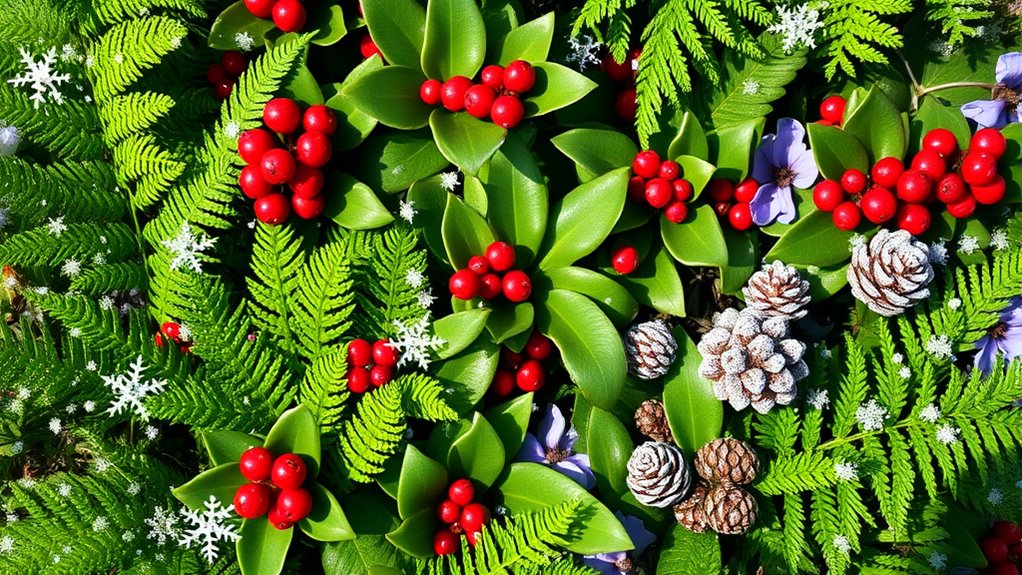
When it comes to winter plant displays, choosing the right combination of evergreens and winter blooms is essential. You’ll want to contemplate sturdy varieties that can withstand the cold while still providing visual interest. Incorporating elements like ornamental grasses and seasonal foliage can enhance texture and depth. As you explore these options, think about how to elevate your arrangements further, perhaps with unique containers or unexpected accents. What possibilities will you discover?




Selecting the Right Evergreens for Winter Displays
When you’re selecting the right evergreens for winter displays, it’s essential to evaluate both aesthetic appeal and hardiness. Consider evergreen varieties like Colorado blue spruce or Eastern red cedar that not only withstand harsh conditions but also provide striking visual interest. Think about your landscape’s seasonal selections; plants with varied textures and shapes can create a dynamic composition. Pay attention to growth habits—dwarf varieties can fit snugly in smaller spaces, while taller options serve as impressive focal points. Ultimately, blending different evergreens enhances your garden’s winter character, ensuring a vibrant, inviting environment during the colder months.
Adding Color With Winter Blooms
Although winter often conjures images of bare branches and muted landscapes, adding color with winter blooms can transform your garden into a vibrant oasis. Consider incorporating winter flower varieties like hellebores, winter jasmine, and pansies, which provide stunning visual interest during the colder months. These plants not only add texture but also enrich seasonal color palettes, creating a dynamic contrast against the stark winter backdrop. Position them strategically for maximum impact, ensuring they complement your existing design. By thoughtfully selecting and arranging these blooms, you’ll create a picturesque winter display that celebrates the beauty of the season while maintaining your garden’s vibrancy.
Utilizing Ornamental Grasses for Texture
While winter blooms add vibrant color to your garden, incorporating ornamental grasses can enhance the overall texture and structure of your winter display. These grasses, with their varied heights and forms, provide visual interest even in the cold months. Choose varieties like Miscanthus or Panicum for their graceful movement and winter resilience. Their feathery plumes catch the sunlight, creating shimmering effects against a snowy backdrop. By layering different grasses, you’ll achieve a dynamic winter texture that contrasts beautifully with static elements. Remember to reflect on their placement for maximum visibility and impact, ensuring your winter garden remains an enchanting sight all season long.
Creating a Winter Container Garden
Creating a winter container garden can transform your outdoor space into a vibrant focal point, even during the coldest months. Start by selecting a sturdy winter container that can withstand freezing temperatures. Choose evergreen plants, like boxwoods or holly, for structure and year-round interest. Incorporate colorful accents with winter-blooming flowers, such as pansies or cyclamen. For added texture, consider layering in decorative elements like pinecones or twigs. When designing your garden, balance height and spread to create visual harmony. This winter container garden not only enhances your landscape but also invites a sense of freedom and creativity during the winter season.
Incorporating Seasonal Foliage
Incorporating seasonal foliage is essential for creating a dynamic winter display. You can use evergreen arrangements to add texture and structure, while seasonal berries introduce vibrant color to your garden. Additionally, don’t overlook winter blooms, which can provide intriguing focal points even in the colder months.
Evergreen Arrangements for Texture
Evergreen arrangements offer a unique opportunity to add depth and texture to your winter displays, especially when you incorporate seasonal foliage. By mixing different evergreen varieties, you can create striking texture contrasts that elevate your arrangements. Consider using the following combinations:
| Evergreen Variety | Texture Type | Seasonal Foliage |
|---|---|---|
| Noble Fir | Soft, bushy | Holly |
| Blue Spruce | Sharp, rigid | Cedar |
| Boxwood | Dense, compact | Pine |
| Yew | Fine, delicate | Juniper |
Experiment with these elements for a visually engaging winter display!
Seasonal Berries for Color
Adding seasonal berries to your winter displays can greatly enhance the visual appeal and bring vibrant color to your arrangements. Incorporating holly berries and other winter fruit not only provides a striking contrast against evergreen foliage but also serves as a focal point. Use clusters of these berries to create depth and interest in your designs. Consider pairing holly berries with textures from pine or cedar, which accentuate their brilliant red hues. Additionally, integrating branches laden with winter fruit can add a naturalistic touch, making your displays feel alive and inviting, even in the coldest months. Embrace this seasonal bounty!
Winter Blooms for Interest
Winter blooms can transform your seasonal displays into enchanting arrangements that bring warmth and vibrancy to the cold months. Incorporating winter flowering plants like hellebores, pansies, and winter jasmine adds bursts of seasonal color to your landscape. To enhance these blooms, consider pairing them with seasonal foliage such as evergreen boughs or ornamental grasses, which provide structure and contrast. Use rich textures and varying heights for visual interest, ensuring your display looks dynamic throughout winter. By thoughtfully integrating these elements, you’ll create a spellbinding winter garden that invites admiration, even in the chill of the season.
Designing a Winter Herb Garden
While you might think that herb gardening is a warm-weather pursuit, designing a winter herb garden can be both rewarding and practical. Focus on herb selection that thrives indoors during colder months, like thyme, parsley, and chives. For ideal winter maintenance, guarantee your herbs receive sufficient light, moisture, and warmth.
| Herb | Light Requirements |
|---|---|
| Thyme | 6-8 hours of sunlight |
| Parsley | 4-6 hours of sunlight |
| Chives | 6-8 hours of sunlight |
With careful planning, you can enjoy fresh herbs all winter long!
Enhancing Your Space With Indoor Plants
Indoor plants can greatly elevate your space’s aesthetic and air quality during the winter months. By selecting the best indoor plants and arranging them creatively, you’ll create an inviting atmosphere that thrives even in colder weather. Additionally, understanding seasonal care tips will guarantee your plants remain healthy and vibrant throughout the winter.
Best Indoor Plants
A well-chosen selection of indoor plants can transform your living space into a vibrant oasis, enhancing both aesthetics and air quality. Consider incorporating various succulent varieties, like Echeveria and Haworthia, which require minimal watering and thrive in indirect light. Their unique shapes and colors add visual interest. Additionally, air plants (Tillandsia) are perfect for those who enjoy creative displays, as they don’t need soil and can be placed in hanging glass terrariums or mounted on wood. By selecting the right indoor plants, you’ll create an inviting atmosphere that not only beautifies your space but also promotes a healthier environment.
Creative Plant Arrangements
Creating stunning plant arrangements can dramatically enhance your space, as they not only showcase the beauty of your plants but also contribute to the overall ambiance of your home. Experiment with various arrangement styles, such as vertical gardens or clustered displays, to add dimension. Consider plant pairings that complement each other regarding color, texture, and growth habits. For instance, combining trailing plants with upright varieties can create visual interest. Don’t forget to incorporate varying pot shapes and sizes to elevate your design. With thoughtful arrangements, you can transform any area into a vibrant, inviting sanctuary.
Seasonal Care Tips
While winter can pose challenges for maintaining indoor plants, implementing a few seasonal care tips can greatly enhance their health and appearance.
- Confirm proper soil preparation by checking for drainage and nutrients.
- Utilize effective pruning techniques to remove dead or damaged leaves, promoting growth.
- Adjust watering schedules, as plants typically require less moisture in the colder months.
Crafting Unique Winter Centerpieces
As you explore the art of crafting unique winter centerpieces, consider incorporating natural elements that evoke the season’s serene beauty. Start with evergreen branches or pinecones, which add texture and warmth. You can enhance your display by including candle displays—opt for unscented candles to maintain a fresh atmosphere. Arrange these candles within a base of moss or fresh snow for a touch of magic. Add seasonal fruits like pomegranates or citrus for a pop of color. Remember to balance height and scale, ensuring your centerpiece draws the eye without overwhelming the table. Embrace creativity and let your unique style shine!
Frequently Asked Questions
How Do I Maintain Winter Plants During Cold Weather?
To maintain winter plants, choose hardy varieties and adjust winter watering to prevent over-saturation. Guarantee proper drainage and protect roots from frost, allowing for a healthy, resilient display despite the cold weather challenges.
What Are the Best Soil Types for Winter Garden Displays?
Imagine a sponge soaking up water; that’s how well-draining soil works for winter gardens. A mix of loamy soil with compost meets drainage needs and enhances soil composition, ensuring your plants thrive even in cold weather.
Can I Use Artificial Plants in Winter Decorations?
Yes, you can use artificial arrangements in winter decorations. They offer versatility and maintain seasonal aesthetics without the maintenance of live plants, allowing you to creatively express your style while enjoying a hassle-free setup.
How Do I Protect Plants From Frost Damage?
To protect your plants from frost damage, use plant coverings like frost cloths or burlap. Make certain they’re secured and remove them during sunny days to prevent overheating while still providing essential frost protection during cold nights.
What Are Some Budget-Friendly Winter Display Ideas?
Delight in DIY arrangements using thrift store finds! You can create enchanting displays by repurposing containers and adding seasonal greenery. Experiment with textures and colors to craft budget-friendly winter aesthetics that express your unique style.