
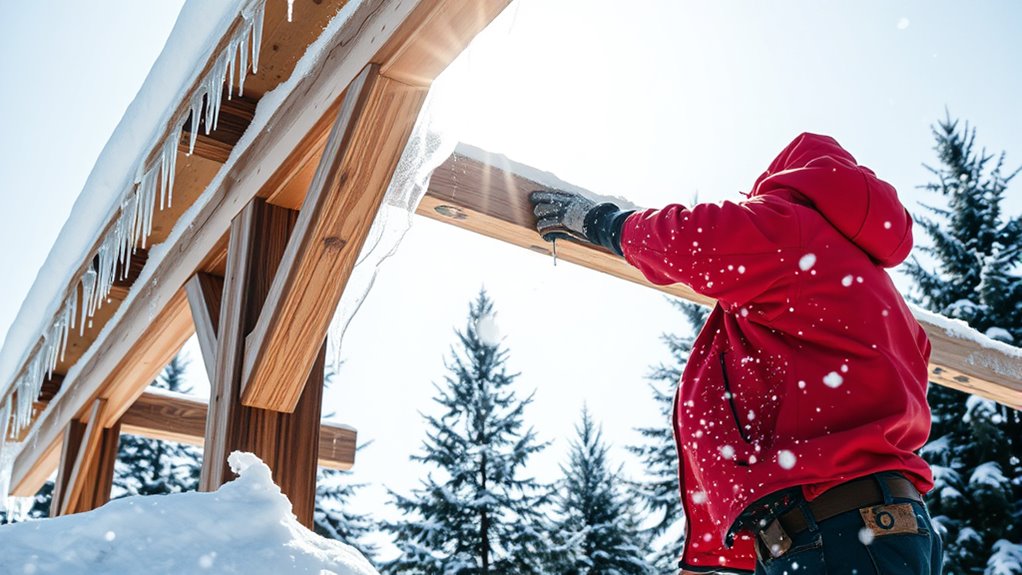
Did you know that roofs can experience stress from snow loads exceeding 40 pounds per square foot? This substantial weight can compromise your roof’s integrity, especially if it’s already showing signs of wear. By considering the addition of extra beams, you can enhance structural support and mitigate potential risks. Understanding the signs that indicate a need for reinforcement is essential. What factors should you evaluate before making this important decision?
Understanding Snow Loads and Their Impact on Roofs
When considering the structural integrity of roofs during winter months, it is vital to understand how snow loads can affect their performance. Snow accumulation can greatly increase the load on your roof, potentially leading to structural failure if not properly addressed. It is important to calculate the expected snow load based on your region, as this will determine whether your existing beams can adequately support the weight. Regular assessments of your roof’s design and materials will guarantee you maintain its structural integrity. By staying informed, you can make proactive decisions that protect your property from the risks associated with heavy snow loads.
Signs Your Roof Needs Reinforcement
As winter approaches, it’s crucial to recognize the signs that your roof may need reinforcement to withstand increased snow loads. Start with a thorough roof inspection; look for sagging areas or visible cracks in rafters. If your roof’s shingles are curling or missing, that’s another red flag. Pay attention to the weather forecast; if heavy snowfall is predicted, assess your roof’s ability to bear additional weight. Water stains on ceilings can indicate structural issues. Addressing these signs promptly can prevent costly damage and guarantee your home remains safe during the harsh winter months ahead. Don’t ignore these critical warnings.
Benefits of Adding Extra Beams
Adding extra beams to your roof can greatly enhance its structural integrity, especially in regions prone to heavy snowfall. By strategically reinforcing your roof, you’ll distribute the load more evenly, minimizing the risk of sagging or collapse. The beam advantages include increased resistance against heavy snow accumulation, which can prevent costly repairs and guarantee your safety. Additionally, enhanced structural integrity can improve your home’s overall durability, allowing for more freedom in design choices without compromising safety. Investing in extra beams isn’t just about meeting code; it’s about safeguarding your home and providing peace of mind during harsh winter conditions.
Choosing the Right Materials for Roof Beams
When selecting materials for roof beams, you must prioritize material strength to guarantee they can withstand heavy snow loads. Consider the weight and durability of each option, as these factors will directly impact the roof’s overall performance. Additionally, evaluating cost-effective options can help you balance quality and budget constraints without compromising safety.
Material Strength Considerations
Choosing the right materials for roof beams is essential to guarantee structural integrity during the snow season. You’ll want to evaluate material density and how it affects load distribution. The right choice can greatly enhance stability under heavy snow loads. Here’s a quick comparison:
| Material | Density (lb/ft³) |
|---|---|
| Steel | 490 |
| Aluminum | 168 |
| Wood | 30-60 |
| Composite | 100-150 |
Selecting materials with ideal density guarantees effective load distribution, reducing the risk of structural failure when snow accumulates. Prioritize resilience for lasting safety.
Weight and Durability
After evaluating material density, the next focus should be on weight and durability, both of which play a significant role in the performance of roof beams during winter months. Selecting materials with ideal weight guarantees effective load distribution, preventing excessive stress on your structure. Strong materials, like engineered wood or steel, maintain structural integrity under heavy snow loads while minimizing deflection. You want to balance the beam’s weight with its ability to withstand environmental pressures. Ultimately, the right choice will enhance your roof’s resilience, securing your space against winter’s harsh demands and allowing for greater freedom in design and use.
Cost-Effective Options
While balancing cost with performance can be challenging, selecting cost-effective materials for roof beams is essential for maintaining structural integrity during snow season. Affordable materials can offer the durability you need without breaking the bank. Consider DIY solutions like laminated veneer lumber (LVL) or engineered wood, which provide strength at a lower cost. Here’s a quick comparison:
| Material | Cost per Foot | Load Capacity |
|---|---|---|
| LVL | $2.50 | High |
| Engineered Wood | $1.75 | Moderate |
| Steel | $3.00 | Very High |
| Timber | $2.00 | Low |
Choose wisely to guarantee safety and savings.
Techniques for Installing Additional Beams
When installing additional beams, precise placement strategies are essential for effective weight distribution. You’ll need specific tools and materials to guarantee a secure and durable installation. Understanding these techniques will enhance your structural integrity during the snow season.
Beam Placement Strategies
To guarantee the structural integrity of a building during snow season, it is crucial to implement effective beam placement strategies. Here are some key techniques to take into account:
- Beam Alignment Techniques: Ascertain beams are aligned correctly to prevent misdistribution of loads.
- Load Distribution Methods: Use methods that equally distribute weight across all beams, minimizing stress points.
- Spacing Considerations: Position additional beams at intervals that support maximum load without compromising structural integrity.
Tools and Materials Needed
Installing additional beams requires specific tools and materials to guarantee a safe and effective process. You’ll need to choose appropriate beam types, such as steel or engineered wood, based on load requirements. Essential installation tools include a level, a measuring tape, a saw, and a drill. A hammer and appropriate fasteners, like bolts or screws, are vital for securing the beams. Safety gear, including gloves and goggles, provides personal protection during installation. Having a sturdy ladder or scaffolding can facilitate access to elevated areas. Proper preparation with these tools and materials will enhance your project’s success and maintain structural integrity.
Assessing Your Roof’s Current Structure
Understanding your roof’s current structure is essential before adding extra beams for snow season. Conducting a thorough roof inspection will help you assess its structural integrity. Here are three critical areas to evaluate:
- Material Condition: Check for signs of wear, rot, or damage in roofing materials.
- Load-Bearing Walls: Identify load-bearing walls that can support additional beams without compromising stability.
- Truss System: Inspect the truss system for any weaknesses or spacing issues that could affect snow load capacity.
Maintenance Tips for Snow Season Preparedness
As winter approaches, making certain your roof is adequately prepared for snow load is essential for preventing structural damage. Start with a thorough inspection of your roof’s surface, checking for any signs of wear or damage. Clear gutters and downspouts to guarantee proper drainage during melting periods. Reinforce weak points with additional beams if necessary, and consider applying roof maintenance coatings that enhance durability. Regularly remove accumulated snow to prevent excessive load, especially after heavy storms. Finally, maintain clear access to your roof for ongoing inspections. Taking these steps will help safeguard your home against the risks associated with snow accumulation.
When to Consult a Professional for Roof Reinforcement
If you notice signs of sagging or stress on your roof, it’s essential to consult a professional for reinforcement. Here are three key situations to take into account:
- Visible Damage: Cracks or warping indicate structural issues needing immediate attention.
- Heavy Snow Accumulation: Excess weight can compromise your roof’s integrity; professional expertise is vital.
- Age of Structure: Older roofs may require reinforcement to meet current load standards.
Frequently Asked Questions
How Much Weight Can My Current Roof Support During Heavy Snow?
Your roof’s snow load capacity depends on its design and materials. Typically, residential roofs can handle 20 pounds per square foot, but consult a structural engineer to guarantee safety during heavy snow events.
Can I Add Beams Myself or Should I Hire a Professional?
You can add beams yourself, but it’s risky. Weigh DIY considerations against safety precautions; improper installation could lead to structural failure. Hiring a professional guarantees stability, giving you freedom from worry about your roof’s integrity.
What Are the Costs Associated With Adding Extra Beams?
The costs for adding extra beams depend on beam materials and installation complexity. Conducting a thorough cost analysis will help you assess expenses, including labor, materials, permits, and potential structural modifications to guarantee safety and stability.
Will Adding Beams Change My Roof’s Appearance Significantly?
Yes, adding beams can alter your roof’s aesthetic impact. You’ll need to contemplate design elements carefully, as the new structure might create a bold silhouette or harmonize with existing features, shaping your home’s visual story.
How Can I Prevent Future Snow Load Issues After Reinforcement?
To prevent future snow load issues, guarantee your roof’s structural integrity by regularly inspecting beams, maintaining proper drainage, and considering snow guards. These proactive measures will enhance resilience against heavy snow accumulation and potential damage.