
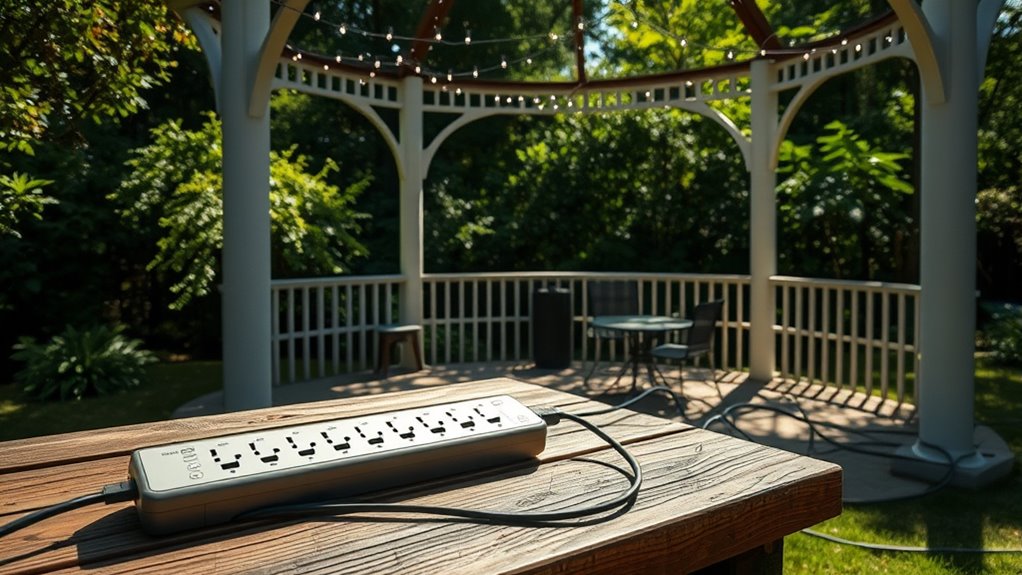
Many people underestimate the impact of electrical load on their gazebo’s circuits, which can lead to potential hazards. Understanding how to calculate wattage and manage device usage is essential for safety. If you’re planning to use multiple devices, it’s critical to know the limits of your circuit. This knowledge can prevent overloads and guarantee a safe outdoor environment. What are the key factors you need to take into account to maintain proper electrical safety?



Understanding Electrical Circuits in Your Gazebo
When you’re setting up electrical circuits in your gazebo, it’s crucial to understand the basics of how these systems work, especially since improper configurations can lead to overloads. Circuit design plays a critical role in guaranteeing efficient power distribution. Start by determining the total wattage of your devices and ascertain your circuit can handle the load without exceeding its capacity. Use appropriate wire gauge and breakers to prevent overheating and minimize risks. Understanding voltage drop is also important, as it affects performance. By grasping these concepts, you’ll create a safe and functional electrical environment that enhances your gazebo experience.
Identifying Common Electrical Needs
Identifying the electrical needs of your gazebo is a key step in ensuring it meets your specific requirements. Consider the essential functions, such as outdoor lighting for ambiance and safety. You’ll likely need multiple fixtures, so plan accordingly. If you intend to use power tools, assess the wattage and amperage they require to operate efficiently. Think about additional outlets for flexibility in usage, ensuring you’re not limited by power availability. Make a list of devices you’ll use regularly, and prioritize their needs to create a balanced electrical setup that allows you the freedom to enjoy your gazebo without overloading circuits.
Calculating Load Capacity
To guarantee your gazebo’s electrical system can handle the load, start by determining the wattage of each appliance you’ll use. Next, calculate the total amperage by dividing the total wattage by the voltage of your circuit. This step is vital for preventing circuit overload and maintaining safety.
Determine Appliance Wattage
Calculating the wattage of each appliance in your gazebo is crucial for preventing circuit overloads. Start by checking the wattage ratings on each device, as they indicate the power consumption. For example, a microwave might use 1,000 watts, while a string of lights could be around 200 watts. Understand your appliance usage: if you frequently run multiple devices simultaneously, sum their wattages to avoid exceeding your circuit’s capacity. This proactive approach guarantees you maintain a safe and functional environment in your gazebo. Remember, knowing the wattage ratings is a key step in managing your electrical load effectively.
Calculate Total Amperage
While understanding the wattage of your appliances is essential, calculating the total amperage is equally important for determining your circuit’s load capacity. To perform an amperage calculation, follow these steps:
- Identify the wattage of each appliance.
- Divide each wattage by the voltage (typically 120V).
- Sum the resulting amperages.
- Verify the total doesn’t exceed your circuit’s capacity (usually 15 or 20 amps).
- Consider additional factors, like continuous load (which should stay below 80% of the circuit capacity).
Choosing the Right Electrical Equipment
When selecting electrical equipment for your gazebo, understanding the specific power requirements is crucial to prevent circuit overloads. Prioritize energy efficiency by choosing LED outdoor lighting, which consumes less power while providing adequate illumination. Always check the wattage ratings of all devices—this guarantees you’re within the safe limits of your circuit. Consider the total amperage of your setup, factoring in both fixed and portable equipment. Using equipment like timers and dimmers can further enhance energy efficiency and control. By carefully selecting compatible devices, you’ll maintain a safe, enjoyable environment in your gazebo without compromising on functionality or aesthetics.
Using Circuit Breakers and Fuses
Selecting the right electrical equipment for your gazebo is just the first step in ensuring safety. To effectively implement circuit protection and overload prevention, consider these essential components:
- Circuit breakers: Automatically interrupt power during overloads.
- Fuses: Provide a simple, one-time overload protection solution.
- GFCI outlets: Protect against ground faults, preventing shock hazards.
- Surge protectors: Shield equipment from voltage spikes.
- Load calculators: Help assess total circuit load and prevent overloads.
Utilizing these elements not only safeguards your electrical system but also gives you peace of mind, allowing you to truly enjoy your gazebo experience.
Ensuring Proper Wiring and Connections
To guarantee safe and efficient electrical operation in your gazebo, the quality of wiring materials is essential. Using appropriate connection techniques will prevent potential hazards and maintain circuit integrity. Both factors play an important role in avoiding overloads and securing long-term reliability.
Quality of Wiring Materials
The integrity of wiring materials plays an essential role in guaranteeing safe and efficient electrical connections within a gazebo. Choosing high-quality wires promotes safety and longevity, reducing the risk of circuit overloads. Here are key factors to take into account:
- Wire Quality: Opt for copper or aluminum with adequate insulation.
- Material Durability: Guarantee resistance to environmental factors.
- Gauge Size: Select the appropriate gauge for your load requirements.
- Heat Resistance: Choose materials that withstand temperature fluctuations.
- Flexibility: Use wiring that can handle movement without damage.
Investing in quality wiring materials safeguards your gazebo’s electrical system.
Correct Connection Techniques
Proper connection techniques are essential for guaranteeing the safety and reliability of electrical systems in your gazebo. Start by using correct wire sizing to match the load requirements; undersized wires can overheat and pose fire hazards. Ensure all connections are tight and secure, as loose connections can create arcing, leading to equipment failure. Implement safe grounding practices to direct any excess current away from your structure, minimizing shock risks. Always use weather-resistant connectors and enclosures to protect against moisture. By adhering to these practices, you’ll create a safe and efficient electrical system that enhances your gazebo experience without compromising safety.
Regular Maintenance and Inspections
While it may seem tedious, regular maintenance and inspections of your gazebo’s electrical system are essential for preventing overloads and guaranteeing safety. By implementing routine checks, you can identify potential issues before they escalate. Here are some preventive measures you should consider:
Regular maintenance of your gazebo’s electrical system is crucial for safety and preventing potential issues.
- Inspect wiring for fraying or damage
- Test circuit breakers and fuses for functionality
- Ascertain all connections are secure and corrosion-free
- Check for moisture exposure in electrical components
- Verify that load limits aren’t exceeded
Staying proactive with these tasks not only protects your investment but also enhances your freedom to enjoy your gazebo’s features safely.
Safety Tips for Outdoor Electrical Use
To guarantee safety when using electrical equipment outdoors, it’s crucial to follow specific guidelines that minimize risks. Always use outdoor extension cords rated for wet conditions, making certain they have a three-prong plug for grounding. When connecting devices, avoid daisy-chaining multiple cords, as this can lead to overheating. Make sure your weatherproof outlets are installed correctly, providing protection against moisture and debris. Regularly inspect your cords for wear and tear, replacing any damaged equipment immediately. Finally, consider using ground fault circuit interrupters (GFCIs) to prevent shock hazards. By adhering to these practices, you’ll guarantee a safer outdoor electrical experience.
Frequently Asked Questions
Can I Use Extension Cords in My Gazebo Safely?
Yes, you can use extension cords in your gazebo, but make certain they’re rated for outdoor use. Follow extension cord safety guidelines and outdoor electrical precautions to prevent hazards and guarantee reliable power distribution without overloading circuits.
What Appliances Should I Avoid Using in My Gazebo?
You should avoid using high-wattage appliances like power tools and excessive outdoor lighting in your gazebo. Did you know that overloading circuits can lead to potential fire hazards? Stay safe by managing your electrical load wisely.
How Do I Know if My Gazebo Needs Additional Circuits?
You’ll know your gazebo needs additional circuits if the electrical load exceeds your circuit capacity. Monitor for tripped breakers or flickering lights; these signs indicate that your current setup can’t handle the demands placed on it.
What Are the Signs of an Overloaded Circuit?
You’ll notice signs of an overloaded circuit if circuit breakers trip frequently, lights flicker, or electrical panels emit heat. These indicate excessive load, risking damage to your equipment and creating safety hazards you should address immediately.
Is It Safe to Use Heaters or Fans in My Gazebo?
Using heaters or fans in your gazebo can be safe, but you must balance heating options and cooling solutions wisely. Always check your circuit capacity, ensuring you don’t risk overload while enjoying your outdoor freedom.