
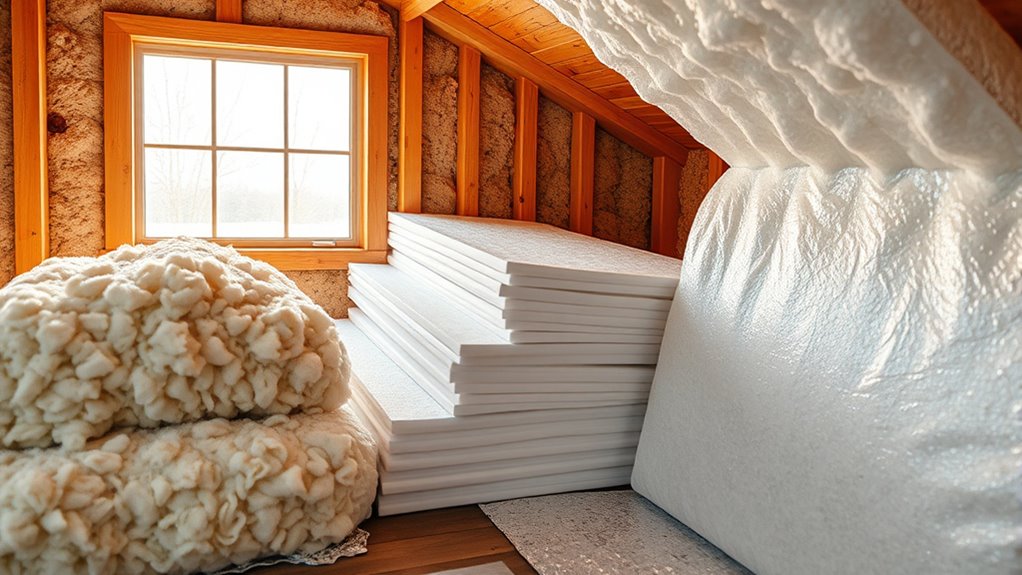
Imagine a homeowner in a cold climate who relies on fiberglass insulation for their walls, achieving a comfortable indoor temperature during winter months. While fiberglass offers solid thermal performance, other insulation materials like spray foam and cellulose could enhance energy efficiency even further. Each option brings unique benefits and drawbacks, influencing both warmth and energy costs. Understanding these differences is essential for making an informed choice about your insulation needs.
Fiberglass Insulation
When considering insulation options, fiberglass insulation stands out due to its excellent thermal performance and fire resistance. You’ll find various fiberglass types, including batts, rolls, and loose-fill, each suited for different applications. Batts and rolls are ideal for standard wall cavities, while loose-fill offers flexibility for hard-to-reach areas.
When it comes to fiberglass installation, it’s essential to guarantee a tight fit without compression, as this maintains its insulating properties. Use proper protective gear during installation to safeguard against irritation. Additionally, consider vapor barriers to enhance moisture management, preventing mold growth. This combination of thermal efficiency and fire safety makes fiberglass insulation a top choice for those seeking comfort and independence in their living spaces.
Spray Foam Insulation
When considering insulation options, spray foam insulation stands out due to its superior air sealing capabilities and high R-value. You’ll find that its installation process involves applying a two-component mixture that expands upon contact, filling gaps and creating a tight seal. This method not only enhances energy efficiency but also contributes to overall structural integrity.
Benefits of Spray Foam
Although many insulation options exist, the unique properties of spray foam insulation make it a standout choice for enhancing energy efficiency in your home. Its superior air sealing capabilities greatly reduce energy loss, promoting cost efficiency. Additionally, spray foam’s minimal environmental impact, particularly when using eco-friendly formulations, aligns with sustainable living goals.
| Benefit | Description | Impact |
|---|---|---|
| Air Sealing | Fills gaps and cracks, preventing air leaks | Improved energy efficiency |
| Moisture Barrier | Repels water, reducing mold growth | Healthier living environment |
| Longevity | Durable material with a long lifespan | Reduced replacement costs |
Installation Process Overview
Having established the benefits of spray foam insulation, it’s important to understand the installation process, as it plays a pivotal role in achieving excellent results. First, prepare the area by verifying it’s clean and dry. You’ll need the right insulation tools, including a spray foam gun and protective gear. Next, familiarize yourself with effective installation techniques, which involve applying the foam in a controlled manner to avoid over-expansion. Start at the corners and work your way to larger surfaces, verifying even coverage for best insulation. Finally, allow the foam to cure properly before sealing any gaps. This methodical approach guarantees you maximize the efficiency of your spray foam insulation, keeping your space warm and energy-efficient.
Cellulose Insulation
Cellulose insulation, derived primarily from recycled paper products, stands out as an eco-friendly option for enhancing thermal performance in residential and commercial buildings. Its cellulose properties include excellent thermal resistance, soundproofing capabilities, and moisture regulation, making it a versatile choice for insulation. Additionally, cellulose sustainability is a key advantage, as it reduces waste and promotes environmental responsibility.
| Property | Benefit |
|---|---|
| Thermal Resistance | Keeps spaces warm in winter |
| Soundproofing | Minimizes noise transfer |
| Moisture Regulation | Reduces risks of mold and dampness |
| Eco-Friendly | Utilizes recycled materials |
When considering insulation, cellulose offers an exceptional balance of performance and sustainability, granting you the freedom to choose a greener path for your building projects.
Mineral Wool Insulation
When exploring insulation options, mineral wool insulation emerges as another effective choice, particularly for its unique properties and benefits. Known for its versatility, mineral wool offers several advantages that make it suitable for various applications:
- Excellent thermal performance, keeping spaces warm.
- Fire-resistant properties, enhancing safety.
- Soundproofing capabilities, minimizing noise pollution.
- Water resistance, preventing mold growth.
These mineral wool benefits make it ideal for residential and commercial settings, such as walls, roofs, and ceilings. Its ability to withstand high temperatures means it’s perfect for industrial applications as well. With mineral wool insulation, you can achieve energy efficiency while ensuring a comfortable environment, allowing you the freedom to focus on what truly matters. Consider it for your next insulation project!
Rigid Foam Board Insulation
Although many insulation options exist, rigid foam board insulation stands out for its high R-value per inch and versatility in application. This material provides excellent thermal resistance, making it a top choice for various projects, from walls to roofs. Its lightweight nature allows for easy handling, while its water-resistant properties protect against moisture.
| Type of Rigid Foam | R-Value (per inch) | Common Uses |
|---|---|---|
| Expanded Polystyrene (EPS) | 3.6 – 4.0 | Walls, foundations |
| Extruded Polystyrene (XPS) | 5.0 – 5.5 | Below-grade, roofs |
| Polyisocyanurate | 6.0 – 7.0 | Roofs, HVAC ducts |
| Phenolic Foam | 4.5 – 6.0 | Industrial insulation |
| Rigid Polyurethane | 6.0 – 7.0 | High-performance areas |
Choosing rigid foam guarantees you maximize your insulation’s efficiency while enjoying the freedom of creative applications.
Reflective or Radiant Barrier Insulation
Reflective or radiant barrier insulation is a highly effective solution for reducing heat transfer in buildings, particularly in warm climates. This insulation type enhances reflective performance, preventing radiant heat from entering your space. It’s essential for maintaining comfort and energy efficiency.
Reflective insulation effectively minimizes heat transfer, enhancing comfort and energy efficiency in warm climates.
Key benefits include:
- Energy savings: Lower cooling costs during hot months.
- Improved comfort: Keeps spaces cooler by blocking radiant heat.
- Easy installation: Often installed in attics, it requires minimal effort.
- Enhanced durability: Resistant to moisture and mold, ensuring longevity.
Sheep’s Wool Insulation
Sheep’s wool insulation stands out as an eco-friendly option that not only provides excellent thermal performance but also offers unique benefits for moisture regulation and indoor air quality. Its natural properties allow it to absorb and release moisture, preventing issues like mold and maintaining a balanced environment. With a high R-value, sheep’s wool effectively traps heat, ensuring warmth during colder months. Additionally, this insulation material is breathable, enhancing indoor air quality by reducing volatile organic compounds (VOCs). Unlike synthetic options, sheep’s wool is renewable and biodegradable, appealing to those who prioritize sustainability. Overall, choosing sheep’s wool insulation means opting for a natural, efficient solution that maximizes warmth while promoting a healthier living space.
Frequently Asked Questions
How Do I Choose the Right Insulation for My Home?
Choosing insulation’s like picking a superhero for your home’s energy efficiency! Consider insulation types like fiberglass or foam, focusing on their thermal performance. Evaluate R-values, installation ease, and environmental impact to guarantee your sanctuary’s warmth.
What Is the Average Cost of Different Insulation Materials?
The average cost of insulation materials varies widely, from fiberglass at $0.50 to $3.50 per square foot. Conducting a cost comparison while considering material efficiency helps you choose the best value for your project’s needs.
How Long Does Insulation Typically Last?
Insulation typically lasts 20 to 80 years, depending on the material. However, material degradation can occur sooner due to moisture, pests, or extreme temperatures, potentially compromising your home’s energy efficiency and comfort.
Can I Install Insulation Myself or Should I Hire a Professional?
You can certainly attempt DIY insulation, but professional installation guarantees peak performance and safety. Weigh your skills and tools against potential risks and efficiency. Sometimes, investing in experts saves you time and future headaches.
What Are the Environmental Impacts of Different Insulation Materials?
Different insulation materials have varying environmental impacts, considering sustainability factors like resource extraction and production emissions. Some offer recycling options, helping you reduce waste, while others may contribute to environmental degradation and increased energy consumption.