
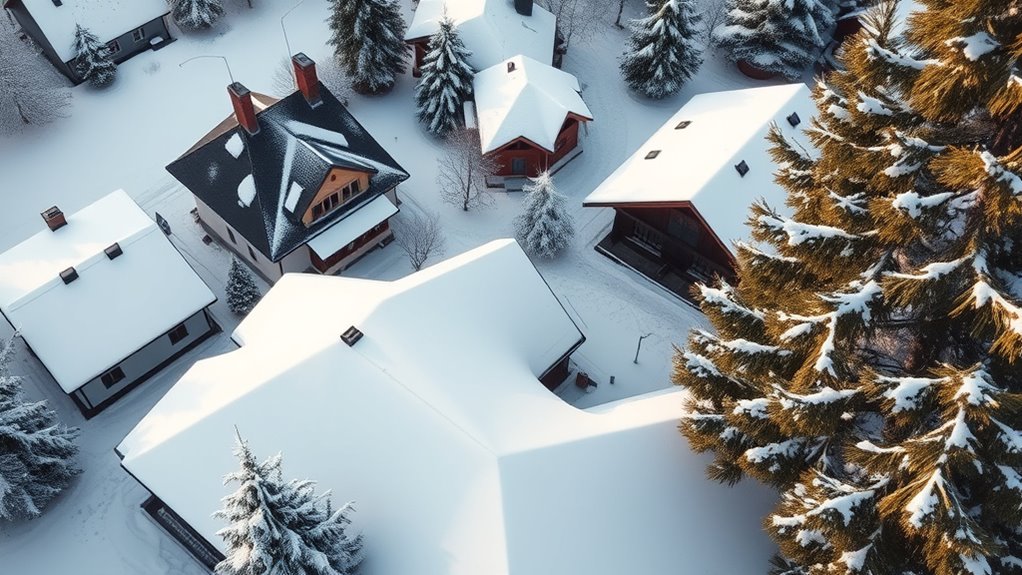
In snowy winter regions, the choice of roof style is essential for maintaining safety and performance. Certain designs, such as gable and hip roofs, are engineered to handle snow accumulation effectively. Understanding the strengths of each roof type can greatly influence durability and protection against winter elements. However, the right roof is just one part of the equation. What other factors should you consider to guarantee your home withstands harsh winter conditions?
Importance of Roof Design in Snowy Climates
When designing a roof for snowy climates, it is important to take into account how snow accumulation can affect structural integrity and safety. A well-designed roof not only guarantees winter durability but also maintains roof aesthetics, blending function with visual appeal. Steep-pitched roofs facilitate efficient snow shedding, reducing the risk of heavy loads and potential collapse. Additionally, selecting materials that withstand harsh conditions is crucial. You’ll want to balance strength with design elements that reflect your style. By prioritizing these aspects, you can achieve a roof that stands resilient against winter’s challenges while enhancing the overall beauty of your home.
Key Factors to Consider for Snow-Prone Areas
Designing roofs for snowy regions requires careful consideration of several key factors that guarantee both safety and performance. First, you need to account for snow load, which varies by location and affects structural integrity. Choose materials that can withstand these loads while securing long-term durability. Regular roof maintenance is essential; inspect for ice dams, leaks, or damage after heavy snowfall. Additionally, consider the roof’s slope, as steeper pitches help snow slide off more easily, reducing accumulation. Finally, factor in local building codes, which often dictate specific design requirements to promote optimal safety and performance in snowy climates.
Gable Roofs: Classic Style With Effective Snow Shedding
Though many roof styles exist, gable roofs stand out as a classic choice, particularly for snowy regions due to their effective snow-shedding capabilities. Their steep slopes allow snow to slide off easily, minimizing the risk of ice dam formation. You’ll appreciate the gable roof benefits, including cost-effectiveness and simple construction. Regular gable roof maintenance is essential, though, as it guarantees longevity and peak performance. Check for loose shingles and clear debris to prevent moisture buildup. With proper care, a gable roof can provide enduring protection, allowing you the freedom to enjoy winter without the worry of structural damage.
Hip Roofs: Stability and Resistance Against Strong Winds
While gable roofs offer effective snow-shedding qualities, hip roofs provide their own advantages, particularly in snowy regions prone to strong winds. Here are some key hip roof advantages:
- Enhanced Wind Resistance: The sloped design minimizes wind pressure, reducing the risk of damage during storms.
- Stability: Hip roofs distribute weight evenly, making them structurally sound and more durable against heavy snow loads.
- Better Drainage: Their design helps snow and rain flow off efficiently, preventing water accumulation and ice formation.
Choosing a hip roof can provide peace of mind in harsh winter conditions, ensuring your home remains secure and resilient.
Shed Roofs: Simple Design for Efficient Snow Drainage
Shed roofs offer a straightforward design that promotes efficient snow drainage, making them ideal for snowy climates. Their single-pitched structure allows snow to slide off easily, reducing the risk of accumulation and potential roof damage. When considering durability, it is crucial to select materials that can withstand harsh winter conditions while maintaining structural integrity.
Advantages of Shed Roofs
When it comes to managing heavy snowfall, a shed roof offers a practical solution that combines simplicity with functionality. Here are some key shed roof benefits you shouldn’t overlook:
- Efficient Snow Shedding: The single slope design naturally directs snow off the roof, reducing the risk of heavy buildup.
- Cost-Effective: With fewer materials needed, shed roofs are often more affordable to build and maintain.
- Sleek Aesthetics: Their modern appearance complements various architectural styles, enhancing your property’s visual appeal.
Choosing a shed roof can provide you with peace of mind, knowing you’re equipped to handle winter’s challenges effectively.
Snow Drainage Efficiency
Because of their unique design, shed roofs excel in snow drainage efficiency, making them ideal for areas prone to heavy snowfall. Their sloped surface allows snow to slide off easily, reducing snow retention and preventing weight-related damage. Effective drainage systems are essential to manage melting snow, further enhancing safety and longevity.
| Feature | Benefit |
|---|---|
| Sloped Design | Minimizes snow retention |
| Easy Snow Removal | Reduces risk of collapse |
| Effective Drainage | Prevents water pooling |
| Minimal Maintenance | Lowers upkeep costs |
With shed roofs, you gain freedom from the concerns of heavy winter loads.
Design Considerations for Durability
While the simplicity of shed roofs contributes to their snow drainage efficiency, careful design considerations are essential for guaranteeing their durability in harsh winter conditions. To enhance roof longevity, focus on:
- Material Selection: Opt for durable materials like metal or reinforced asphalt shingles that withstand snow loads.
- Structural Support: Incorporate adequate framing and bracing to prevent sagging under heavy snow.
- Proper Pitch: Make sure the roof has a suitable slope to facilitate quick snow runoff and minimize ice buildup.
Flat Roofs: Pros and Cons in Snowy Regions
Flat roofs can be a practical choice in snowy regions, but they come with distinct advantages and disadvantages that homeowners should consider. On the plus side, flat roofs provide easy access for maintenance and can support snow accumulation if properly engineered. However, without adequate drainage, they risk water pooling and structural damage from heavy snow loads. You’ll also need to think about insulation and waterproofing to prevent leaks. Ultimately, while flat roofs offer design flexibility, their performance in snowy climates hinges on careful planning and construction to mitigate the unique challenges posed by winter weather.
A-Frame Roofs: An Aesthetic and Functional Choice
A-Frame roofs offer a unique combination of aesthetic appeal and practical functionality, making them an excellent choice for snowy regions. Their steep angles facilitate effective snow shedding, reducing the risk of heavy accumulation that can lead to structural damage. Additionally, the design allows for efficient drainage, ensuring your roof remains resilient throughout winter storms.
Design Benefits of A-Frame
When considering roofing options for snowy winter regions, the A-Frame design stands out for its unique combination of aesthetic appeal and practical functionality. Here’s why you should embrace A-Frame roofs:
- A Frame Aesthetics: Their striking triangular shape complements various architectural styles, enhancing your home’s visual appeal.
- A Frame Functionality: The steep pitch effectively manages snow accumulation, reducing the risk of structural damage.
- Versatility: A-Frame designs can accommodate large windows, inviting natural light and offering stunning views of the snowy landscape.
With these benefits, A-Frame roofs offer a smart choice for homeowners seeking both beauty and resilience.
Snow Shedding Efficiency
While many roofing styles struggle to effectively shed snow, the sloped design of A-Frame roofs excels in this aspect, ensuring that snow slides off rather than accumulating. This efficient snow shedding reduces the risk of excessive snow load, which can compromise your roof’s integrity. By minimizing snow accumulation, A-Frame roofs also lower the need for regular roof maintenance, allowing you to enjoy winter without constant worry. The steep pitch of these roofs is not only aesthetically pleasing but also functional, granting you peace of mind during heavy snowfall. Choose A-Frame roofs for a blend of beauty and performance in snowy climates.
Roof Materials Best Suited for Snowy Conditions
Choosing the right roof materials is essential for homes in snowy regions, as they must withstand heavy snow loads and prevent ice dams. Here are three materials that excel in snowy conditions:
- Metal Roofing: Its smooth surface allows snow to slide off easily, reducing accumulation and minimizing ice dam formation.
- Insulated Shingles: These provide excellent thermal resistance, helping to keep your home warm while preventing melting and refreezing on the roof.
- Slate Tiles: Durable and heavy, they handle snow loads well and resist water infiltration, making them a reliable choice for winter climates.
Selecting the right materials guarantees your home remains safe and efficient.
Importance of Proper Insulation and Ventilation
Proper insulation and ventilation are vital for maintaining your home’s energy efficiency and structural integrity in snowy regions. Effective insulation techniques prevent heat loss, keeping your home warm and reducing energy costs. Without proper insulation, you risk ice dams forming on your roof, leading to costly damage. Complementing your insulation with efficient ventilation systems is essential; they promote air circulation, preventing moisture buildup in your attic. This balance guarantees a comfortable living environment and extends the life of your roof. By prioritizing these elements, you’re investing in a safe, efficient home that withstands the harsh winter elements.
Drainage Solutions to Prevent Ice Dams and Water Damage
To effectively prevent ice dams and water damage, you need to take into account the roof’s pitch and the efficiency of your gutter system. A proper roof pitch facilitates snow and ice runoff, while an effective gutter system guarantees that water is directed away from your home. Implementing these drainage solutions is vital for maintaining the integrity of your roof in snowy winter regions.
Proper Roof Pitch
When it comes to preventing ice dams and water damage in snowy winter regions, understanding the significance of roof pitch is essential. A proper roof pitch offers several advantages:
- Ideal Slope: A steeper slope allows snow to slide off easily, reducing accumulation.
- Enhanced Drainage: Proper pitch guarantees efficient water runoff, minimizing pooling and potential leaks.
- Mitigated Ice Formation: A preferred angle prevents warm air from melting snow, which can lead to ice dam formation.
Effective Gutter Systems
A well-designed gutter system plays an essential role in managing water runoff and preventing ice dams, particularly in snowy winter regions. Effective drainage systems guarantee that melting snow drains away from your roof and foundation, reducing the risk of water damage. Regular gutter maintenance is vital; clogged gutters can lead to backups, promoting ice buildup. Consider installing heated gutter systems or adding extensions to direct water away from your home. By prioritizing these solutions, you can protect your property from potential winter hazards while enjoying the freedom of a well-maintained environment. Don’t overlook the importance of efficient drainage.
Frequently Asked Questions
How Can Roof Color Affect Snow Melting and Drainage?
Roof color considerably affects snow melting and drainage. Darker colors can enhance heat absorption, reducing snow retention. Proper roof insulation further aids in preventing excessive buildup, promoting efficient drainage and minimizing potential damage from melting snow.
What Maintenance Tips Are Essential for Snowy Roofs?
To maintain snowy roofs, prioritize regular snow removal to prevent excess weight and ice damming. Make certain gutters are clear, and inspect for leaks. Consistent upkeep protects your home and enhances its longevity against winter weather challenges.
Are There Specific Building Codes for Roofs in Snowy Areas?
You bet there’re specific building regulations for roofs in snowy areas! They emphasize snow loads to confirm safety. Always check local codes to assure your roof’s designed to handle those wintery challenges without a hitch.
How Do Roof Styles Impact Energy Efficiency in Winter?
Roof styles greatly impact energy efficiency in winter by enhancing thermal insulation and optimizing air circulation. A well-designed roof reduces heat loss, maintaining comfortable indoor temperatures while lowering energy costs during harsh winter months.
Can Roof Design Influence Heating Costs During Snowy Months?
Sure, your roof can’t magically lower heating costs, but smart design with insulation techniques boosts thermal performance. So, while you sip cocoa, remember, a well-crafted roof might just keep those bills from skyrocketing!