
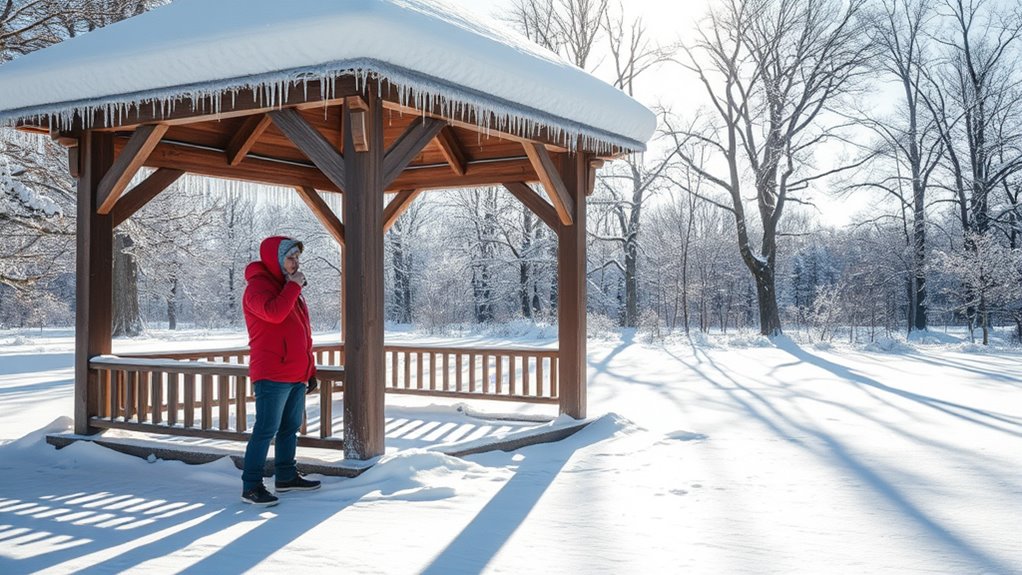
After a snowstorm, it’s crucial to evaluate your gazebo’s structure carefully. You need to assess the weight of the snow accumulation on the roof and inspect for any signs of warping or cracking in the materials. Pay close attention to the joints and fasteners, as these areas are critical for stability. Ignoring these details could lead to bigger issues down the line. What you find might surprise you and necessitate immediate action.
Assessing Snow Accumulation on the Roof
Evaluating snow accumulation on the roof of your gazebo is essential for maintaining its structural integrity. A significant snow load can stress the roofing materials, particularly if your roof slope is insufficient for effective drainage. You should regularly monitor the accumulated snow, especially after heavy storms, to prevent potential collapse. Consider the weight of the snow and any additional ice, as even a slight increase in load can exceed the roof’s capacity. If you notice excessive buildup, remove it promptly using safe techniques to protect both the gazebo and your freedom to enjoy the space year-round.
Inspecting the Structural Integrity
After evaluating snow accumulation on the roof, the next step is to inspect the structural integrity of your gazebo. Begin by examining the structural materials—check for any warping or cracking in the wood, metal, or other components. Verify connections are secure, and look for signs of stress or fatigue. Follow your maintenance routines meticulously; they’re vital in identifying potential weaknesses. Pay special attention to joints and fasteners, as these areas often bear the most load. If you notice any significant issues, consider consulting a professional to guarantee your gazebo remains a safe and enjoyable space.
Checking for Water Damage and Mold
While inspecting your gazebo, it’s essential to check for water damage and mold, as these issues can compromise both the appearance and integrity of the structure. Look for signs of mold growth, such as discoloration or a musty odor, which indicates prolonged moisture exposure. Investigate potential water leaks, particularly around joints and seams, where snow accumulation may have caused deterioration. Pay attention to wooden components; if they’re warped or soft, it’s a clear sign of water damage. Addressing these concerns promptly can prevent further structural issues, ensuring your gazebo remains a safe and enjoyable outdoor space.
Evaluating the Foundation and Anchoring
Once you’ve checked for water damage and mold, it’s important to assess the foundation and anchoring of your gazebo. Begin by examining the foundation stability; verify it’s level and free of cracks. Look for any signs of shifting or settling that could compromise structural integrity. Next, evaluate the anchoring methods used. Are they appropriate for your gazebo’s design and location? Inspect the fasteners, brackets, and ties for corrosion or fatigue. Proper anchoring prevents movement during storms, guaranteeing your gazebo remains secure. By thoroughly evaluating these components, you’ll safeguard your structure against future weather challenges while maintaining your freedom to enjoy it.
Preventative Measures for Future Storms
To guarantee your gazebo withstands future storms, it’s vital to implement effective preventative measures. Addressing snow load is essential, as excessive weight can compromise structural integrity. Here are some maintenance tips:
- Regular Inspections: Examine joints, beams, and fasteners biannually to maintain stability and detect wear.
- Snow Removal: After heavy snowfall, promptly clear snow from the roof to minimize load stress.
- Reinforcement: Consider adding structural supports or braces designed to withstand increased snow loads, enhancing overall resilience.
Frequently Asked Questions
How Often Should I Inspect My Gazebo After a Snowstorm?
You should inspect your gazebo after every significant snowstorm. Assess the snow load and check for any signs of structural integrity issues. Regular evaluations guarantee your structure remains safe and functional, allowing you to enjoy your space freely.
What Tools Do I Need to Check My Gazebo?
You’ll need a ladder, a level, a measuring tape, and a sturdy flashlight for gazebo maintenance. Inspecting for snow load damage requires precision; neglecting this can lead to costly repairs and limit your outdoor freedom.
Can I Repair Minor Damage Myself?
Yes, you can handle minor damage yourself. Start with a thorough damage assessment, then gather necessary tools for DIY repairs. Focus on structural integrity and follow best practices to guarantee your gazebo remains safe and functional.
When Should I Hire a Professional for Repairs?
If over 30% of your structure’s integrity is compromised, it’s wise to hire a professional. Their assessments can prevent escalating repair costs, ensuring safety and longevity. Don’t hesitate when your gazebo’s stability is at risk.
What Materials Are Best for Gazebo Construction in Snowy Areas?
For snowy areas, metal’s durability outmatches wood. Choose insulated materials for longevity and strength. Consider metal frames with insulated panels to withstand heavy snow loads, ensuring your gazebo remains structurally sound while providing a cozy retreat.