
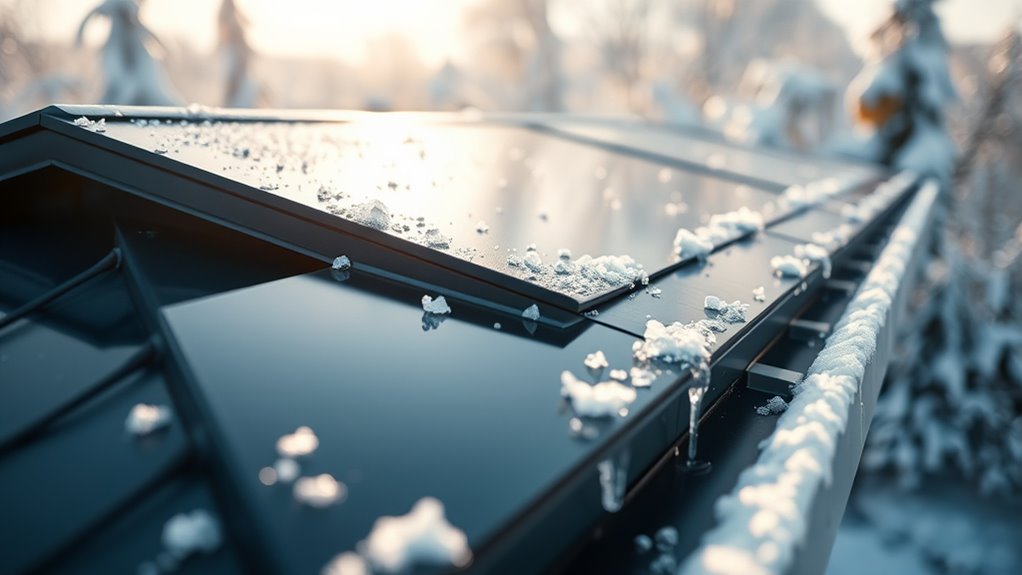
When creating a snow-resistant roof, it’s essential to understand how snow impacts structural integrity. You need to select the right materials and design features that can withstand heavy snow loads while facilitating efficient snow shedding. Proper insulation and ventilation also play an important role in preventing moisture issues. Understanding these elements will help you make informed decisions that can enhance your roof’s performance in winter conditions. What specific strategies will you implement to guarantee durability?
Understanding the Impact of Snow on Roofs
When you consider the impact of snow on roofs, it’s vital to understand the weight and thermal properties of accumulated snow. Snow accumulation can greatly affect roof stability, as each inch of snow adds considerable weight, potentially exceeding design limits. Factors such as moisture content and compaction further influence this weight; wet snow is heavier than dry snow. Understanding these dynamics is important for maintaining structural integrity and preventing catastrophic failures. Regular assessments during winter months can help you identify potential risks, ensuring your roof withstands the pressures of snow while preserving your freedom from the worry of structural damage.
Choosing the Right Roofing Materials
Choosing the right roofing materials is essential to guarantee your roof can withstand the challenges posed by heavy snow loads. Metal roofing options, such as standing seam or corrugated panels, provide excellent snow shedding capabilities, reducing the risk of accumulation. They’re durable and can last for decades with minimal maintenance. On the other hand, synthetic roofing materials, like polymer shingles, offer lightweight yet robust solutions that mimic traditional options while resisting moisture. Both choices deliver the strength and resilience needed for snowy climates, ensuring your home remains protected and your freedom from costly repairs is preserved. Make an informed decision for lasting security.
Designing for Snow Load Resistance
When designing for snow load resistance, you need to accurately calculate the potential snow load your roof will face. Considerations like roof pitch and material strength requirements are essential for ensuring structural integrity. Each of these factors plays an important role in preventing snow accumulation and potential roof failure.
Calculating Snow Load
Calculating snow load is essential for ensuring your roof can withstand the weight of accumulated snow. To do this, you’ll need to apply snow load formulas that consider various factors influencing load, such as ground snow load, roof slope, and thermal properties. The ground snow load varies by geographic region, so it’s important to reference local building codes. Additionally, the roof’s shape affects how snow accumulates; flat roofs may hold more snow than pitched ones. By accurately determining these variables, you can design a roof that meets safety standards and reduces the risk of structural failure during heavy snow events.
Roof Pitch Considerations
Although roof pitch is often overlooked, it plays an essential role in designing roofs that can effectively resist snow load. Proper roof angles can minimize snow accumulation, reducing the risk of structural failure. Consider these critical factors:
- Pitch: Steeper roofs encourage snow to slide off, preventing buildup.
- Orientation: Roofs facing prevailing winds may experience increased snow load.
- Material: The surface texture affects snow retention; smoother materials promote shedding.
- Local Climate: Understand your region’s snowfall patterns to tailor your design.
Material Strength Requirements
Selecting appropriate materials is vital for designing roofs that can withstand snow load effectively. You need to prioritize material durability to guarantee longevity under harsh conditions. Structural integrity is imperative; using materials like reinforced steel or engineered wood can enhance strength while minimizing weight. Consider the snow load your region typically experiences, as this will dictate the necessary material specifications. Confirm all components, from trusses to sheathing, meet or exceed local building codes. By choosing the right materials, you not only protect your investment but also promote a safe environment, allowing for freedom from worry during winter storms.
Proper Insulation and Ventilation
Proper insulation and ventilation are essential for maintaining a snow-resistant roof, as they help regulate temperature and moisture levels within the attic. To achieve peak performance, consider these factors:
Proper insulation and ventilation are crucial for a snow-resistant roof, regulating attic temperature and moisture effectively.
- Insulation types: Choose between fiberglass, foam board, or spray foam for effective thermal resistance.
- Ventilation strategies: Implement ridge vents, soffit vents, or gable vents for proper air circulation.
- Air sealing: Confirm all gaps are sealed to prevent heat loss.
- Moisture barriers: Install vapor barriers to reduce condensation and ice dam formation.
With these measures, you can enjoy a resilient roof that stands firm against winter’s challenges.
Implementing Effective Drainage Systems
Implementing effective drainage systems is essential to preventing snow accumulation and ice dam formation on your roof. A well-thought-out drainage design will facilitate efficient water management, directing meltwater away from critical areas. Consider using gutters and downspouts that are properly sized and strategically placed to enhance flow and minimize blockages. Regular maintenance, such as clearing debris, guarantees peak performance. Additionally, incorporating features like heated cables can further mitigate ice buildup. By prioritizing these elements, you empower your roof to withstand winter challenges and protect your home from potential damage caused by trapped moisture. Invest in drainage solutions for long-term resilience.
Preventing Ice Dams and Water Damage
Even with an effective drainage system in place, ice dams can still pose a significant threat to your roof’s integrity. To guarantee ice dam prevention and effective water damage mitigation, consider these critical actions:
- Insulate your attic to maintain consistent temperatures.
- Install heat cables on eaves and valleys to melt snow.
- Seal any air leaks that may contribute to ice formation.
- Ensure your roof design promotes proper drainage.
Regular Maintenance and Inspection Practices
To guarantee your roof performs at its best in snowy conditions, regular maintenance and inspections are essential. Conducting seasonal roof inspections allows you to identify potential weaknesses, while implementing effective debris removal strategies prevents moisture buildup and ice formation. By prioritizing these practices, you can greatly enhance your roof’s resistance to snow-related damage.
Seasonal Roof Inspections
While you might think of your roof as a sturdy shield against the elements, regular inspections are crucial for maintaining its integrity, especially before and after winter. Seasonal weather can wreak havoc, affecting roof longevity. To guarantee your roof remains resilient, consider these inspection practices:
- Check for missing or damaged shingles.
- Inspect flashing and seals for leaks.
- Assess gutter health to prevent water buildup.
- Look for signs of algae or moss growth.
Debris Removal Strategies
As winter approaches, maintaining a debris-free roof becomes essential to prevent moisture accumulation and potential damage. Regular inspections should identify common debris types, such as leaves, branches, and dirt. Utilize effective removal tools like roof rakes, soft brooms, or leaf blowers to clear these obstructions safely. Establish a consistent maintenance schedule, ideally before snowfall, to guarantee your roof remains in prime condition. Don’t forget to check gutters and downspouts, as they can also accumulate debris, leading to ice dams. By implementing these strategies, you’ll enhance your roof’s snow-resistance and prolong its lifespan, granting you peace of mind during harsh weather.
Upgrading Existing Roofs for Better Performance
Upgrading existing roofs for better performance can greatly enhance a home’s ability to withstand snow accumulation and reduce the risk of structural damage. Consider these essential improvements:
- Roof Reinforcement Techniques: Strengthen your roof’s frame to support heavier snow loads.
- Insulation Upgrades: Enhance thermal resistance to prevent ice dam formation.
- Proper Ventilation: Guarantee air circulation to maintain an even roof temperature.
- Quality Materials: Choose snow-resistant roofing materials for longevity and durability.
Frequently Asked Questions
How Much Snow Can My Roof Safely Support?
Your roof can safely support a snow load averaging 20-40 pounds per square foot, depending on its structure. It’s essential to assess your roof’s design and materials to guarantee it can handle potential weight.
What Are the Signs of Roof Snow Damage?
Like a bridge under pressure, your roof can show signs of snow damage through sagging, cracking, or leaks. Ice dams can exacerbate these issues, indicating excessive snow load that your roof may struggle to bear safely.
Can I Use a Flat Roof in Snowy Areas?
You can use a flat roof in snowy areas due to advantages like easier drainage. Opt for durable flat roof materials, such as TPO or PVC, designed to withstand heavy snow loads and prevent water accumulation.
How Often Should I Inspect My Roof for Snow Issues?
You should inspect your roof after every significant snowfall. Regular roof maintenance is essential, as snow accumulation can create hidden hazards. Keeping a vigilant eye prevents potential problems, ensuring your home remains a safe haven.
What Is the Cost of Snow-Resistant Roofing Options?
The cost of snow-resistant roofing options varies, typically ranging from $5 to $15 per square foot. A cost analysis of different roofing materials can help you choose the best option for durability and budget.