
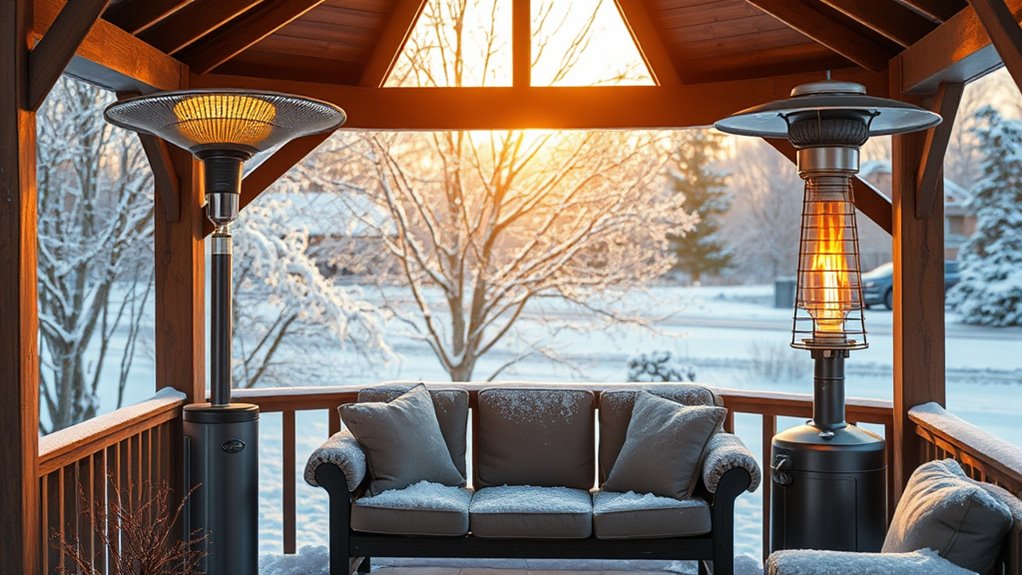
Imagine hosting a winter gathering in your gazebo, only to find it chilly and uncomfortable. Choosing between electric and gas heaters can greatly impact your experience. Each option has its own set of advantages and drawbacks that can affect heating efficiency, cost, and safety in your space. Understanding these factors is essential to making an informed decision that meets your specific needs. What will you prioritize when selecting the best heating solution for your gazebo?
Understanding Electric Heaters: Benefits and Drawbacks
When considering heating options for your winter gazebo, understanding electric heaters’ benefits and drawbacks is essential. Electric heater types vary, including infrared, ceramic, and convection models, each offering unique heating capabilities. Their installation is often straightforward, requiring minimal space and no venting, which grants you flexibility in placement. However, consider the energy costs and potential limitations in extreme cold. Electric heaters may not provide sufficient warmth for larger gazebos. For ideal performance, follow heater installation tips, ensuring proper placement and safety precautions. Balancing these factors will help you achieve a comfortable, inviting winter environment in your gazebo.
Exploring Gas Heaters: Advantages and Disadvantages
Gas heaters present a compelling alternative for heating your winter gazebo, offering distinct advantages and disadvantages compared to electric models. Understanding the pros and cons can help you choose the right fuel source for your needs.
| Advantages | Disadvantages |
|---|---|
| Quick heat-up time | Requires proper ventilation |
| Portable options available | Fuel source dependency |
| Lower operating costs | Higher initial investment |
| No need for electricity | Maintenance requirements |
| Versatile placements | Safety concerns |
Energy Efficiency Comparison
Although both electric and gas heaters can effectively warm your winter gazebo, their energy efficiency varies considerably.
- Energy Consumption: Electric heaters typically have lower energy consumption due to direct heating.
- Heating Capacity: Gas heaters often provide greater heating capacity, but can be less efficient in smaller spaces.
- Environmental Impact: Electric options may offer a cleaner energy source, depending on your electricity provider.
Understanding these factors can help you choose the right heater. Ultimately, considering your gazebo’s size and your heating needs will guide you toward a solution that maximizes efficiency without compromising comfort.
Cost Analysis: Electric vs. Gas Heating
While evaluating heating options for your winter gazebo, it’s essential to take into account the cost implications of both electric and gas heaters. The initial investment for electric heaters is typically lower, as installation is simpler and requires minimal infrastructure. However, operational costs can escalate depending on electricity rates. In contrast, gas heaters may demand a higher upfront cost due to installation complexities, yet they often offer lower operational costs over time, especially in colder climates. Ultimately, evaluating your specific usage patterns and local energy prices will help you make an informed decision that aligns with your budget and heating needs.
Safety Considerations for Your Gazebo Heating Options
When choosing a heating option for your gazebo, safety should be a top priority. Understanding the risks associated with different heaters can help you make an informed decision. Consider the following safety factors:
- Fire Hazards: Gas heaters can pose a higher risk of fire; make sure they’re placed away from flammable materials.
- Ventilation Requirements: Gas heaters require proper ventilation to prevent carbon monoxide buildup, which can be deadly.
- Electric Safety: While electric heaters are generally safer, confirm your electrical system can handle the load to avoid overheating.
Frequently Asked Questions
How Long Do Electric and Gas Heaters Typically Last?
Electric heaters generally last 10-15 years, while gas heaters can last 20-25 years. For ideal lifespan comparison, follow maintenance tips like regular cleaning and inspections, ensuring efficient performance and longevity for your heating solution.
Can I Use a Space Heater in My Gazebo?
Absolutely, you can use a space heater in your gazebo. Just guarantee proper gazebo insulation and prioritize space heater safety by keeping flammable materials away, maintaining ventilation, and monitoring the heater’s operation to avoid any mishaps.
What Size Heater Do I Need for My Gazebo?
To determine heater sizing for your gazebo, calculate the square footage and consider insulation levels. A well-insulated gazebo requires less heating power, while larger, poorly insulated spaces need more. Aim for 10-20 BTUs per square foot.
Are There Portable Options for Both Electric and Gas Heaters?
Sure, you’ve got plenty of choices! Portable electric heaters can easily warm your space, while portable gas options bring a rustic charm. Just remember, safety first—no one wants a “warm” surprise in the gazebo!
How Do Weather Conditions Affect Heater Performance?
Weather conditions considerably impact heater performance. Extreme temperature fluctuations can reduce heater efficiency, as both electric and gas models struggle to maintain consistent heat when faced with harsh conditions or rapid changes in outdoor temperatures.