
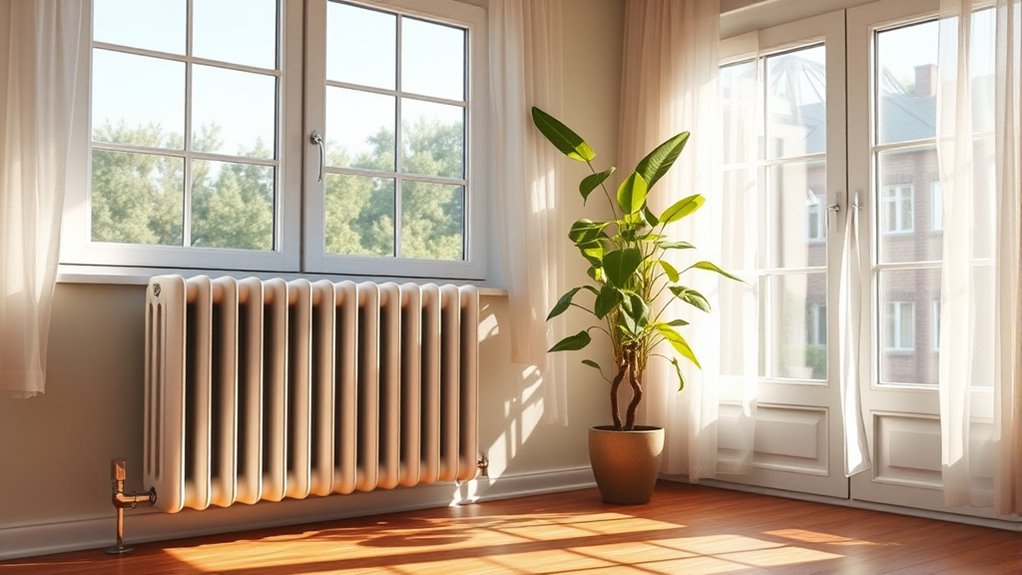
When you heat your home, ensuring proper ventilation is essential for safety and comfort. Without adequate airflow, harmful gases can accumulate, leading to health risks. You might not notice the subtle signs of poor ventilation until issues arise. Understanding the importance of effective ventilation systems can make a significant difference in your indoor environment. Let’s explore how to identify these risks and improve your home’s air quality effectively.
The Importance of Ventilation in Heating Systems
When you heat your home, guaranteeing proper ventilation is vital for both safety and efficiency. Different ventilation types, such as natural and mechanical, play significant roles in maintaining ideal air circulation. Natural ventilation relies on passive airflow through windows and vents, while mechanical systems actively exchange stale air with fresh air. Proper ventilation prevents the buildup of harmful gases and assures that heated air is distributed evenly throughout your space. By enhancing air circulation, you can create a comfortable environment that supports your freedom to enjoy your home without health risks. Prioritizing ventilation is key to effective heating.
Common Risks of Poor Ventilation
Poor ventilation can lead to several significant risks that compromise both health and comfort in your home. Inadequate airflow can result in the buildup of pollutants, allergens, and moisture, severely impacting indoor air quality. This environment can exacerbate respiratory issues and promote mold growth, creating further health hazards. Additionally, poor ventilation may lead to excessive heat retention, causing discomfort and increasing energy costs. Implementing effective ventilation strategies is essential to mitigate these risks, ensuring that fresh air circulates freely. By prioritizing proper airflow, you can create a healthier, more comfortable living space while protecting your well-being.
Signs Your Home Needs Better Airflow
If you’re noticing stale or musty odors in your home, it could indicate inadequate airflow. Additionally, uneven temperature distribution and excessive humidity levels are clear signs that your ventilation system needs improvement. Addressing these issues is essential for maintaining a healthy indoor environment.
Stale or Musty Odors
While it might be easy to overlook, stale or musty odors in your home are often clear indicators that your space lacks proper airflow. These unpleasant smells can point to stagnant air and inadequate ventilation, which may affect your health and comfort. To address this issue, consider evaluating your ventilation system and ensuring proper air exchange.
| Indicator | Possible Causes | Recommended Action |
|---|---|---|
| Stale Air | Blocked vents | Clean and clear pathways |
| Musty Smells | Mold and mildew growth | Improve humidity control |
| Odor Persistence | Insufficient airflow | Increase ventilation |
Uneven Temperature Distribution
When you notice that certain rooms in your home feel noticeably warmer or cooler than others, it often signals the need for improved airflow. This uneven temperature distribution can create uncomfortable temperature gradients and hinder effective air circulation. To assess your situation, look for these signs:
- Persistent cold spots or hot zones
- Difficulty maintaining a consistent temperature
- Drafty areas near doors or windows
- Overworking heating systems
- High energy bills
Addressing these issues can enhance comfort and efficiency, ensuring your home’s heating system performs at its best. Better airflow not only stabilizes temperatures but also contributes to a healthier living environment.
Excessive Humidity Levels
Excessive humidity levels can create an environment conducive to mold growth and respiratory issues, indicating that your home may require better airflow. Signs you might notice include condensation on windows, musty odors, and even peeling paint. Effective humidity control and moisture management are essential for a healthy living environment.
Here’s a quick reference table to assess your home:
| Sign of Humidity | Possible Cause | Recommended Action |
|---|---|---|
| Condensation | Poor ventilation | Increase airflow |
| Musty odors | Mold growth | Use dehumidifiers |
| Peeling paint | Excess moisture | Improve insulation |
| Allergies | Dust mites, mold | Regular cleaning |
| Stale air | Lack of airflow | Open windows or vents |
Tips for Improving Indoor Air Quality
To maintain a healthy indoor environment, it is essential to prioritize air quality, especially during the heating season. Here are some effective tips to enhance your indoor air quality:
- Use air purifiers to filter out pollutants.
- Incorporate indoor plants, which naturally improve air quality.
- Regularly clean and replace HVAC filters.
- Guarantee proper ventilation by opening windows periodically.
- Avoid using harsh chemicals for cleaning.
Choosing the Right Heating System for Ventilation
Selecting the right heating system is essential, as it directly impacts both comfort and air quality in your home. Focus on energy efficiency to lower utility bills while maintaining a warm environment. Consider system compatibility with your existing ventilation setup, ensuring effective air circulation. Systems like heat pumps or high-efficiency furnaces are often ideal, as they work well with various ventilation strategies. Evaluate your heating needs based on room size and layout, and balance that with the ventilation requirements. By choosing wisely, you’ll create a harmonious atmosphere that promotes health and comfort in your living space, ultimately granting you greater freedom.
Regular Maintenance for Optimal Performance
To guarantee your heating system operates efficiently, regular maintenance is essential. You should check air filters frequently, inspect ductwork for leaks or blockages, and schedule professional servicing at least once a year. These steps will help maintain peak performance and prolong the lifespan of your heating system.
Check Air Filters
One of the most essential steps in ensuring proper ventilation when heating is regularly checking air filters. Regular maintenance not only improves air quality but also enhances your system’s efficiency. Different filter types can affect your home environment considerably. Here’s what to take into account:
- Change filters every 1-3 months
- Use high-efficiency particulate air (HEPA) filters for better air quality
- Choose filters that match your system specifications
- Inspect filters monthly for dust accumulation
- Clean reusable filters as per manufacturer guidelines
Inspect Ductwork Regularly
Regular inspection of ductwork is crucial for maintaining ideal heating performance and efficiency. You should conduct a thorough duct inspection at least once a year to identify any leaks, blockages, or damage. This guarantees that your system operates smoothly and helps prevent energy loss. During your inspection, perform an airflow assessment to evaluate how well air is circulating through your ducts. Proper airflow is essential for effective heating; poor circulation can lead to uneven temperatures and increased energy costs. By prioritizing duct inspections, you’re investing in the longevity and efficiency of your heating system while assuring a comfortable living environment.
Schedule Professional Servicing
After ensuring that the ductwork is in good condition, scheduling professional servicing is the next step for ideal heating performance. Regular maintenance keeps your system running efficiently and safely. Here’s what to expect during a professional inspection:
- Thorough system evaluation
- Cleaning of essential components
- Identification of potential issues
- Calibration for peak performance
- Safety checks on gas connections
Frequently Asked Questions
How Does Ventilation Affect Energy Efficiency in Heating Systems?
Think of ventilation as the unsung hero in your heating system. The right ventilation types can improve heating efficiency, reducing energy costs while maintaining comfort. Poor airflow, however, can lead to wasted energy and increased bills.
Can I Use Air Purifiers to Improve Ventilation?
Yes, air purifiers can enhance indoor air circulation, but their effectiveness in improving ventilation is limited. They filter pollutants rather than ventilate, so consider combining them with fresh air sources for ideal results.
What Are the Best Plants for Enhancing Indoor Air Quality?
You might think air purifying plants are just for show, but they’re actually heroes in indoor gardening! Spider plants, peace lilies, and snake plants improve air quality while adding charm to your space.
How Often Should I Change My HVAC Filters?
You should change your HVAC filters every 1 to 3 months, depending on usage. Regular filter maintenance keeps indoor air quality high, ensuring efficient airflow and reducing allergens that can affect your health.
Are There Specific Ventilation Systems for Small Apartments?
Yes, there are specific ventilation types for small apartments, such as exhaust fans, balanced systems, or heat recovery ventilators. These systems enhance apartment heating efficiency while maintaining indoor air quality, ensuring a comfortable living environment.