
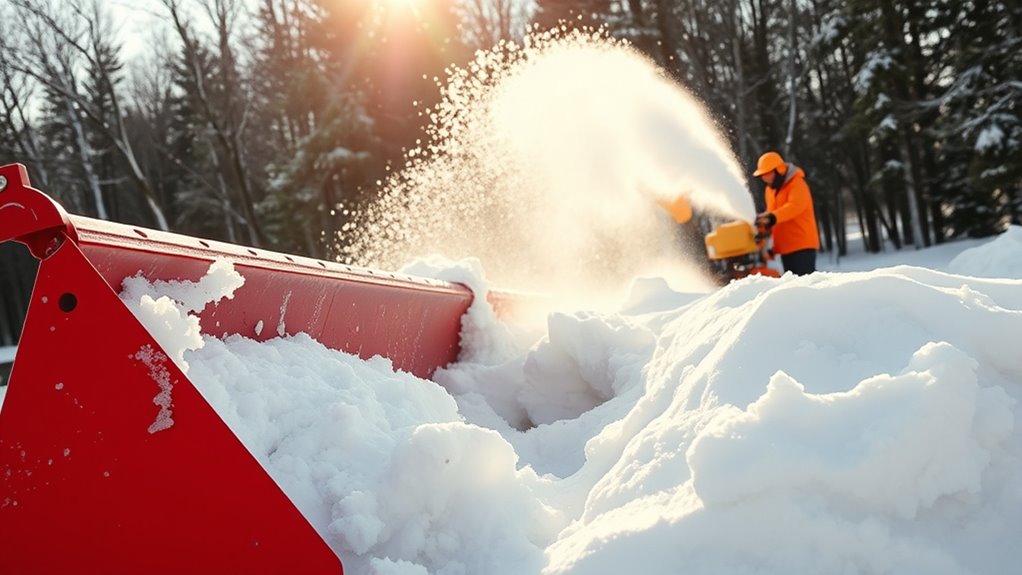
Think of snow removal as a strategic game where efficiency is key. You need the right tools and techniques to clear your space quickly and safely. From understanding different snow types to mastering shoveling techniques, each step matters. You’ll also want to contemplate maintenance of your equipment to keep it in top shape. Ready to explore the best practices for a quicker, safer snow removal process? Let’s get started.
Understanding Snow Types and Their Impact on Removal
When it comes to snow removal, understanding the different types of snow can make all the difference in your efficiency. Snow density and snow moisture are key factors that affect how you tackle the job. Light, fluffy snow has low density and moisture content, making it easier to shovel or blow away. On the other hand, wet, heavy snow is more challenging due to higher density and moisture, requiring more effort and possibly different tools. Knowing these characteristics helps you choose the right techniques and tools, optimizing your snow removal process. In turn, this can save you time and energy, allowing you to enjoy your winter without the burden of excessive snow clearing. So, pay attention to these factors!
Essential Tools for Efficient Snow Clearing
To clear snow efficiently, you’ll need the right tools at your disposal. Snow shovels and rakes are essential for manual removal, while snow blowers can save you time and effort. Don’t forget to stock up on salt to help prevent ice buildup and guarantee safer walkways.
Snow Shovels and Rakes
While winter can bring beautiful scenery, it also demands effective snow removal tools like shovels and rakes. Choosing the right shovel materials is essential for efficiency. Lightweight plastic shovels are great for light snow, while metal options handle icy conditions better. Don’t forget about the ergonomic designs that can reduce strain on your back.
When it comes to rakes, look for designs that suit your snow type. Wide, flat rakes work well for heavy accumulations, while narrower ones are perfect for precision. The right rake can help you tackle hard-to-reach areas without hassle. Investing in quality shovels and rakes will not only speed up your snow-clearing process but also give you the freedom to enjoy winter’s beauty without stress.
Snow Blowers and Salt
Snow blowers and salt are two vital tools that can dramatically improve your snow-clearing efficiency. When you invest in a quality snow blower, you’ll save time and energy, easily tackling heavy snowfalls. To maximize snow blower efficiency, keep it well-maintained and clear any obstacles before use.
On the other hand, salt is key for preventing ice buildup. Use effective salt application techniques by spreading it evenly across walkways and driveways to guarantee quick melting. Remember to apply salt before the snow falls for best results. Combining these tools not only speeds up the snow removal process but also enhances safety, giving you the freedom to move about with ease during winter weather. Embrace these strategies for an efficient winter!
The Best Techniques for Shoveling Snow
Shoveling snow can be an overwhelming task, but using the right techniques can make it much easier and safer. Start by selecting an ergonomic shovel that suits your height, as this reduces strain on your back. Use proper shoveling techniques: bend your knees, not your back, and lift with your legs. Push the snow instead of lifting it whenever possible. Work in small sections, throwing the snow to the side rather than over your shoulder to minimize strain. Take breaks as needed to avoid fatigue, and stay hydrated. By incorporating these ergonomic strategies, you’ll tackle snow removal efficiently, keeping freedom from injury while enjoying the winter landscape. Embrace these methods, and shoveling will feel less overwhelming!
Using a Snowblower Effectively
If you’re looking to speed up the snow removal process, using a snowblower can be a game changer. First, make certain you perform regular snowblower maintenance; check the oil level, clean the spark plug, and inspect the belts before each use. This not only prolongs the life of your machine but also guarantees it runs efficiently when you need it most.
When operating your snowblower, prioritize snowblower safety. Always wear protective gear, and never attempt to clear a jam with your hands—turn it off first. Aim the discharge chute away from driveways, sidewalks, and people. By following these tips, you can enjoy the freedom of a clear pathway without the back-breaking labor of shoveling. Embrace the efficiency of your snowblower!
Salt vs. Sand: Choosing the Right Ice Melt
When it comes to melting ice, you need to weigh the effectiveness of salt versus sand. Consider how each option impacts the environment and your budget, as these factors can influence your choice. Let’s break down what you need to know to make an informed decision.
Effectiveness of Ice Melt
While both salt and sand serve as popular ice melt options, their effectiveness varies considerably based on the conditions and intended use. Salt, a common ice melt type, works quickly to lower the freezing point of water, making it ideal for immediate melting. However, its effectiveness diminishes in extremely low temperatures. Sand, on the other hand, doesn’t melt ice but provides traction, making it useful for slip prevention. When choosing between the two, consider your application methods; use salt for rapid melting on walkways and driveways, while sand is better for areas where slipping is a concern. Balancing these ice melt types can help you maintain safety and freedom during winter months.
Environmental Impact Considerations
Considering the environmental impact is essential when choosing between salt and sand for ice melt. Salt can be effective, but it often harms plants, soil, and water sources. If you’re looking for sustainable practices, sand offers a safer alternative. It provides traction without the negative effects on your environment.
When selecting an ice melt, think about the long-term consequences. Environmental alternatives, like sand, can help maintain your property without jeopardizing local ecosystems. Additionally, sand is generally more cost-effective and can be reused, further supporting sustainability. By choosing wisely, you can protect your surroundings while keeping your pathways safe. Ultimately, the decision should align with your commitment to eco-friendly practices and preserving nature’s balance.
Cost Analysis and Budgeting
Understanding the costs involved in choosing between salt and sand for ice melt can save you money and hassle. When you’re planning your budget allocation, consider that rock salt typically costs less upfront but may require more frequent application, especially in extreme conditions. On the other hand, sand is often cheaper in bulk, but it doesn’t melt ice as effectively and can lead to more cleanup.
To implement cost-saving strategies, weigh the long-term benefits against immediate costs. If you live in an area with heavy snowfall, investing in a more effective ice melt might save you time and money in the long run. Ultimately, each option has its pros and cons, so choose wisely to maintain your budget and freedom.
Creating a Snow Removal Plan
Creating a snow removal plan is essential for staying ahead of winter weather challenges. By establishing a clear strategy, you can minimize disruptions and maintain your freedom during snowy days. Start by evaluating your property and deciding on effective snow removal strategies. Then, set up snow clearing schedules that fit your routine and prioritize areas like driveways and walkways.
- Identify necessary tools and equipment for efficient snow removal.
- Designate specific times for clearing snow after each snowfall.
- Consider enlisting help from neighbors or local services if needed.
With a solid plan in place, you’ll be ready to tackle winter’s challenges and enjoy the season without the stress of unexpected snowfalls.
Tips for Clearing Roofs and Gutters
When clearing snow from your roof and gutters, safety should be your top priority. Use proper ladder techniques and guarantee you have the right tools to make the job efficient. This will help prevent accidents and make the clearing process smoother.
Safe Ladder Techniques
To safely clear snow from roofs and gutters, it’s essential to use proper ladder techniques. Prioritize ladder stability and positioning to prevent accidents. Here are some key tips:
- Position the ladder on a flat surface: Make sure the ground is level to maintain stability.
- Use the 4-to-1 rule: For every four feet of height, place the base of the ladder one foot away from the wall for ideal positioning.
- Secure the ladder: Use ladder stabilizers or tie it off to prevent it from slipping while you work.
Tools for Efficient Clearing
Having the right tools can make all the difference in efficiently clearing snow from roofs and gutters. Consider investing in ergonomic tools designed for comfort and ease of use. Snow rakes with extendable handles let you reach high areas without risking a fall. Look for snow removal innovations like heated gutter cables, which help prevent ice build-up and reduce your workload. A sturdy ladder is essential, but don’t forget protective gear like gloves and goggles to keep you safe. For those hard-to-reach spots, a snow blower can save you time and energy. By utilizing these tools, you’ll not only clear snow more effectively but also enjoy the freedom that comes with a well-maintained home.
Safety Precautions During Snow Removal
While snow removal can be a straightforward task, it’s essential to prioritize safety to prevent injuries. Before heading out, make sure you’re prepared for the weather conditions and equipped with the right personal protective equipment. Here are some safety precautions to keep in mind:
Prioritize safety during snow removal by dressing appropriately and using the right tools to prevent injuries.
- Dress in layers to maintain warmth and flexibility.
- Use ergonomic tools to reduce strain on your body and prevent injuries.
- Stay hydrated, even in cold weather, to keep your energy levels up.
Maintenance of Snow Removal Equipment
Proper maintenance of your snow removal equipment is essential for ensuring its efficiency and longevity. Start by establishing a maintenance schedule that includes regular equipment inspection. Check for any signs of wear and tear, like frayed belts or rusted parts. Clean your equipment after each use to prevent snow and ice buildup, which can lead to damage. Make sure fluids are topped off and filters are clean to keep everything running smoothly. Don’t forget to sharpen blades regularly to enhance performance. If you notice any unusual sounds or reduced efficiency, address those issues immediately. By staying proactive with maintenance, you can enjoy the freedom of reliable snow removal without unexpected breakdowns. Your equipment will thank you for it!
When to Call in Professional Help
Knowing when to call in professional help for snow removal can save you time, effort, and potential injury. Recognizing the signs of urgency is essential. If you notice any of the following, it might be time to seek a professional assessment:
- Heavy snowfall accumulating beyond your equipment’s capability
- Icy conditions that pose a slip hazard
- Large areas to clear, such as driveways or commercial lots
Don’t underestimate the risks involved in snow removal. Professionals have the right tools and expertise to handle challenging conditions safely and efficiently. By knowing when to get help, you can maintain your freedom and avoid unnecessary stress during winter storms. Remember, your safety is paramount, and sometimes, it’s best to leave it to the experts.
Frequently Asked Questions
How Can I Prevent Snow From Sticking to My Driveway?
Want to keep snow from sticking to your driveway? Consider using driveway coatings or investing in heated driveways. These options help prevent snow accumulation, giving you the freedom to enjoy a clear surface all winter long.
What Time of Day Is Best for Snow Removal?
The best time for snow removal is early morning for efficiency, as it prevents ice formation. However, if you prefer evening convenience, clear the snow promptly to avoid accumulation and make your mornings easier.
Are There Eco-Friendly Alternatives to Traditional Ice Melts?
You’ve got eco-friendly options like sand, sawdust, or even coffee grounds that melt ice without harming the environment. These alternative materials offer a natural solution, keeping your surfaces safe while preserving nature’s beauty.
How Do I Properly Store My Snow Removal Equipment?
To properly store your snow removal equipment, clean it thoroughly, dry it completely, and check for any maintenance needs. Keep it in a cool, dry place, away from moisture and extreme temperatures for maximum longevity.
Can I Use a Leaf Blower for Snow Removal?
You can use a leaf blower for snow removal, but its effectiveness varies. For light, powdery snow, it can enhance your snow removal efficiency. Just remember, heavy snow might require more robust equipment.