
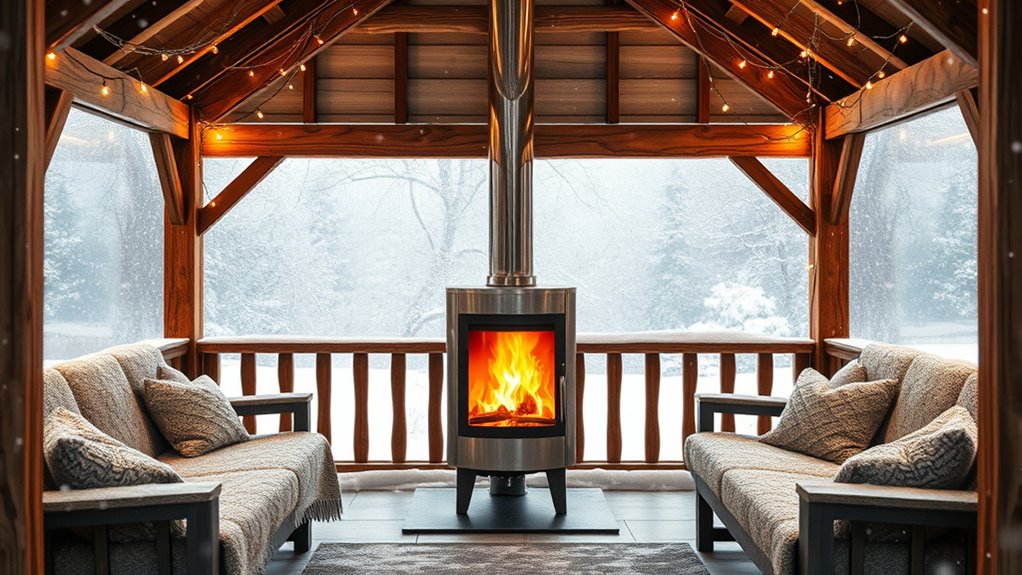
If you’re looking to make your winter gazebo more inviting, adding a stove can be a practical solution. You’ll want to take into account the type of stove that best fits your needs and the structure of your gazebo. Proper installation and safety measures are essential to guarantee a warm and cozy environment. Understanding the various elements involved will help you create a comfortable space that you can enjoy throughout the colder months. Let’s explore the details further.
Choosing the Right Type of Stove
When considering how to add a stove to your winter gazebo, what type of stove suits your needs best? You’ll typically choose between electric vs. wood burning options. Electric stoves offer convenience and easy installation, while wood-burning stoves provide a cozy, rustic feel and can be more cost-effective in the long run. Think about stove size—ensure it fits your gazebo’s dimensions and heating requirements. A compact stove may work for smaller spaces, while larger models can heat bigger areas more effectively. Ultimately, your choice depends on your lifestyle, aesthetic preferences, and how much freedom you want in heating options.
Assessing Your Gazebo’s Structure
Before adding a stove to your winter gazebo, you need to assess its structure carefully. Start by evaluating the durability of the materials, checking for proper ventilation, and inspecting the weight capacity. Ensuring your gazebo can handle a stove is essential for safety and functionality.
Evaluate Material Durability
To guarantee your winter gazebo can safely accommodate a stove, it’s crucial to evaluate the durability of its materials. Start with careful material selection; verify your gazebo uses robust materials that can withstand heat and moisture. Conduct durability testing on wood, metal, and other components to check for wear and tear. Look for signs of rot or rust, and assess how these materials respond to temperature changes. A strong structure not only supports the stove but also keeps your space inviting and safe. Prioritizing material durability will help you enjoy your winter gazebo without compromising on comfort or safety.
Check Ventilation Requirements
Guaranteeing proper ventilation is essential for your winter gazebo, especially when adding a stove. You’ll want to assess the ventilation types available, such as passive and active options, to maintain ideal air circulation. Consider installing vents or windows that can easily be opened to allow fresh air in while letting smoke escape. Also, make sure that your stove’s exhaust system is properly connected to prevent harmful fumes from lingering inside. By prioritizing ventilation, you not only enhance comfort but also promote safety, allowing you to enjoy your winter gazebo without compromising your well-being.
Inspect Weight Capacity
While you’re excited about adding a stove to your winter gazebo, it’s vital to inspect the weight capacity of its structure. Start by checking the manufacturer’s specifications for maximum load limits. Confirm the gazebo’s stability can support the stove’s weight and any additional items, like firewood. Proper weight distribution is important; place the stove in a central location to balance the load effectively. If your gazebo is older or has seen wear, consider reinforcing its framework. This careful assessment helps prevent accidents, making sure you enjoy your winter retreat without worrying about safety. Your freedom to relax depends on a sturdy structure!
Ensuring Proper Ventilation
When planning to add a stove to your winter gazebo, it’s essential to prioritize proper ventilation to prevent smoke buildup and guarantee a safe environment. Consider installing ventilation systems that promote ideal air flow, allowing fresh air to circulate while expelling harmful gases. Make sure to position vents strategically, ideally near the stove, to enhance efficiency. You might also explore options like windows or exhaust fans to help facilitate air exchange. By ensuring adequate ventilation, you’ll create a comfortable and inviting space where you can enjoy your stove without worrying about safety hazards or discomfort from poor air quality.
Safety Considerations for Stove Installation
Before you begin the installation of a stove in your winter gazebo, it’s important to take into account various safety factors to guarantee a secure setup. First, verify your stove meets all stove safety standards and is suitable for outdoor use. Keep flammable materials away from the stove, especially during winter when hazards can increase. Make sure the stove is placed on a non-combustible surface to prevent fires. Additionally, install carbon monoxide detectors to protect against gas risks. Always have a fire extinguisher nearby, and familiarize yourself with its use to promote a safe and enjoyable winter experience in your gazebo.
Fuel Options for Your Stove
When choosing a fuel source for your stove, you have a few solid options to evaluate. Wood-burning stoves bring a rustic charm and efficient heating, while propane and natural gas offer convenience and ease of use. Each option has its benefits, so think about what fits best with your needs and preferences.
Wood-Burning Stoves
While considering a wood-burning stove for your winter gazebo, it’s important to choose the right fuel options to guarantee efficient heating. Opting for seasoned hardwoods, like oak or maple, offers significant wood burning benefits, such as longer burn times and higher heat output. Make sure to store your wood properly to maintain its quality. When installing your stove, follow essential installation tips, like ensuring proper ventilation and clearance from flammable materials. By selecting the right fuel and carefully installing your stove, you’ll create a cozy, inviting space to enjoy the winter months with freedom and warmth.
Propane and Natural Gas
If you’re looking for a convenient heating solution for your winter gazebo, propane and natural gas stoves are excellent options. Propane offers portability and flexibility, making it ideal for those who want to move their stove around. Just remember to follow propane safety guidelines, ensuring proper ventilation and regular inspections. On the other hand, natural gas efficiency means you’ll enjoy consistent heating without the need for tank refills. Both fuel types provide effective warmth, but consider your specific needs and preferences before choosing. Whichever you select, you’ll create a cozy retreat to enjoy all winter long!
Installing the Stove: Step-by-Step Guide
Installing a stove in your winter gazebo can transform the space into a cozy retreat, and following a clear step-by-step guide makes the process straightforward. First, determine the ideal stove placement, making sure it’s away from flammable materials and easily accessible. Next, gather your installation tools, including a drill, screwdriver, level, and measuring tape. Secure the stove according to the manufacturer’s guidelines, checking for proper ventilation and clearance. Connect gas lines or electrical sources carefully, adhering to safety codes. Finally, test the stove to verify it operates correctly, and enjoy your warm, inviting gazebo all winter long!
Adding Accessories for Comfort and Functionality
Once you’ve set up your stove, enhancing your winter gazebo with the right accessories can further elevate your comfort and functionality. Consider adding cozy blankets for warmth and outdoor rugs to define your space. These items not only boost comfort but also add a charming aesthetic.
| Accessory | Purpose | Benefit |
|---|---|---|
| Cozy Blankets | Provide warmth | Create a snug atmosphere |
| Outdoor Rugs | Define seating areas | Enhance visual appeal |
| Decorative Pillows | Add comfort and style | Make seating more inviting |
With these additions, your gazebo will become a cozy retreat.
Maintenance Tips for Your Winter Stove
While enjoying the warmth of your winter stove, it’s essential to keep it well-maintained to guarantee safety and efficiency. Start by cleaning the stove regularly, removing ash and debris to prevent buildup. Check the chimney for obstructions and make sure proper ventilation to promote winter safety. Inspect the seals and gaskets for wear and replace them as needed to maintain peak performance. Don’t forget to schedule an annual professional inspection to catch any hidden issues early. By prioritizing stove maintenance, you’ll enjoy a cozy atmosphere while making sure your winter gazebo remains a safe haven against the cold.
Enhancing the Ambiance of Your Gazebo
To create a warm and inviting atmosphere in your winter gazebo, consider incorporating various elements that enhance both comfort and style. Cozy lighting, such as string lights or lanterns, can transform the space into a magical retreat. Add decorative elements like plush cushions, throws, or seasonal decor to make it feel more personal and welcoming.
| Element | Description |
|---|---|
| Cozy Lighting | Soft, warm lights to create warmth |
| Decorative Items | Personal touches to enhance style |
| Comfort Features | Cushions and throws for relaxation |
These simple additions will elevate your gazebo experience, making it a perfect escape.
Frequently Asked Questions
Can I Use an Electric Stove in My Gazebo?
Sure, you can use an electric stove in your gazebo! Just make certain you’ve taken safety precautions and improved gazebo insulation to keep things cozy and secure during chilly gatherings. Enjoy your space safely!
How Much Space Do I Need Around the Stove?
You’ll need at least 36 inches of safety clearance around your stove for proper stove placement. This space guarantees airflow and reduces fire risk, allowing you to enjoy your winter gazebo comfortably and safely.
What Are the Best Materials for a Stove Pad?
For a stove pad, choose fireproof materials like concrete, brick, or tile—each is heat resistant and durable. These options guarantee safety, protect your gazebo, and provide freedom to enjoy warmth without worry.
Are There Specific Permits Required for Installation?
Yes, you’ll likely need specific permits for installation. Check local installation regulations and verify compliance, as safety inspections may be required. It’s important to prioritize safety while enjoying your freedom to enhance your winter gazebo.
Can I Use My Stove During a Snowstorm?
You can use your stove during a snowstorm, but take safety precautions. Guarantee proper ventilation, keep flammable materials away, and have a snowstorm preparedness plan. Stay warm and enjoy the cozy atmosphere while staying safe!