
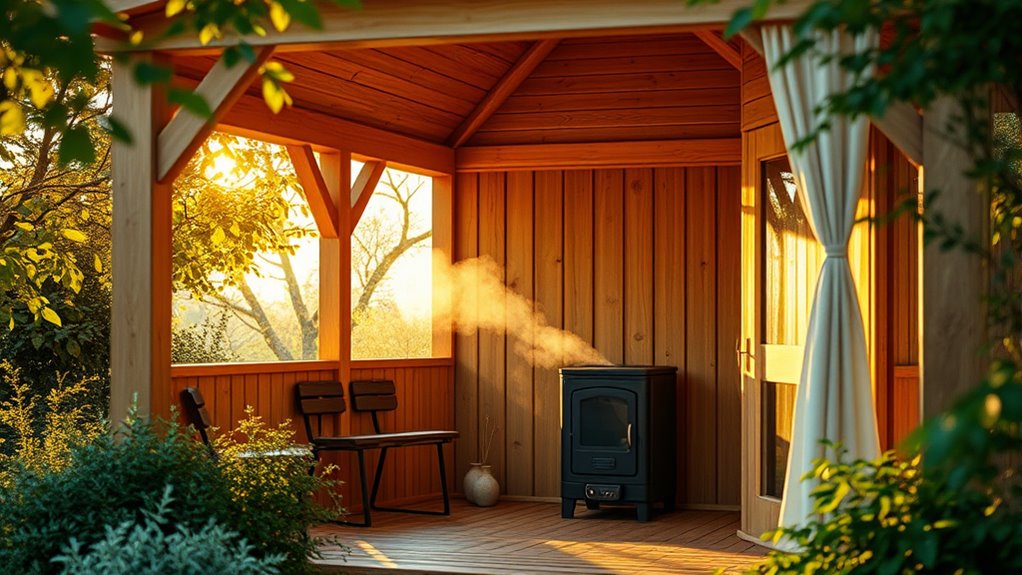
To effectively prevent heat loss in your sauna gazebo, it’s essential to contemplate various strategies that enhance insulation and minimize drafts. Selecting the right insulation materials is just the beginning. You’ll also need to address gaps, install appropriate doors, and optimize your ventilation system. Each decision impacts the overall heat retention. Understanding these factors can greatly enhance your sauna experience, but there are more techniques to explore that could further improve efficiency.
Choose the Right Insulation Materials
When it comes to preventing heat loss in your sauna gazebo, selecting the right insulation materials is essential. You’ll want to take into account various insulation types, such as fiberglass, foam boards, or mineral wool, each with distinct thermal properties. Fiberglass is cost-effective but may require additional thickness to meet your insulation needs. In contrast, foam boards offer higher R-values in thinner applications, making them ideal for tighter spaces. Mineral wool is fire-resistant, providing added safety. When determining insulation thickness, aim for a balance between efficiency and space constraints. Thicker insulation often results in better heat retention, but you must verify it fits within your gazebo’s structural limits. Thoughtful selection will enhance your sauna experience and maintain a comfortable atmosphere.
Seal Gaps and Cracks
To effectively prevent heat loss in your sauna gazebo, you’ll need to inspect for any air leaks that may compromise insulation. Identifying these gaps and cracks is essential, as even small openings can lead to significant heat loss. Once identified, using weatherstripping materials can provide a simple yet effective solution to seal these vulnerabilities.
Inspect for Air Leaks
Although you may have invested in a high-quality sauna gazebo, any unsealed gaps and cracks can greatly undermine its thermal efficiency. Start with air leak detection to identify potential problem areas. Inspect around windows, doors, and seams where materials meet. If you notice cold drafts, those spots likely need attention. Use a candle or smoke stick to reveal airflow, as it can highlight even the smallest leaks. Once you’ve pinpointed these areas, consider effective sealing solutions, such as caulk or foam insulation, to enhance airtightness. Taking these steps not only improves heat retention but also contributes to a more comfortable sauna experience, allowing you to enjoy your space fully without unnecessary heat loss.
Use Weatherstripping Materials
After identifying air leaks around your sauna gazebo, addressing these gaps and cracks is essential for improving heat retention. One effective solution is to utilize various weatherstripping types, such as adhesive-backed foam, V-strip, or door sweeps. Each type serves a specific purpose depending on the location and size of the gap. When selecting materials, consider durability and temperature resistance, as these will impact their effectiveness.
For installation techniques, verify surfaces are clean and dry to promote adhesion. Measure gaps accurately, cut weatherstripping to size, and apply it firmly, checking for a tight seal. Regular maintenance and replacement of worn weatherstripping can greatly enhance the thermal efficiency of your sauna, allowing you to enjoy a cozy atmosphere without unnecessary heat loss.
Install a Heat Retention Door
To effectively reduce heat loss in your sauna gazebo, selecting the right door material is essential. Insulated, durable materials can markedly enhance thermal retention, while proper installation techniques guarantee an airtight seal. By focusing on these aspects, you can maximize your sauna’s efficiency and comfort.
Door Material Selection
When selecting door materials for your sauna gazebo, it is crucial to prioritize heat retention properties to maximize energy efficiency. Opt for materials like insulated fiberglass or solid wood, as they offer superior thermal performance compared to standard options. Consider the door design aesthetics; a well-designed door not only enhances the overall look but also contributes to energy efficiency. Look for features such as double-glazing or weather stripping, which help minimize heat loss. The right choice in materials can dramatically impact your sauna experience, ensuring that heat stays where it belongs. By investing in quality materials, you can enjoy a warmer, more comfortable environment while maintaining the freedom to indulge in your sauna retreat without excessive energy costs.
Proper Installation Techniques
While selecting the right door material is essential, proper installation techniques are equally important to guarantee ideal heat retention in your sauna gazebo. Begin by adhering to installation guidelines that specify the correct measurements for your door frame. Verify that the door fits snugly to prevent air leaks. Focus on insulation placement around the edges; using weather stripping can enhance thermal efficiency. Pay attention to hinges and seals, as these can greatly impact heat retention. Make sure to caulk any gaps, which can compromise your sauna’s efficiency. Finally, consider a door sweep for added protection against drafts. By following these techniques, you’ll maintain a cozy atmosphere, allowing you to enjoy the freedom of your sauna experience without losing precious heat.
Use Thermal Curtains or Blinds
Installing thermal curtains or blinds can greatly enhance heat retention in your sauna gazebo. These specially designed window treatments provide significant thermal curtain benefits, allowing you to enjoy a more comfortable environment while minimizing heat loss. By reducing drafts and insulating windows, you’ll experience notable energy savings.
| Aspect | Impact |
|---|---|
| Heat Retention | Reduces heat loss |
| Energy Efficiency | Lowers utility costs |
| Comfort Level | Enhances sauna experience |
Choosing the right thermal curtains or blinds can transform your sauna gazebo into an energy-efficient oasis. With various styles available, you can express your freedom of choice while ensuring your space remains cozy and inviting. Invest in thermal options for a better sauna experience.
Optimize Ventilation
Enhancing ventilation in your sauna gazebo is crucial for maintaining a comfortable environment and preventing excessive heat loss. Effective ventilation systems guarantee that air circulation is balanced, allowing fresh air to enter while expelling stale, humid air. This process not only enriches your sauna experience but also reduces the risk of mold and mildew, which can thrive in damp conditions.
To achieve ideal air circulation, consider installing adjustable vents or fans that can be controlled based on your preferences. Additionally, positioning windows to facilitate cross-ventilation can greatly improve airflow. By implementing these strategies, you’ll create a sauna that feels inviting and maintains its temperature, granting you the freedom to enjoy your space without the worry of excessive heat loss.
Maintain a Consistent Temperature
To maintain a consistent temperature in your sauna gazebo, it’s essential to closely monitor and control heat sources. Effective temperature regulation involves using a reliable thermostat and adjusting the heater according to your desired level. By selecting a heater with precise controls, you enhance heat preservation, minimizing fluctuations that can lead to discomfort. Confirm that insulation is adequate, as this directly impacts how well your sauna retains warmth. Additionally, consider the placement of your heat source; positioning it correctly can optimize heat distribution. Regularly check for air leaks that may undermine your efforts, and seal any gaps to guarantee the environment remains stable. By implementing these strategies, you can enjoy a consistently warm sauna experience, maximizing your relaxation.
Utilize a Sauna Blanket
Using a sauna blanket can greatly enhance your heat retention efforts in a sauna gazebo. It offers various benefits, such as improved heat distribution and comfort, while also requiring specific usage techniques for best performance. Additionally, understanding maintenance and care tips will help guarantee its longevity and effectiveness in preventing heat loss.
Benefits of Sauna Blankets
The comfort and warmth provided by sauna blankets make them a valuable addition to any wellness routine. These blankets effectively trap heat, offering significant heat retention advantages that enhance your experience. When you wrap yourself in a sauna blanket, you create a controlled environment, allowing for deep tissue relaxation and detoxification. This method not only maximizes the sauna blanket benefits but also helps you maintain a consistent temperature, which can be especially useful in cooler climates or during winter months. Additionally, they’re portable and easy to use, giving you the freedom to enjoy sauna-like sessions anytime, anywhere. By integrating sauna blankets into your routine, you can elevate your wellness practice while minimizing heat loss effectively.
Proper Usage Techniques
Maximizing the benefits of a sauna blanket hinges on proper usage techniques. First, verify you’re wearing suitable clothing—opt for lightweight, moisture-wicking attire to promote ideal heat management. Before starting, hydrate adequately to maintain your body’s fluid balance, vital for safe sauna use. During your session, it’s important to maintain sauna etiquette; respect others’ space and preferences if sharing the sauna. Adjust the blanket’s tightness to your comfort level, as this can influence heat retention. Pay attention to your body’s signals; if you feel dizzy or overheated, it’s time to exit. Finally, limit your sessions to 20-30 minutes to avoid excessive heat exposure while maximizing your relaxation and detoxification benefits.
Maintenance and Care Tips
Maintaining and caring for your sauna blanket is essential to guarantee its longevity and ideal performance. Establishing regular cleaning routines helps eliminate dirt and oils that accumulate over time, ensuring optimal insulation. Use a damp cloth with mild detergent for routine cleanings, and avoid harsh chemicals that could damage the fabric. Seasonal checks are vital; inspect for any signs of wear or damage, particularly around seams and zippers. If you notice any issues, addressing them promptly can prevent more extensive repairs down the line. Additionally, store your sauna blanket in a cool, dry place when not in use to protect it from moisture and pests. By following these tips, you’ll maximize your sauna blanket’s effectiveness and lifespan.
Incorporate Heat Reflective Panels
While you might think that insulation alone is enough to keep your sauna gazebo warm, incorporating heat reflective panels can greatly enhance energy efficiency. These panels work by reflecting radiant heat back into the sauna, minimizing heat loss and maintaining a consistent temperature. During panel installation, make sure that they’re strategically placed on walls and ceilings where heat tends to escape. The reflective surface can considerably reduce the amount of energy required to heat your sauna, allowing you to enjoy longer sessions without constantly replenishing heat. Additionally, using heat reflective panels can help reduce your energy costs, giving you the freedom to indulge in your sauna experience without concern for excessive utility bills. Embrace this effective solution for ideal warmth.
Regular Maintenance and Inspections
Neglecting regular maintenance and inspections can lead to significant heat loss in your sauna gazebo. To maximize efficiency, you should conduct regular checks on the insulation, seals, and structural integrity of your gazebo. Seasonal upkeep is essential; inspect for gaps or wear in the seals around doors and windows, as well as the condition of the roof and walls. Any damage can create drafts that sap heat. Clean the heating elements and verify they’re functioning at their best. Don’t forget to check the ventilation system; proper airflow is crucial for maintaining a consistent temperature. By committing to these practices, you can guarantee your sauna gazebo remains a warm, inviting retreat, allowing you the freedom to enjoy it year-round without excessive heat loss.
Consider a Wood Stove or Heater Upgrade
Upgrading your wood stove or heater can greatly enhance the efficiency of your sauna gazebo. Higher wood stove efficiency means you’ll use less fuel while achieving your desired temperature more quickly. When considering heater types, evaluate options like electric, gas, or wood-burning. Each type has unique advantages; for instance, electric heaters offer ease of use, while wood stoves provide a traditional, cozy ambiance.
Investing in a modern, high-efficiency model can considerably reduce heat loss, ensuring your sauna remains warm and inviting. Look for features such as better insulation, improved airflow, and advanced temperature controls. By selecting the right heating solution, you’ll maximize comfort while minimizing energy costs, allowing you to enjoy your sauna experience to the fullest.
Frequently Asked Questions
What Are the Best Materials for Sauna Gazebo Construction?
For constructing a sauna gazebo, consider using high-quality insulation materials like fiberglass or spray foam. Combine these with efficient construction techniques, such as tight sealing and vapor barriers, to enhance heat retention and overall performance.
How Often Should I Inspect My Sauna Gazebo for Heat Loss?
You should inspect your sauna gazebo for heat loss at least quarterly. Regular assessments help guarantee effective heat retention. Utilize proper insulation techniques to maintain ideal temperatures and enhance the overall efficiency of your sauna experience.
Can I Use a Space Heater in My Sauna Gazebo?
You can use a space heater in your sauna gazebo, but prioritize space heater safety. Consider sauna heater alternatives for efficient warmth while ensuring proper ventilation and safeguarding against potential hazards associated with electric heating devices.
What Is the Ideal Temperature for a Sauna Gazebo?
The ideal sauna temperatures typically range from 150°F to 195°F (65°C to 90°C). Staying within these sauna temperature ranges guarantees a comfortable experience while promoting relaxation and health benefits without risking overheating or discomfort.
How Does Weather Affect Heat Retention in My Sauna Gazebo?
Weather’s like a rollercoaster, causing temperature fluctuations that challenge your sauna gazebo’s heat retention. Employing effective insulation techniques can help maintain warmth, allowing you to enjoy your relaxation space despite the shifting outdoor conditions.