
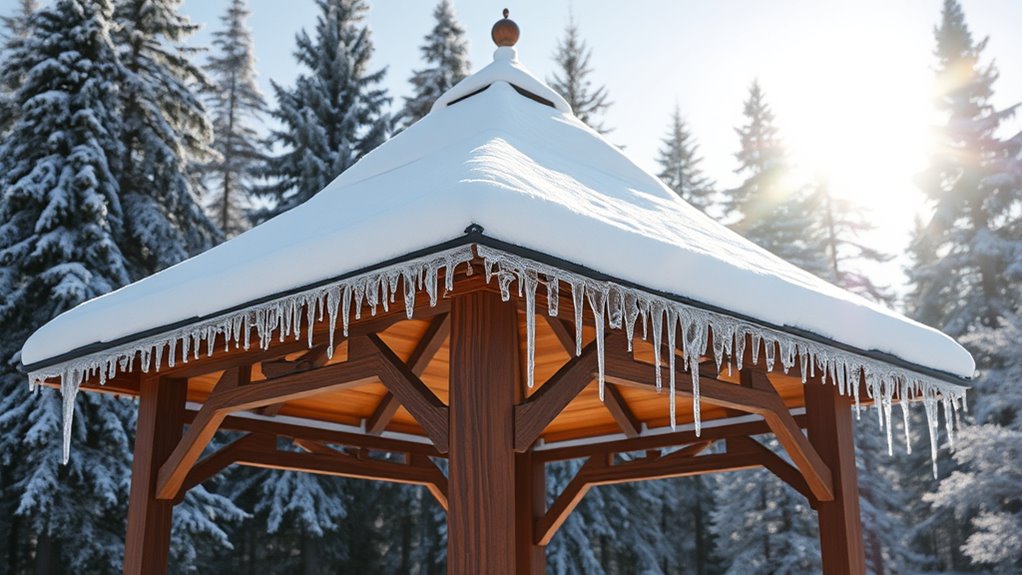
When it comes to preventing ice dams on your gazebo roof, understanding the underlying causes is vital. Ice dams form when heat escapes from the structure, leading to melting snow that refreezes at the eaves. To combat this, you’ll need to focus on effective insulation and ventilation methods. Additionally, regular maintenance is important for keeping your roof in peak condition. Let’s explore the best strategies to guarantee your gazebo remains protected against winter’s harsh elements.
Understanding Ice Dams and Their Causes
Ice dams form when heat escapes from a building’s interior, causing snow on the roof to melt and then refreeze at the eaves. This heat loss creates an inconsistent temperature gradient, leading to ice formation where cold air meets warm surfaces. As melted snow runs down the roof, it accumulates at the eaves, freezing into solid ice. Over time, this can cause significant damage, including leaks and structural issues. To prevent ice dams, it’s crucial to address areas of heat loss and guarantee proper ventilation, keeping roof temperatures consistent and minimizing the melting and refreezing cycle that leads to ice formation.
Insulating Your Gazebo Roof Effectively
How can you effectively insulate your gazebo roof to prevent ice dams? Start by selecting appropriate roof materials, like metal or asphalt shingles, which resist heat loss. Next, choose the right insulation types—fiberglass batts, spray foam, or rigid foam boards work well. Make sure insulation fits snugly between rafters, minimizing gaps that can let heat escape. Cover the insulation with a vapor barrier to prevent moisture accumulation. Additionally, consider adding radiant barriers for extra protection against heat transfer. By implementing these strategies, you’ll maintain an even roof temperature, reducing the risk of ice dams and enhancing your gazebo’s longevity and performance.
Ensuring Proper Ventilation
Proper insulation is just one component of preventing ice dams on your gazebo roof; adequate ventilation plays a significant role as well. By implementing effective ventilation techniques, you can enhance airflow management, reducing heat buildup that leads to ice formation. Here are three key strategies:
- Install soffit vents to promote fresh air intake.
- Use ridge vents for efficient heat escape, ensuring continuous airflow.
- Consider gable vents to enhance cross-ventilation, balancing temperature throughout the space.
Regular Maintenance and Snow Removal
While ensuring your gazebo’s roof is well-ventilated and insulated is essential, regular maintenance and snow removal are equally important in preventing ice dams. You should regularly inspect the roof for debris and damage, as neglect can lead to major issues. Use proper tools for maintenance, such as a roof rake or a shovel for effective snow removal. Aim to remove snow promptly after each snowfall to prevent buildup, which can lead to ice dam formation. Maintaining a clear roof not only promotes aesthetics but also preserves the structural integrity of your gazebo, granting you peace of mind during winter months.
Installing Ice and Water Shields
After guaranteeing regular maintenance and snow removal, consider the benefits of installing ice and water shields. These protective barriers can prevent water intrusion and ice dams, enhancing your gazebo’s durability. Here are three key ice shield benefits:
- Leak Prevention: Shields create a watertight seal, protecting against leaks.
- Extended Lifespan: They help prolong the life of roofing materials by reducing damage from ice buildup.
- Ease of Installation: Using proper installation techniques guarantees a secure fit, allowing for efficient water drainage.
Frequently Asked Questions
Can Ice Dams Affect the Structural Integrity of My Gazebo?
Yes, ice dams can lead to structural damage in your gazebo. Effective ice dam prevention methods, like proper insulation and ventilation, are essential to protect the integrity of your structure and maintain its longevity.
How Do I Know if My Gazebo Needs More Insulation?
If you notice cold spots or feel drafts, your gazebo might need more insulation. Signs of heat loss—like melting snow on the roof—indicate inadequate insulation, compromising comfort and efficiency. Check those areas closely!
What Materials Are Best for Gazebo Roof Insulation?
For gazebo roof insulation, consider materials like fiberglass batts, spray foam, or rigid foam boards. Each insulation type complements roofing materials, ensuring ideal energy efficiency and temperature regulation, ultimately enhancing your gazebo’s comfort and longevity.
Is There a Specific Snow Removal Technique for Gazebo Roofs?
For effective snow removal on gazebo roofs, use a roof rake to slide snow off gently, avoiding damage. Regular roof maintenance guarantees longevity and prevents excess weight, reducing the risk of structural issues during winter.
How Often Should I Inspect My Gazebo for Ice Dams?
You should conduct routine inspections of your gazebo at least once a month during winter. Regular checks are essential for seasonal maintenance, ensuring you catch potential ice dam issues before they become problematic. Stay ahead, stay free!