
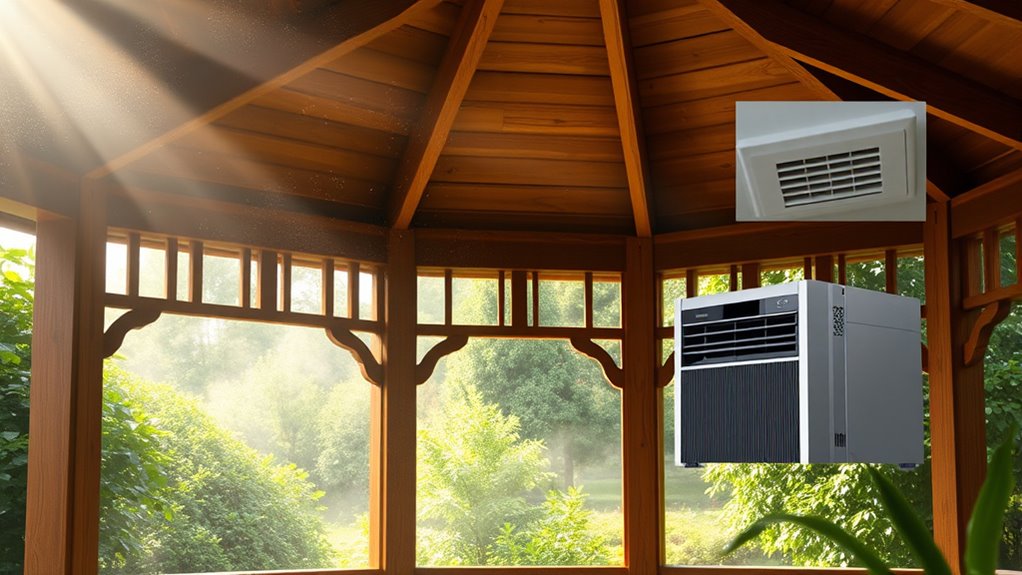
If you’re looking to reduce moisture in your enclosed gazebo, understanding the causes is essential. High humidity can lead to mold and mildew, impacting both comfort and structure. You’ll need to focus on proper ventilation, effective insulation, and reliable drainage solutions. Each aspect plays a key role in creating a dry environment. Let’s explore practical strategies that can help maintain a comfortable atmosphere in your gazebo year-round.
Understanding the Causes of Moisture in Enclosed Gazebos
When you think about moisture in enclosed gazebos, it’s essential to understand the various factors that contribute to this issue. Common moisture sources include rain, snow, and even nearby water bodies. High humidity levels can exacerbate these conditions, creating an environment where dampness thrives. Poor insulation and inadequate drainage can trap moisture, leading to mold and mildew growth. It’s also important to evaluate the materials used in your gazebo, as some may retain moisture more than others. By identifying these factors, you can take proactive steps to minimize moisture and maintain a comfortable, inviting space for relaxation and enjoyment.
Proper Ventilation Techniques
To effectively combat moisture buildup in your enclosed gazebo, implementing proper ventilation techniques is essential. Start by ensuring adequate airflow management; open windows or install vents to encourage cross-ventilation. Consider using ceiling fans to circulate air, helping to reduce humidity control. During warmer months, keep doors open whenever possible to promote a steady exchange of air. Additionally, installing a ridge vent or exhaust fan can help expel excess moisture. Remember, stagnant air fosters dampness, so maintain consistent airflow to create a comfortable, dry environment. With these techniques, you can enjoy your gazebo free from unwanted moisture.
Utilizing Dehumidifiers Effectively
When it comes to reducing moisture in your gazebo, choosing the right dehumidifier is vital for maximum performance. You’ll also want to keep up with maintenance and care to guarantee it runs efficiently and effectively. Let’s explore how to select the best unit for your needs and the essential upkeep tips to extend its lifespan.
Choosing the Right Dehumidifier
Choosing the right dehumidifier for your gazebo can greatly enhance the comfort and longevity of the space, especially if you’re dealing with high humidity levels. Here are some key factors to take into account:
- Dehumidifier capacity: Select one that matches your gazebo’s size.
- Energy efficiency: Look for models with an Energy Star rating.
- Portability: Consider a unit that’s easy to move if needed.
- Noise level: Opt for quieter models for a peaceful environment.
Maintenance and Care Tips
Although maintaining your dehumidifier might seem like a small task, it plays an essential role in ensuring ideal performance in your gazebo. Regularly check and clean the filters to promote effective airflow and humidity control. Don’t forget to empty the water reservoir frequently or set up a continuous drainage option. Utilize moisture monitoring tools to track levels and adjust settings accordingly. Consider running your dehumidifier consistently during humid months for best results. By staying on top of these maintenance tips, you’ll create a comfortable, moisture-free environment, allowing you to fully enjoy your enclosed gazebo without worry.
Insulating Your Gazebo
Insulating your gazebo can greatly enhance its comfort level, especially during colder months or in humid climates. By using effective insulation materials, you can create thermal barriers that prevent heat loss and moisture buildup. Consider these options:
- Foam board insulation for walls
- Reflective insulation for ceilings
- Spray foam for tight spaces
- Weather stripping for doors and windows
These materials not only improve energy efficiency but also help maintain a pleasant atmosphere. With the right insulation, you’ll enjoy your gazebo year-round, free from the discomfort of dampness or cold drafts. Embrace the freedom to relax in your perfect outdoor retreat!
Choosing the Right Building Materials
When you’re planning to build a gazebo, selecting the right materials is essential for durability and moisture resistance. Start with wood selection; opt for naturally resistant types like cedar or redwood. These woods withstand moisture better than others. Additionally, consider adding moisture barriers, such as treated plywood or plastic sheeting, under your flooring and walls. This will help prevent water damage and rot. Don’t forget about finishes—stains and sealants can further protect your wood from the elements. By choosing wisely, you can create a beautiful, long-lasting gazebo that offers you a fantastic space for relaxation and enjoyment without worrying about moisture issues.
Implementing Drainage Solutions
Selecting the right building materials is just the beginning; effective drainage solutions are essential to ensuring your gazebo remains moisture-free. You need to implement reliable drainage systems and water barriers to divert excess moisture away. Consider these options:
Effective drainage solutions are crucial to keep your gazebo moisture-free; consider installing gutters, French drains, and permeable paving for optimal protection.
- Gutters and downspouts to channel water away from the gazebo
- French drains to prevent pooling around the foundation
- Gravel beds that allow water to permeate and drain effectively
- Permeable paving to reduce surface runoff
Regular Maintenance Practices
To keep moisture at bay in your gazebo, regular maintenance is key. Start by inspecting for any water sources, like leaks or pooling, that could contribute to dampness. Additionally, make it a habit to clean your gutters regularly to prevent overflow and guarantee proper drainage.
Inspect for Water Sources
While it might seem easy to overlook, regularly inspecting your gazebo for potential water sources is essential for maintaining its integrity and longevity. Conducting a thorough roof inspection can prevent pesky water leaks and keep your space dry and enjoyable. Here are a few key areas to check:
- Roof seams for any gaps or deterioration
- Nearby trees that could drop debris or create shade
- Foundation for cracks that might allow water in
- Window seals for any signs of wear
Clean Gutters Regularly
Regularly cleaning your gutters is essential for preventing moisture buildup in your gazebo. Clogged gutters can trap rainwater, causing it to overflow and seep into your gazebo’s foundation. To guarantee effective gutter cleaning, clear out leaves, twigs, and debris at least twice a year. Use a sturdy ladder and wear gloves to protect your hands. Consider installing gutter guards to further reduce maintenance needs. By keeping your gutters clear, you’ll enhance moisture prevention and protect your gazebo from mold and rot. A little effort in gutter maintenance can lead to a drier, more enjoyable outdoor space for you and your loved ones.
Seasonal Tips for Moisture Control
As the seasons change, so do the challenges of moisture control in your gazebo. Seasonal humidity and weather impact can create a damp environment if not managed properly. Here are some practical tips for keeping your space comfortable:
- Ventilation: Open windows or install vents to allow airflow.
- Dehumidifiers: Use portable units during humid months to reduce moisture.
- Insulation: Insulate walls to minimize temperature fluctuations.
- Maintenance: Regularly check for leaks or mold growth.
Frequently Asked Questions
Can Plants Inside the Gazebo Increase Moisture Levels?
Yes, plants inside your gazebo can act like sponges, absorbing and releasing moisture. Certain plant types, like ferns, raise humidity levels considerably, so consider their impact on your space’s overall comfort and environment.
How Often Should I Check for Signs of Mold?
You should check for signs of mold at least once a week. Regular inspections aid mold prevention and moisture control, ensuring a healthy environment. Stay proactive to enjoy your space without unwanted surprises!
Are There Specific Materials That Attract Moisture?
Yes, certain materials, like untreated wood and fabrics, can act as moisture traps. When making material choices, opt for moisture-resistant options like synthetic fabrics and treated wood to minimize humidity and enhance your space’s comfort.
Can I Use a Fan Instead of a Dehumidifier?
You can use a fan instead of a dehumidifier, but its effectiveness in humidity control may be limited. Fans circulate air, helping reduce moisture, but a dehumidifier’s more efficient for tackling high humidity levels.
What Time of Year Is Moisture Most Problematic?
Moisture’s most problematic during late spring and summer when seasonal humidity peaks due to weather patterns. You might notice increased dampness then, so it’s essential to monitor humidity levels and take necessary precautions.