
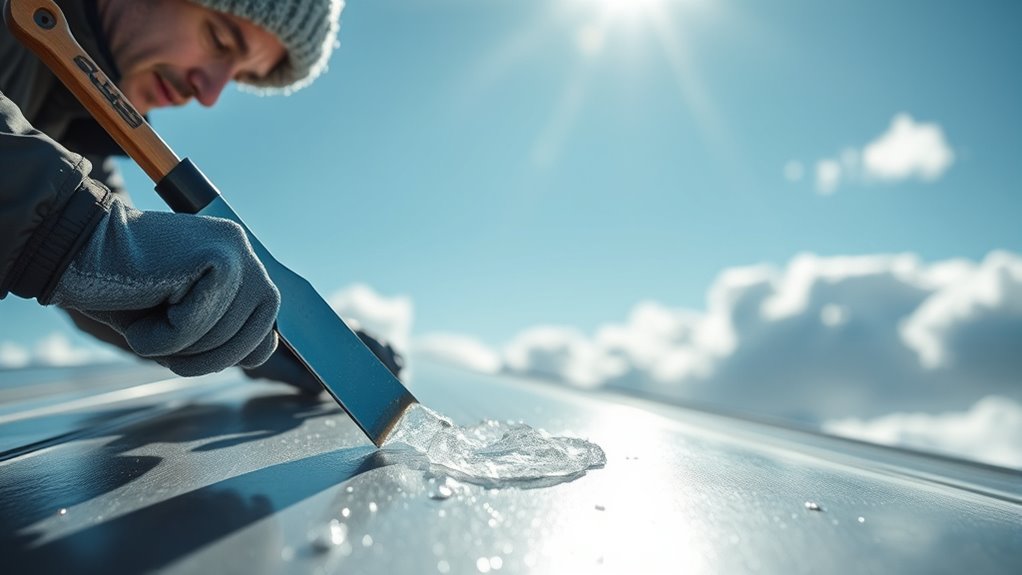
You might think removing ice from your roof panels is straightforward, but improper techniques can lead to costly damage. It’s essential to understand the risks involved and how to tackle the task effectively. Using the right tools and methods can preserve your roof’s integrity while ensuring safety. Explore the best practices for ice removal and discover preventative measures to protect your roof in the future.
Understanding Ice Buildup on Roofs
Ice buildup on roofs occurs primarily due to the interplay of heat loss and weather conditions. When warm air escapes through the roof, it melts snow, causing water to flow down. If temperatures drop, this water re-freezes, leading to ice formation. The type of roof materials you choose can notably influence this process. For instance, metal roofs allow for quicker melting and runoff, while asphalt shingles may trap heat, exacerbating ice issues. Understanding these dynamics is essential for homeowners who desire to maintain their roofs and prevent damage. By recognizing these factors, you can take proactive steps to minimize ice accumulation.
The Risks of Improper Ice Removal
Improper ice removal can lead to significant structural damage to your roof panels, compromising their integrity. Additionally, using the wrong tools or techniques may scratch the surface, creating weak points that can lead to water intrusion. Understanding these risks is essential for maintaining your roof’s longevity and functionality.
Structural Damage Risks
When you attempt to remove ice from roof panels without proper techniques or tools, you risk causing significant structural damage. This can lead to costly repairs and further complications, such as:
- Ice dam formation: Blocked drainage can cause water to back up, damaging roofing materials.
- Weakened structural integrity: Improper removal methods may compromise the roof’s support system.
- Increased leakage risk: Damaged panels can allow moisture infiltration, leading to mold and rot.
To guarantee effective roof drainage and maintain your roof’s longevity, always use safe, recommended methods for ice removal. Protect your investment by prioritizing proper techniques.
Roof Panel Scratches
Neglecting proper methods for ice removal not only jeopardizes the structural integrity of your roof but can also lead to unsightly scratches on roof panels. Using sharp tools or excessive force could mar the surface finish, compromising aesthetics and longevity. For effective roof maintenance, prioritize gentle techniques like hot water application or specialized ice melt products. These methods not only help in ice removal but also play a vital role in scratch prevention. Remember, investing time in safe ice removal practices protects your roof’s appearance and value, ensuring it remains in peak condition for years to come.
Water Intrusion Potential
As ice accumulates on roof panels, the risk of water intrusion increases considerably if not addressed properly. Improper ice removal can lead to severe ice damming issues, resulting in moisture accumulation beneath the roof surface. This can compromise the structural integrity of your home and lead to costly repairs.
- Increased risk of leaks
- Damage to insulation and framing
- Mold growth and health risks
To mitigate these risks, employ safe ice removal techniques, ensuring you don’t inadvertently damage the roofing material. Always prioritize preventive measures to keep your home safe and dry during winter months.
Tools You Can Use Safely
When removing ice from roof panels, using the right tools is essential for safety and effectiveness. Heat guns can effectively melt ice without damaging the roofing material, while plastic scrapers prevent scratches on the surface. Additionally, soft-bristle brooms are useful for clearing away slush and debris without causing harm.
Heat Guns Effectively
Heat guns can be an effective tool for safely removing ice from roof panels, especially when used with care and precision. Employing proper heat gun techniques is essential to prevent damage. Here are some vital safety precautions to keep in mind:
- Always maintain a safe distance from the roof surface.
- Use a heat gun with adjustable temperature settings.
- Wear appropriate protective gear, including gloves and goggles.
Plastic Scrapers Recommended
While heat guns are effective for melting ice, plastic scrapers provide a safe and efficient method for removing ice from roof panels without risking damage to the surface. These tools are specifically designed to glide over surfaces, minimizing scratches and dents. Here are some key plastic scraper benefits:
| Benefit | Description |
|---|---|
| Surface Safety | Prevents damage to roof panels |
| Lightweight Design | Easy to handle and maneuver |
| Cost-Effective | Affordable and reusable |
Using a plastic scraper simplifies effective ice removal while ensuring your roof remains intact and functional. Choose wisely for the best results!
Soft-Bristle Brooms Useful
Soft-bristle brooms are invaluable tools for safely removing ice from roof panels without risking damage to the surface. By utilizing effective broom techniques, you can harness the soft bristle benefits, ensuring your roof remains intact while effectively clearing ice.
- Prevents scratches and dents
- Lightweight and easy to maneuver
- Ideal for delicate surfaces
When you use a soft-bristle broom, angle it correctly to maximize effectiveness while minimizing pressure on the roof. This approach not only protects your panels but also allows you to clear ice efficiently, providing peace of mind during winter maintenance.
Step-by-Step Guide to Ice Removal
Removing ice from roof panels can be an essential task to prevent damage and guarantee safety. First, assess the ice accumulation and identify the safest access points. Use effective ice melting techniques, such as applying a calcium chloride solution, which is safer for your roof. Next, gently chip away at the edges using a plastic or rubber tool to avoid panel damage. Utilize soft-bristle brooms to sweep off any loose debris. Always wear safety gear and maintain stability while on the roof. Following these roof maintenance tips can help you effectively manage ice while protecting your investment and assuring your safety.
Preventative Measures for Future Winters
To prevent ice buildup on roof panels in future winters, you’ll want to implement several key strategies early in the season. Here are some effective ice prevention strategies and winter maintenance tips:
- Insulation: Make sure your attic is well-insulated to prevent heat loss.
- Ventilation: Maintain proper airflow to keep the roof cold, reducing melting and refreezing.
- Gutter Maintenance: Regularly clear gutters and downspouts to allow proper drainage.
When to Call a Professional
Even with preventative measures in place, there are times when ice buildup becomes unmanageable, signaling the need for professional assistance. You should consider when to engage professionals if you notice signs of danger, such as excessive ice weight, leaks, or visible damage to roof panels. If ice removal efforts risk your safety or equipment, it’s essential to call in experts. Professionals possess the tools and experience to safely remove ice without causing further damage. Don’t underestimate the risks; your roof’s integrity and your safety are paramount. Timely intervention can save you from costly repairs and guarantee your peace of mind.
Maintaining Roof Health Year-Round
While winter brings the risk of ice accumulation on roof panels, maintaining roof health year-round is essential for preventing such issues. Implementing a routine of seasonal maintenance and regular roof inspections guarantees your roof remains in prime condition.
- Schedule inspections in spring and fall.
- Clean gutters and downspouts to prevent water backup.
- Address minor repairs promptly to avoid larger issues.
Frequently Asked Questions
Can I Use a Pressure Washer to Remove Ice From My Roof?
You shouldn’t use a pressure washer to remove ice from your roof. It’s ineffective for thick ice and can lead to roof damage, increasing hazards like leaks and structural issues. Consider safer alternatives instead.
Will Salt Damage My Roof Panels During Ice Removal?
Yes, salt can damage your roof panels over time. Consider using salt alternatives that provide effective ice removal while ensuring roof protection, preserving the integrity of your roofing materials without the risks associated with traditional salt.
What Is the Best Time of Day to Remove Ice?
The best time to remove ice is during morning sunlight, as it helps melt surface layers. Be mindful of temperature fluctuations; removing ice too early may cause it to refreeze, complicating your efforts.
Are There Eco-Friendly Ice Removal Solutions Available?
Sure, you can find eco-friendly ice removal solutions! Biodegradable de-icers and natural ice melts effectively tackle ice without harming the environment, letting you clear pathways safely while embracing a greener approach to winter maintenance.
How Can I Safely Access My Roof for Ice Removal?
To safely access your roof for ice removal, guarantee proper roof safety by using a sturdy ladder. Employ ladder techniques like securing it at an angle and having a spotter to prevent falls and accidents.