
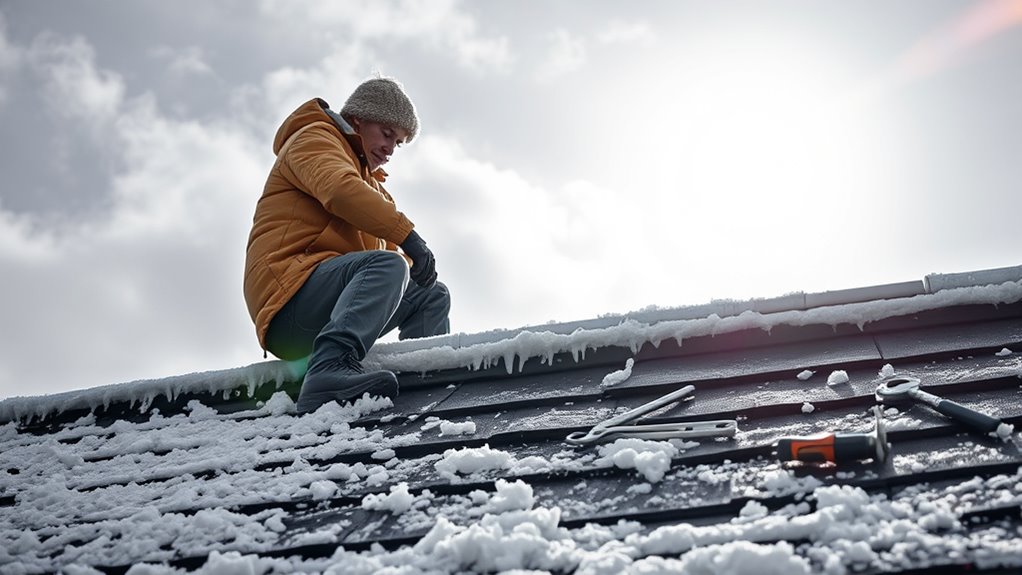
When you encounter broken roof panels in winter, it’s vital to assess the damage promptly. You’ll need to determine if repairs or replacements are necessary based on the severity. Using quality materials designed for cold conditions is essential. Furthermore, understanding the right tools and safety precautions can make all the difference. Knowing how to proceed can help guarantee the durability of your repair, especially in harsh weather. Let’s explore the steps you need to take.
Assessing Roof Damage in Cold Weather
When evaluating roof damage in cold weather, it’s crucial to remember that low temperatures can exacerbate existing issues. You should employ effective roof inspection techniques to identify problems like ice dams and cracked shingles. Cold weather effects, such as thermal contraction, can lead to further deterioration if left unchecked. Inspect for moisture infiltration and weakened seals, as these can worsen during the freeze-thaw cycles. By conducting a thorough assessment, you can pinpoint areas needing urgent attention and prevent more significant damage. Staying proactive in your approach guarantees your roof remains sound against the harsh winter elements, preserving your freedom from unexpected repairs.
Essential Tools and Materials for Winter Repairs
Although winter conditions can complicate roof repairs, having the right tools and materials on hand is crucial for successful outcomes. To guarantee you’re prepared, consider these key items:
- Quality Roofing Materials: Choose materials designed for cold weather, like modified bitumen or metal panels, which offer durability and insulation.
- Heated Tools: Use heat guns or torches to soften adhesives, making application easier in low temperatures.
- Protective Gear: Invest in insulated gloves and non-slip footwear to keep you safe while working on icy surfaces.
With these essentials, you’ll be equipped to tackle winter roofing challenges efficiently.
Safety Precautions for Winter Roof Work
As you prepare for winter roof work, it is essential to recognize the heightened risks associated with icy conditions. Make sure you wear appropriate winter safety gear, including slip-resistant footwear and insulated gloves. Before starting, inspect the roof insulation and remove any snow or ice buildup to prevent slips. Use a harness and secure your ladder to minimize fall risks. Always work with a partner to enhance safety and communication. Keep tools organized and within reach to avoid unnecessary movements. Finally, be mindful of weather conditions; postpone work if visibility is poor or temperatures are dangerously low. Your safety should always come first.
Step-by-Step Guide to Repairing Broken Panels
Repairing broken roof panels can be a straightforward process if you follow a systematic approach. Here’s a step-by-step guide to help you with panel replacement using effective repair techniques:
- Assess the damage: Determine if the panel can be repaired or needs replacement. Look for cracks, holes, or warping.
- Gather materials: You’ll need replacement panels, sealant, screws, and safety equipment.
- Perform the repair: Remove any damaged sections, install the new panel, and seal edges to prevent leaks.
Preventative Measures to Avoid Future Damage
To prevent future damage to your roof panels, it’s essential to implement regular maintenance and monitoring. Engaging in preventive maintenance and scheduling seasonal inspections can greatly reduce the risk of extensive repairs.
| Maintenance Task | Frequency |
|---|---|
| Roof Inspection | Bi-annual |
| Gutter Cleaning | Seasonal |
| Sealant Application | Annually |
Frequently Asked Questions
Can I Repair My Roof Myself in Winter?
Yes, you can attempt DIY repairs in winter, but it’s challenging due to cold temperatures and potential ice. Make certain you have proper materials and safety gear, and consider waiting for milder weather if conditions are severe.
What Are the Costs for Professional Roof Repairs in Winter?
Winter repair costs can range considerably, often from $300 to $1,500, depending on the damage. You should get professional estimates to guarantee accuracy, as conditions and materials impact overall pricing and your budget choices.
How Long Do Winter Roof Repairs Typically Last?
Winter roof repairs often focus on temporary solutions, which may last from a few weeks to several months. Repair longevity depends on weather conditions and the materials used, so plan for more permanent fixes once temperatures rise.
Will Insurance Cover Winter Roof Repair Costs?
Yes, most insurance policies cover winter roof repair costs, but it depends on your specific policy terms. Always review your coverage, as some may exclude damage related to extreme winter conditions or certain maintenance issues.
What Are the Signs I Need a Full Roof Replacement?
If your roof’s nearing its lifespan and shows curling shingles, significant leaks, or sagging, it’s time to contemplate replacement. Ignoring these indicators can lead to costly repairs and compromise your home’s safety.