
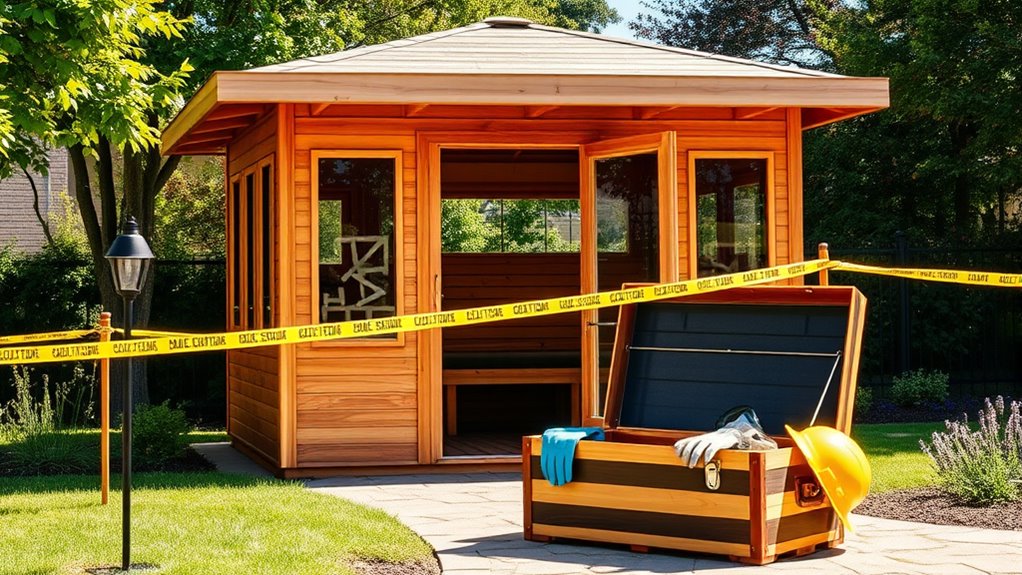
When constructing a gazebo sauna, it’s essential to prioritize safety from the outset. You need to understand local building codes, select appropriate materials, and guarantee proper site preparation. Each step plays an important role in avoiding potential hazards. Ignoring these aspects could lead to serious consequences. So, what specific regulations and precautions should you follow to guarantee a secure and enjoyable sauna experience? The answer lies in a detailed examination of fundamental safety measures.
Understanding Local Building Codes
Before you begin your gazebo sauna build, it’s vital to understand local building codes, as these regulations dictate what’s permissible in your area. Familiarizing yourself with these codes can save you time, money, and potential legal issues. Start by checking with your local zoning office to determine permit requirements; some areas may require permits for structures over a certain size or those situated near property lines. Compliance with local regulations guarantees your project adheres to safety standards, which is essential for both functionality and peace of mind. Additionally, staying informed about any updates to these codes can prevent unforeseen complications during your build. Ultimately, understanding these regulations empowers you to create a sauna that respects both your vision and local laws.
Choosing Safe and Durable Materials
Once you’re familiar with local building codes, the next step is selecting safe and durable materials for your gazebo sauna. Prioritize wood species like cedar or redwood, known for their natural resistance to moisture and decay, ensuring long-term material durability. When sourcing these materials, emphasize safe sourcing practices, verifying that suppliers adhere to environmental regulations and ethical standards. Avoid treated woods with harmful chemicals, as they may release toxins in high heat conditions. Additionally, consider using non-toxic insulation and vapor barriers to maintain a healthy atmosphere. Remember, investing in quality materials not only enhances the sauna’s lifespan but also contributes to a safer, more enjoyable experience. The right choices empower you to create a sanctuary that respects both health and freedom.
Proper Site Selection and Preparation
When selecting a site for your gazebo sauna, make certain the ground is level to provide stability and prevent structural issues. Additionally, consider drainage to avoid water accumulation that could compromise the foundation and lead to safety hazards. Proper site preparation is essential for the longevity and functionality of your sauna.
Level Ground Assessment
A proper site selection begins with evaluating the ground level, as this step is essential for guaranteeing the stability and safety of your gazebo sauna. You’ll want to assess the ground stability and conduct soil testing to determine if the terrain can support your structure. Here are three key steps to follow:
- Check for Levelness: Use a level tool to guarantee the ground is even, preventing structural issues down the line.
- Analyze Soil Composition: Conduct soil testing to identify drainage capacity and load-bearing strength, which impacts stability.
- Consider Surroundings: Evaluate nearby trees and structures that could affect the sauna’s integrity through root growth or falling debris.
Drainage Considerations
While evaluating the site for your gazebo sauna, proper drainage is a critical factor that shouldn’t be overlooked. Effective drainage systems must be integrated to manage water runoff efficiently, preventing potential water damage or erosion around your sauna. Begin by examining the natural topography of your chosen location; slopes can facilitate water diversion away from the structure. Consider installing French drains or swales to guide excess water, ensuring it flows away from the sauna’s foundation. Additionally, maintaining a clear path for runoff will enhance the longevity of your build. By prioritizing these drainage considerations, you’ll create a stable, dry environment that enhances both safety and enjoyment of your gazebo sauna.
Ensuring Adequate Ventilation
To guarantee a comfortable and safe sauna experience, proper ventilation is essential for regulating temperature and humidity levels. Implementing effective airflow strategies assures that you maintain ideal conditions. Consider these key points for ensuring adequate ventilation:
Proper ventilation is crucial for a safe sauna experience, helping regulate temperature and humidity effectively.
- Intake and Exhaust: Position vents near the floor for fresh air intake and higher up for exhaust, allowing hot air to escape.
- Cross-Ventilation: Create openings on opposite walls to enhance airflow, promoting even distribution of heat and humidity control.
- Adjustable Vents: Install adjustable vents to give you the freedom to modify airflow according to your preferences, adapting to varying humidity levels.
Electrical Safety Considerations
When building your gazebo sauna, you must prioritize electrical safety to prevent hazards. This includes installing a circuit breaker, ensuring proper grounding, and waterproofing all electrical components. Each of these measures is essential for safe operation and compliance with electrical codes.
Circuit Breaker Installation
Ensuring the proper installation of a circuit breaker is essential for the safety of your gazebo sauna’s electrical system. You need to choose the right breaker types and perform accurate circuit sizing to prevent overloads and potential hazards. Here are three key considerations for effective installation:
- Circuit Sizing: Calculate the total wattage of your sauna and select a breaker that can handle a bit more than the calculated load to avoid tripping.
- Breaker Types: Use a Ground Fault Circuit Interrupter (GFCI) breaker for wet areas, ensuring additional safety against electrical shocks.
- Installation Location: Position the breaker near the sauna but in a dry, accessible location for quick access during emergencies.
Following these guidelines can enhance your sauna’s safety and performance.
Grounding Requirements
Proper grounding is an essential component of electrical safety for your gazebo sauna, complementing the circuit breaker installation. To safeguard against electrical faults and guarantee user safety, you need to employ effective grounding techniques. Start by selecting appropriate grounding materials, such as copper or galvanized steel rods, which are known for their conductivity and durability. Install these rods vertically into the ground, making sure they reach moisture-rich soil for peak performance. Connect these rods to your sauna’s electrical system via a grounding wire, properly sized to handle potential fault currents. Regularly inspect your grounding system for corrosion or damage. By adhering to these grounding requirements, you empower yourself with a secure and efficient sauna environment, promoting both safety and freedom.
Waterproofing Electrical Components
As you prepare your gazebo sauna, waterproofing electrical components becomes essential to prevent potential hazards. Utilizing effective waterproofing techniques guarantees safety and longevity for your setup. Here are three critical steps to reflect upon:
- Select the Right Electrical Enclosures: Use enclosures rated for outdoor use, designed to resist moisture and corrosion.
- Apply Sealants: Use silicone or other waterproof sealants around junction boxes and connections to create a barrier against water intrusion.
- Install GFCI Outlets: Ground Fault Circuit Interrupter outlets provide an extra layer of protection, automatically shutting off power in case of a ground fault.
Installing Proper Insulation
When building a gazebo sauna, installing insulation correctly is vital to maintain the desired temperature and energy efficiency. You’ll want to choose from various insulation types, such as fiberglass, foam board, or mineral wool, each offering different levels of heat retention. Proper installation involves sealing all gaps and guaranteeing a continuous barrier to prevent heat loss. Pay attention to the R-value of the insulation material; higher values indicate better thermal resistance. Installing a vapor barrier is also essential to control moisture, which can degrade insulation performance over time. By taking these steps, you guarantee that your sauna retains heat effectively, providing a comfortable and energy-efficient environment for relaxation and rejuvenation.
Fire Safety Measures
Securing effective insulation not only enhances energy efficiency but also plays a role in fire safety for your gazebo sauna. To mitigate fire risks, you should implement the following measures:
Effective insulation boosts energy efficiency and is vital for enhancing fire safety in your gazebo sauna.
- Smoke Detector Installation: Place smoke detectors at entry points and within the sauna area to provide early alerts in case of fire.
- Fire Extinguisher Placement: Keep fire extinguishers within easy reach, ideally mounted on walls near the entrance and sauna heater. Verify they’re appropriate for electrical and wood fires.
- Clearance from Flammable Materials: Maintain a safe distance between the sauna heater and any combustible materials, ensuring at least three feet of clearance.
Regular Maintenance and Inspection Practices
Regular maintenance and inspection practices are essential for the longevity and safety of your gazebo sauna. Implementing preventive maintenance measures helps you identify potential issues before they escalate. Use the following inspection checklist to streamline your routine:
| Task | Frequency |
|---|---|
| Check for leaks | Monthly |
| Inspect wood condition | Quarterly |
| Test electrical systems | Semi-annually |
| Clean heating elements | Annually |
Frequently Asked Questions
What Type of Foundation Is Best for a Gazebo Sauna?
A solid concrete slab serves as the best foundation for your gazebo sauna, ensuring stability. Employing proper leveling techniques and quality foundation materials creates a sanctuary, much like a well-rooted tree weathering any storm.
Can I Use My Existing Electrical Outlets for the Sauna?
You shouldn’t use your existing electrical outlets for the sauna without verifying the electrical requirements. Confirm outlet safety by consulting a licensed electrician to ensure that your current outlets can handle the sauna’s power needs.
How Do I Prevent Mold in My Sauna?
To prevent mold in your sauna, guarantee effective humidity control through ventilation and use a dehumidifier. Regularly inspect for moisture buildup, and maintain a dry environment to enhance mold prevention and promote a healthier experience.
What Size Should My Sauna Heater Be?
Your sauna heater’s size should match the sauna’s volume. For ideal heat output, calculate the cubic footage and select a heater that provides 30-50 watts per cubic foot to guarantee efficient heating and comfort.
Are There Specific Safety Rules for Sauna Use?
In the forest of relaxation, sauna etiquette and safety precautions are your guiding stars. Always hydrate, limit your time, and respect others’ space. Embrace the warmth, but heed these rules for a safe, liberating experience.