
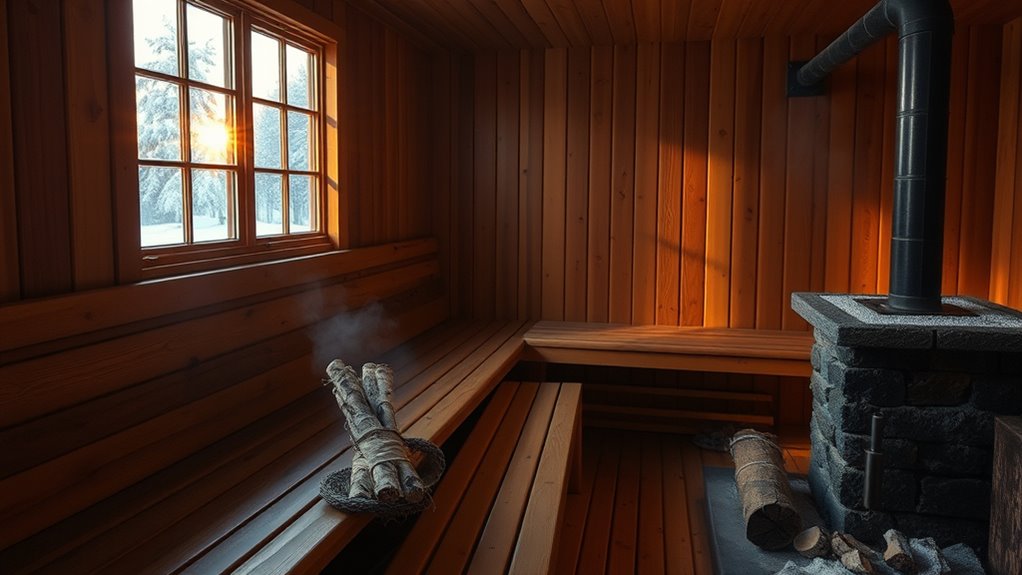
When setting up your sauna benches for winter comfort, it’s essential to focus on height, arrangement, and materials. Aim for a bench height between 18 to 24 inches to guarantee proper ergonomics and heat circulation. The arrangement should allow for adequate airflow, ideally in a U-shape. Don’t overlook the benefits of heat-resistant cushions and blankets. These elements will transform your sauna into a cozy winter retreat, but there’s more to reflect on for the ultimate experience.
Choosing the Right Bench Height for Optimal Heat Distribution
When you’re setting up sauna benches, it’s essential to take into account the right bench height for ideal heat distribution. Proper bench ergonomics can make a significant difference in your sauna experience. Generally, higher benches allow for better heat circulation, as heat rises naturally. Aim for a height between 18 to 24 inches, which accommodates most users comfortably. Make sure that your benches are staggered in height; this allows for varied temperature options, catering to different preferences. Remember, a well-designed sauna experience should let you relax freely and enjoy the benefits of heat therapy. By carefully considering bench height, you optimize not only comfort but also the sauna’s efficiency, enhancing your overall wellness journey.
Arranging Benches for Enhanced Airflow and Comfort
To maximize both airflow and comfort in your sauna, it’s essential to strategically arrange the benches. Proper bench spacing enhances airflow dynamics, guaranteeing a more enjoyable experience. Here’s how to set up your benches:
- Position Benches in a U-Shape: This layout promotes circulation, allowing hot air to flow freely.
- Maintain Adequate Space: Leave at least 12-18 inches between benches to prevent overcrowding and guarantee proper ventilation.
- Align Benches with the Door: This allows cooler air to enter while hot air exits, balancing temperature.
- Use Multi-Level Benches: If possible, stagger the heights to create varied temperature zones, catering to individual preferences.
Utilizing Cushions and Blankets for Added Warmth
After arranging your sauna benches for ideal airflow and comfort, consider incorporating cushions and blankets to enhance your warmth and relaxation. Cushions made from heat-resistant materials like neoprene or outdoor foam can provide both comfort and insulation. They’ll help keep you cozy while you enjoy your sauna experience. When choosing blankets, opt for types like wool or thermal fleece, as they trap heat effectively and add a layer of softness. Make sure to select sizes that fit your benches well, ensuring they don’t slip or bunch up. By integrating these elements into your sauna setup, you create a more inviting and pleasant atmosphere, allowing you to fully unwind during those chilly winter sessions.
Incorporating Heat-Reflective Materials for Maximum Retention
While you’re enjoying the warmth of your sauna, incorporating heat-reflective materials can considerably enhance heat retention and improve your overall experience. By using effective insulation techniques, you’ll create an inviting atmosphere that keeps the heat where it belongs. Here are four ways to maximize retention:
- Heat Reflective Coatings: Apply specialized coatings to your sauna walls, reflecting heat back into the space.
- Reflective Foil Insulation: Install foil-backed insulation panels behind the wall coverings for an extra layer of heat retention.
- Thermal Curtains: Use thermal curtains to cover windows, limiting heat loss when the sauna isn’t in use.
- Insulated Benches: Construct your benches with insulation underneath to trap warmth effectively.
These methods will guarantee your sauna remains a cozy retreat all winter long!
Maintaining and Cleaning Your Benches for Longevity and Hygiene
Since your sauna benches endure high humidity and heat, maintaining and cleaning them regularly is essential for both longevity and hygiene. Start by identifying your bench materials, as different woods require different care. For cedar or hemlock, a gentle wipe with a damp cloth once a week is effective. Use a mild, natural cleaner to combat any mold or mildew; avoid harsh chemicals that can damage the wood. Every month, inspect your benches for any signs of wear or splinters, and sand them down if necessary. Additionally, guarantee proper ventilation to minimize moisture buildup. By adhering to this cleaning frequency and maintenance routine, you can enjoy your sauna’s comfort while keeping your benches in first-rate condition.
Frequently Asked Questions
What Materials Are Best for Sauna Bench Construction?
Cedar wood’s warmth contrasts beautifully with sleek bench design, creating a cozy atmosphere. For durability and comfort, choose soft, smooth finishes. You’ll appreciate the natural aroma while enjoying your sauna experience, enhancing relaxation immensely.
How Can I Safely Heat My Sauna Efficiently?
To heat your sauna efficiently, consider using a high-quality electric heater or a wood stove. Insulate the space well, maintain proper temperatures, and use a timer to optimize energy efficiency without sacrificing comfort during your sessions.
What Is the Ideal Sauna Temperature for Winter Use?
For winter use, aim for a sauna temperature between 150°F and 195°F. This range offers comfort while maximizing relaxation. Keep your winter recommendations in mind, adjusting as needed to suit your personal preferences.
How Often Should I Use My Sauna in Winter?
You should use your sauna three to four times a week in winter. This frequency maximizes winter benefits, like improved circulation and relaxation, while balancing the cozy warmth against the chilly air outside. Enjoy the freedom!
Can I Use Essential Oils in My Sauna?
Yes, you can use essential oils in your sauna for added benefits, like relaxation and relief. Just make certain you dilute them properly for sauna safety, and avoid oils that may irritate your skin or respiratory system.