
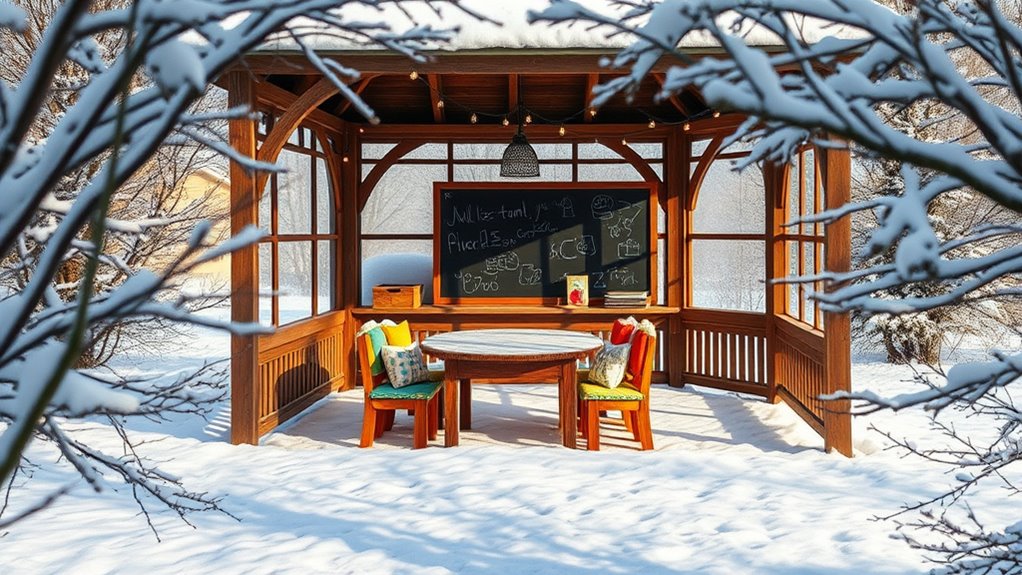
It’s funny how a simple gazebo in your backyard can transform into a vibrant mini classroom during winter. With some thoughtful modifications, you can create an inviting space that fosters learning and curiosity. Imagine your students immersed in nature while staying warm and comfortable. What engaging activities could you explore in this unique setting? Let’s uncover how to make the most of this outdoor learning environment and inspire your students this winter.




Benefits of an Outdoor Learning Environment
When you step into an outdoor learning environment, you’ll quickly discover the myriad benefits it offers for both students and educators. Outdoor education transforms traditional classrooms into vibrant spaces for exploration and creativity. Nature immersion fosters a sense of wonder, sparking curiosity that textbooks often can’t ignite. You’ll find that students are more engaged, focused, and enthusiastic to learn when surrounded by the beauty of the outdoors. This connection to nature not only enhances academic performance but also promotes emotional well-being. By embracing outdoor learning, you’re not just teaching; you’re empowering students to thrive in a world full of possibilities.
Essential Modifications for Winter Comfort
Embracing outdoor learning can be a transformative experience, but as winter approaches, it’s important to guarantee your mini classroom remains comfortable and inviting. Consider these essential modifications:
| Feature | Insulation Options | Heating Solutions |
|---|---|---|
| Walls | Foam panels | Electric heaters |
| Ceiling | Reflective blankets | Propane heaters |
| Floor | Area rugs | Heated mats |
| Windows | Thermal curtains | Portable heaters |
With these adjustments, you’ll create a cozy atmosphere that inspires creativity and exploration. Winter doesn’t have to confine learning; it can enhance it! So, embrace the chill and make your outdoor classroom a welcoming retreat.
Engaging Activities for Students
While the winter chill might be in the air, that doesn’t mean learning has to come to a halt. Embrace the season by engaging students in hands-on experiments that spark curiosity! Try creating snowflakes with simple materials or exploring the properties of ice. Nature exploration can be just as thrilling; encourage students to observe animal tracks or study winter tree structures. These activities ignite a sense of wonder, showing that knowledge thrives even in the cold. So bundle up, step outside, and let the gazebo become a vibrant hub of creativity and discovery. Learning knows no boundaries—especially in winter!
Creating a Cozy Atmosphere
To create a cozy atmosphere in your gazebo classroom, consider adding soft blankets and cushions that invite students to settle in and get comfortable. Combine these with warm lighting to foster an inviting ambiance. Cozy decorations, like fairy lights or seasonal ornaments, can enhance the space, making it feel like a home away from home.
Create a warm and inviting gazebo classroom with soft blankets, warm lighting, and cozy decorations that make learning feel like home.
- Use layered textures for warmth and comfort.
- Incorporate natural elements, like plants, to connect with nature.
- Add personal touches that reflect your students’ personalities.
Creating this nurturing environment will inspire creativity and learning, allowing minds to flourish freely.
Safety Considerations for Winter Classes
As winter approaches, ensuring the safety of your mini classroom becomes a top priority. Start with weather preparedness by checking forecasts and having a backup plan for extreme conditions. Invest in thermal insulation for your gazebo; it keeps everyone warm and comfortable, allowing for focused learning. Don’t forget to monitor the temperature regularly, and have blankets or warm drinks on hand for added coziness. Clear pathways of snow and ice to prevent slips, and equip your space with a first aid kit for emergencies. By prioritizing safety, you create a nurturing environment where creativity can thrive, even in winter’s chill.
Frequently Asked Questions
What Age Groups Are Best Suited for Outdoor Classroom Settings?
Kindergarten readiness is ideal for outdoor learning, as young kids thrive in nature. Engaging them in exploration fosters curiosity and creativity, letting their imaginations soar while they develop essential skills in a vibrant, open environment.
Can I Use My Gazebo for Other Activities Besides Teaching?
Your gazebo can be a canvas for creative workshops and vibrant outdoor gatherings. Let your imagination soar as you host art classes, cozy book clubs, or even yoga sessions—freedom awaits in your backyard sanctuary!
How Do I Maintain the Gazebo During Winter Months?
To maintain your gazebo during winter, focus on insulation to keep it cozy. Regularly clear snow and check for damage. Embrace the season’s beauty while ensuring your space remains inviting and functional for all activities.
Are There Specific Subjects That Work Better Outdoors?
Science experiments, art projects, nature studies, and storytelling sessions thrive outdoors. You’ll inspire creativity and curiosity, as students connect with their surroundings, exploring concepts in fresh air, making learning an adventure that ignites their imagination!
What Supplies Should I Keep in the Gazebo for Winter Classes?
Picture a cozy retreat where winter supplies and classroom essentials blend seamlessly. Keep warm blankets, portable heaters, writing materials, and engaging books handy. You’re crafting a unique learning space that inspires creativity and joy amidst winter’s chill.