
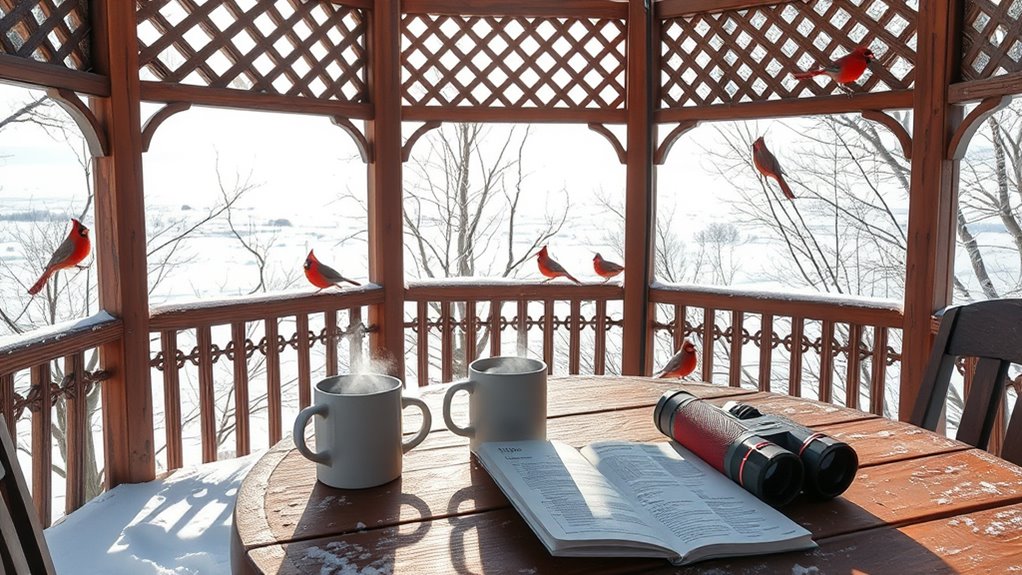
You might say that winter offers a serene charm for birdwatching, and a gazebo can be your perfect vantage point. With carefully selected materials and large windows, you can observe various bird species flitting about, even in the cold. Insulation adds comfort, while strategic seating allows for prolonged observation. But what specific features should you consider to enhance your experience? Let’s explore the possibilities together.
Choosing the Right Gazebo for Birdwatching
When you’re selecting a gazebo for winter birdwatching, it’s essential to take into account both the structure’s material and its design, as these factors can significantly impact your experience. Opt for sturdy materials like aluminum or treated wood, which withstand harsh elements while providing insulation. Design features such as large windows enhance visibility, allowing you to observe birds without obstruction. Consider a sloped roof to prevent snow accumulation, ensuring a safe and comfortable environment. By prioritizing these material options and design features, you’ll create a cozy haven that invites both you and the winter birds to thrive in harmony.
Essential Birdfeeding Tips for Winter
Winter can be a challenging time for birds, making effective feeding strategies vital for their survival. To attract a variety of species, offer high-energy foods like sunflower seeds, suet, and peanuts. Consider using feeders that minimize waste and protect from the elements. Remember bird bath essentials, too; providing fresh water is essential, as natural sources often freeze over. Keep your bird bath clean and consider adding a heater to maintain liquid water. By implementing these winter feeding strategies, you’ll not only support avian friends but also create a vibrant scene right outside your gazebo, enhancing your birdwatching experience.
Creating a Cozy Viewing Space
As the cold air settles in, transforming the landscape into a winter wonderland, creating a cozy viewing space in your gazebo can greatly enhance your birdwatching experience.
- Cozy Blankets: Drape soft, warm blankets over your seating to wrap yourself in comfort while observing the vibrant winter birds.
- Hot Beverages: Prepare a thermos filled with your favorite hot beverage, whether it’s tea, coffee, or cocoa, to keep you warm and invigorated.
- Strategic Seating: Position chairs near windows for ideal views, allowing you to enjoy the flurry of activity outside without disturbing your feathered friends.
With these elements, you’ll relish every moment spent in your winter retreat.
Best Bird Species to Spot in Winter
During the colder months, you’ll find a unique array of bird species that thrive in the frigid temperatures. Particularly, winter sightings reveal the resilience of these birds, such as the American Goldfinch, Northern Cardinal, and Dark-eyed Junco. Observing them in your gazebo can be a rewarding experience.
| Bird Species | Characteristics | Best Viewing Times |
|---|---|---|
| American Goldfinch | Bright yellow plumage | Early morning |
| Northern Cardinal | Bold red color | Late afternoon |
| Dark-eyed Junco | Slate gray with white | All day |
Enjoy the beauty of nature’s winter wonders!
Enhancing Your Gazebo With Birdwatching Accessories
To truly enjoy the wonders of winter birdwatching from your gazebo, consider enhancing your space with a few thoughtful accessories. These items can transform your experience, allowing for comfort and keen observation.
Enhance your gazebo for winter birdwatching with thoughtful accessories for comfort and keen observation.
- Birdwatching Binoculars: Invest in high-quality binoculars for clear, close-up views of feathered friends.
- Gazebo Seating: Choose comfortable seating that supports long hours of observation, like cushioned chairs or a cozy bench.
- Bird Feeders: Set up feeders to attract various species, providing a lively show just outside your gazebo.
With these additions, you’ll create a perfect winter haven for birdwatching.
Safety and Maintenance for Winter Birdwatching
As winter approaches, ensuring your gazebo is weatherproofed becomes essential for both your comfort and the birds’ visibility. You’ll need to gather safety gear essentials, such as non-slip footwear and proper insulation, to navigate icy conditions effectively. Regular maintenance checks will also keep your birdwatching haven safe and enjoyable throughout the season.
Weatherproofing Your Gazebo
While the allure of winter birdwatching draws you to your gazebo, ensuring it withstands the harsh elements is essential for both your comfort and the safety of your feathered visitors. To effectively weatherproof your space, consider these three strategies:
- Insulation Materials: Add insulating panels or blankets to retain heat and create a cozy environment.
- Weatherproof Coverings: Install durable tarps or canvas to shield against snow and rain, maintaining visibility while keeping the interior dry.
- Sealant Application: Regularly check and apply sealants to joints and seams, preventing drafts and water infiltration.
These steps will enhance your winter birdwatching experience.
Safety Gear Essentials
When winter birdwatching in your gazebo, having the right safety gear can make all the difference in your comfort and well-being. Start with thermal layers, which trap body heat while allowing moisture to escape, keeping you warm without bulk. An insulated base layer is essential, as it provides warmth without compromising mobility. Don’t forget insulated footwear; these keep your feet cozy and dry, vital for those long hours of observation. Additionally, a warm hat and gloves can help prevent heat loss, enabling you to focus on the beauty of avian visitors. With the right gear, you’re free to fully enjoy the experience.
Regular Maintenance Tips
To guarantee your gazebo remains a safe and inviting space for winter birdwatching, regular maintenance is essential. Embrace the freedom of birdwatching by ensuring your gazebo is in prime condition. Follow these tips:
- Gazebo Cleaning: Clear debris and wipe surfaces to prevent mold and decay.
- Seasonal Inspections: Check the roof, walls, and flooring for damage; early detection can save time and money.
- Winter Preparations: Reinforce structural integrity against snow and ice accumulation.
Frequently Asked Questions
What Are the Best Times of Day for Winter Birdwatching?
The best times for winter birdwatching are the soft morning light, when birds are most active, and the crisp evening chill, as they prepare to roost. Both times offer unique glimpses into their daily routines.
How Can I Attract Specific Bird Species to My Gazebo?
To attract specific bird species to your gazebo, set up bird feeders stocked with their preferred seeds and incorporate native plants nearby. This creates a welcoming habitat, drawing in desired birds while enhancing your outdoor experience.
Can I Use Binoculars From Inside the Gazebo?
Yes, you can certainly use binoculars from inside the gazebo. Different binocular types enhance your gazebos views, letting you observe bird species closely while staying warm and comfortable. Enjoy the freedom of winter birdwatching!
What Clothing Is Best for Staying Warm While Birdwatching?
To stay warm while birdwatching, you’ll want to use layering techniques, like a moisture-wicking base layer, insulating middle layers, and a windproof outer layer. Don’t forget thermal accessories like hats and gloves for maximum comfort.
How Do I Document the Birds I See During Winter?
To document winter birds, use bird identification techniques like field notes and sketches. A winter species guide can help you record sightings, noting behaviors and habitats, ensuring you capture each unique observation with freedom and precision.