
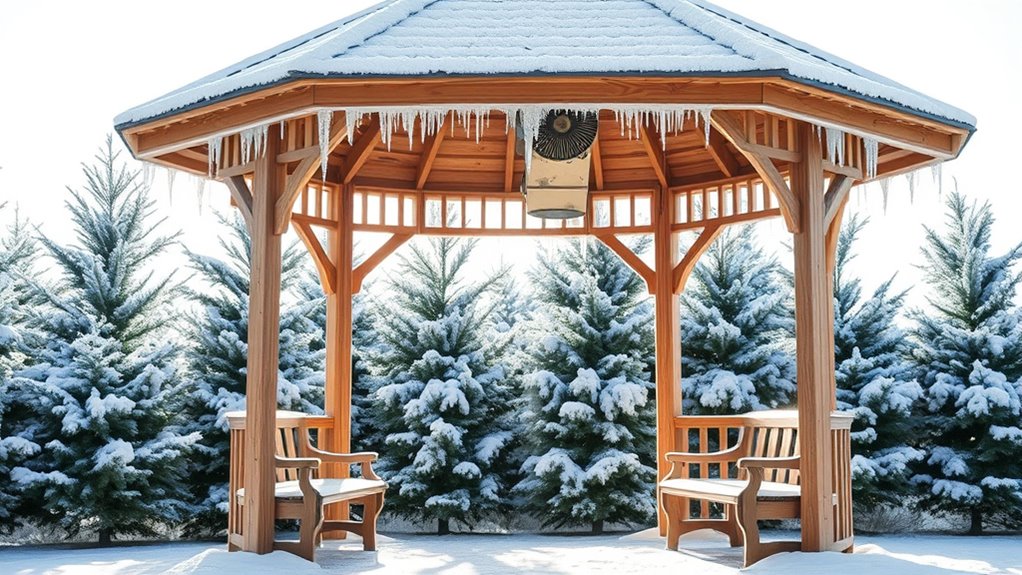
Some might think winter gazebos are too chilly to enjoy, but proper ventilation can transform your space into a cozy retreat. By implementing strategic airflow techniques, you can prevent moisture buildup and maintain a comfortable temperature. Consider how roof vents and windows can work together to enhance your gazebo’s atmosphere. Discover the essential methods to guarantee your winter haven remains inviting, no matter the season.
Importance of Ventilation in Winter Gazebos
When you think about winter gazebos, you might not immediately consider the importance of ventilation, but it’s essential for maintaining a comfortable and healthy environment. Proper ventilation enhances air quality, preventing the buildup of moisture and stale air that can lead to mold and mildew. By regulating temperature, you create a space that feels inviting, even during the coldest months. Strategic airflow allows warm air to circulate while expelling excess humidity, ensuring a balanced atmosphere. Ultimately, effective ventilation not only boosts your enjoyment but also protects the structural integrity of your gazebo, allowing you to embrace winter’s beauty freely.
Installing Roof Vents for Improved Airflow
When it comes to enhancing airflow in your gazebo, choosing the right type of roof vents is essential. Consider factors like design and material to maximize efficiency, and don’t forget to follow proper installation techniques for ideal performance. With the right approach, you can greatly improve ventilation and create a comfortable environment, even during the coldest months.
Types of Roof Vents
Installing roof vents is essential for maintaining ideal airflow in your winter gazebo, and there are several types to take into account. Gable vents are a popular choice, allowing warm air to escape while drawing in cooler air from the sides. They’re great for enhancing cross-ventilation. On the other hand, ridge vents run along the peak of your roof, providing continuous airflow. They work seamlessly with your gazebo’s design, preventing moisture buildup without obstructing aesthetics. Choosing the right combination of gable and ridge vents guarantees your space remains comfortable, allowing you the freedom to enjoy your gazebo all winter long.
Installation Tips and Techniques
With the right types of roof vents in place, you can maximize airflow in your winter gazebo. Start by gathering essential installation tools like a drill, measuring tape, and safety goggles. Choose durable ventilation materials that withstand harsh weather, guaranteeing long-lasting performance. Mark your vent locations carefully, maintaining proper spacing for peak airflow. Cut precise openings in the roof, then securely attach the vents using screws. Don’t forget to seal any gaps with weatherproof caulk to prevent leaks. Finally, regularly inspect your vents to make sure they remain unobstructed, promoting a healthy environment in your cozy winter retreat. Enjoy your liberating space!
Utilizing Windows for Natural Ventilation
How can you enhance the comfort of your winter gazebo while maximizing natural airflow? By thoughtfully selecting window types, you can greatly boost ventilation benefits. Casement windows, for instance, open outward, allowing fresh air to flow in while creating a natural breeze effect. Sliding windows offer versatility, enabling you to adjust airflow levels easily. Consider awning windows for rainy days; they keep moisture out while still promoting ventilation. Utilize cross-ventilation by opening windows on opposite sides, helping warm air escape and cool air enter. Embracing these techniques not only elevates comfort but also fosters a serene, breathable environment in your winter retreat.
Strategic Placement of Fans
While you might think that simply adding fans would suffice for circulation, strategically placing them can greatly enhance your winter gazebo’s airflow and comfort. Consider the following fan types and orientations to optimize your setup:
| Fan Type | Ideal Orientation | Purpose |
|---|---|---|
| Ceiling Fan | Counterclockwise | Circulate warm air |
| Box Fan | Facing outwards | Exhaust stale air |
| Oscillating Fan | Multi-directional | Distribute air evenly |
| Wall-mounted Fan | Fixed, angled downwards | Direct airflow downward |
Incorporating Electric Heaters With Ventilation
To keep your winter gazebo cozy, incorporating electric heaters alongside your ventilation system is vital for maintaining a comfortable environment. Start by determining ideal electric heater placement to guarantee heat distributes evenly throughout the space. Position heaters near seating areas, but away from direct airflow to prevent cold drafts. Achieving a heater ventilation balance is important; you want to make sure that warm air circulates without stifling airflow. Adjust your ventilation settings to accommodate the heaters, allowing fresh air to enter while retaining warmth. This synergy creates a welcoming atmosphere, letting you enjoy your gazebo even in the coldest months.
Using Exhaust Fans to Reduce Moisture
To effectively reduce moisture in your winter gazebo, proper fan placement is essential for maximizing airflow. You’ll need to take into account fan size to guarantee it suits the space while maintaining energy efficiency to keep those utility bills in check. Strategically positioning exhaust fans not only enhances ventilation but also creates a comfortable environment free from dampness.
Proper Fan Placement
Proper fan placement is essential for effective moisture control in your winter gazebo, and understanding where to position exhaust fans can make a significant difference. Here are key considerations for ideal fan orientation:
- Locate High Points: Position fans near the highest ceiling points to capture rising humidity effectively.
- Direct Airflow Outward: Make sure the exhaust fans are angled to push moist air out, preventing moisture buildup.
- Choose Correct Types: Use axial fans for high airflow and centrifugal fans for concentrated moisture removal.
Fan Size Considerations
Selecting the right fan size plays a pivotal role in optimizing moisture management within your winter gazebo. You’ll want to evaluate the fan power and types that suit your space. For larger gazebos, high-CFM exhaust fans effectively circulate air, reducing humidity levels. Conversely, smaller spaces may benefit from medium-sized fans that provide adequate ventilation without overwhelming the area. Remember, balancing fan size with airflow is key; a fan too powerful can create drafts, while one too weak may not effectively eliminate moisture. By choosing the appropriate fan, you’re ensuring a comfortable and inviting environment, free from excess humidity.
Energy Efficiency Tips
Energy efficiency is a crucial aspect when utilizing exhaust fans to combat moisture in your winter gazebo. Here are some tips to enhance your setup:
- Choose Energy Saving Appliances: Opt for exhaust fans designed for low energy consumption to minimize your electricity bills.
- Enhance Thermal Insulation: Confirm your gazebo is well insulated to retain heat, reducing the workload on your exhaust fans.
- Utilize Timers and Sensors: Install timers or moisture sensors to operate fans only when necessary, promoting efficiency and convenience.
Insulating Your Gazebo for Temperature Control
While you may love the idea of enjoying your gazebo during winter, achieving a comfortable temperature inside requires effective insulation techniques. Choosing the right insulation materials can greatly enhance temperature regulation.
| Insulation Material | Benefits | Application |
|---|---|---|
| Foam Board | High R-value | Walls and roof |
| Fiberglass Batts | Cost-effective | Walls and floors |
| Reflective Barriers | Reflects heat | Under roof and walls |
Creating Cross-Ventilation With Openings
To guarantee a comfortable atmosphere in your winter gazebo, creating effective cross-ventilation through strategic openings is crucial. By allowing a cross breeze to flow, you’ll enhance air circulation and maintain a pleasant environment. Consider these techniques:
Creating effective cross-ventilation in your winter gazebo ensures a fresh and inviting atmosphere, even in chilly weather.
- Position windows opposite each other: This guarantees that air flows freely, creating a natural cross breeze.
- Use adjustable vents: Install vents that can be opened or closed based on weather conditions, allowing for control over air circulation.
- Incorporate screens: Screens keep the cold out while still permitting airflow, guaranteeing comfort without sacrificing warmth.
With these strategies, your gazebo will feel fresh and inviting even in winter.
Regular Maintenance Tips for Optimal Airflow
Maintaining ideal airflow in your winter gazebo goes beyond implementing effective cross-ventilation techniques. You need a proactive maintenance schedule. Start with regular airflow assessments—check for blockages and guarantee vents are clear. Dust and debris accumulate quickly, so clean surfaces frequently. Inspect the roof for snow buildup that could impede airflow. Don’t forget to lubricate hinges on windows and doors for smooth operation. Also, consider seasonal adjustments; opening or closing certain vents can optimize circulation based on weather changes. By prioritizing these maintenance tips, you’ll create a welcoming space that breathes freely throughout winter’s chill.
Frequently Asked Questions
How Can I Prevent Snow From Blocking My Gazebo Vents?
You won’t believe it, but building snow barriers around your gazebo’s vent designs actually keeps them clear! Just make certain they’re high enough to deflect snow, allowing your space to breathe freely during winter’s embrace.
What Materials Are Best for Insulating a Winter Gazebo?
For insulating a winter gazebo, consider foam board insulation and thermal blankets. These materials effectively retain heat, ensuring comfort without compromising freedom of movement. Layering them can maximize thermal efficiency while maintaining an inviting atmosphere.
Can I Use My Gazebo in Winter Without Ventilation?
You can’t enjoy winter usage in your gazebo without ventilation! Stale air and moisture can ruin your comfort. Proper airflow keeps the space fresh and cozy, letting you embrace winter’s beauty without feeling trapped.
Are Solar-Powered Ventilation Options Available for Winter Gazebos?
Yes, solar-powered ventilation options are available for winter gazebos. They enhance solar efficiency, providing energy savings while maintaining airflow. You’ll enjoy a comfortable space without relying solely on traditional power sources, embracing freedom in design and functionality.
How Often Should I Check My Gazebo for Ice Buildup?
You should check your gazebo for ice buildup weekly during winter. Establishing a regular maintenance schedule helps with ice prevention, ensuring your structure remains safe and enjoyable, allowing you to embrace the freedom of winter outdoors.