
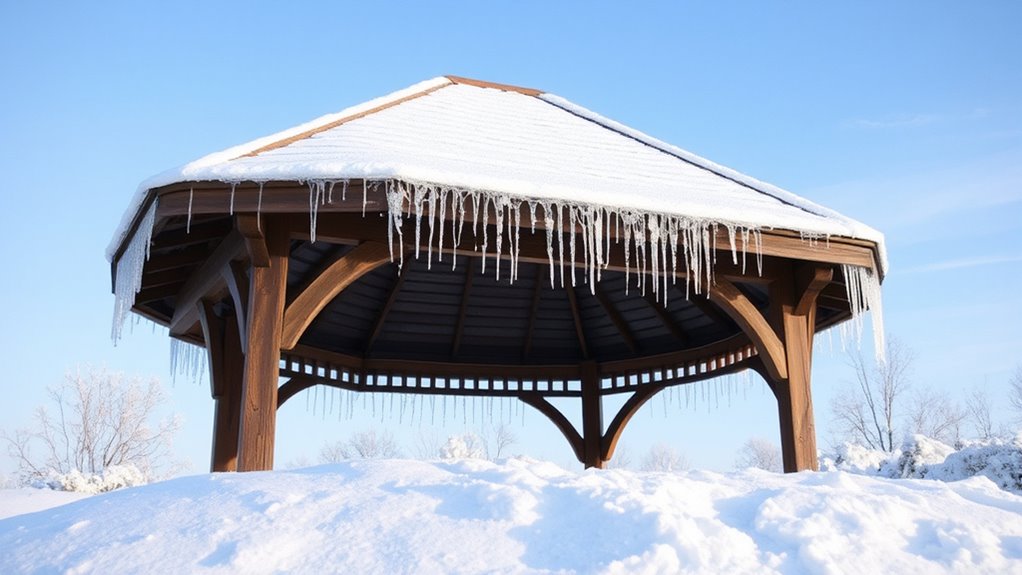
You understand the risks associated with ice damage on gazebo roofs, and it’s essential to address them proactively. Implementing regular maintenance and inspections can greatly reduce your vulnerability. Snow removal techniques and proper insulation play important roles in preventing ice formation. However, effective strategies extend beyond these basics. You’re likely wondering what extensive solutions can further strengthen your gazebo against winter’s harsh conditions, and the following sections will provide essential insights.




Understanding the Risks of Ice Damage
When winter weather arrives, understanding the risks of ice damage to gazebo roofs becomes essential for maintaining their structural integrity. Ice formation can lead to significant weight accumulation on the roof, increasing the risk of roof collapse. As temperatures fluctuate, melted snow can refreeze, creating a cycle that exacerbates stress on the roofing materials. You should be aware that prolonged exposure to such conditions may weaken the structure, compromising its ability to support weight. Recognizing the potential hazards and implementing preventive measures guarantees your gazebo remains a safe and enjoyable outdoor space throughout the winter months.
Regular Maintenance and Inspection
To guarantee the longevity and resilience of your gazebo roof against ice damage, regular maintenance and inspection are essential. Implementing preventive measures starts with routine checks of the roofing material, ensuring there are no cracks, loose shingles, or signs of wear. Examine the gutters and drainage systems for blockages that could exacerbate ice accumulation. Additionally, inspecting the structure for integrity issues, like sagging or rot, is vital. By staying proactive, you can address potential problems before they escalate, ensuring that your gazebo remains a sanctuary rather than a source of concern during harsh winter conditions. Prioritize these inspections to maintain functionality.
Snow Removal Techniques
When it comes to snow removal from your gazebo roof, having the right tools is essential for effective and safe clearing. You’ll need a sturdy snow shovel or a roof rake designed to minimize damage while removing snow. Additionally, implementing safe shoveling practices can help prevent injury and guarantee efficient snow management.
Tools for Snow Removal
Although winter can be a beautiful season, it often brings the challenge of snow accumulation on gazebo roofs, necessitating effective snow removal tools. A reliable snow shovel is essential for efficiently clearing snow without damaging the roof structure. Opt for lightweight models with a curved blade for easier maneuverability. Ice scrapers are equally important; they help remove stubborn ice that can form underneath the snow, preventing potential leaks or structural damage. Investing in these tools not only safeguards your gazebo but also enhances your winter experience, allowing you to enjoy the season without the burden of ice-related issues.
Safe Shoveling Practices
While it may seem straightforward, safe shoveling practices are vital for protecting both your gazebo and your well-being. Using proper posture and effective shoveling techniques can minimize strain and prevent injury. Remember to bend at your knees, keep your back straight, and avoid twisting your body. Here’s a handy guide:
| Technique | Description | Benefits |
|---|---|---|
| Bend your knees | Lift with your legs, not your back | Reduces back strain |
| Push, don’t lift | Slide snow instead of lifting | Less physical exertion |
| Take breaks | Rest periodically | Prevents fatigue |
| Use a lightweight shovel | Easier to handle | Reduces injury risk |
| Wear proper footwear | Guarantees traction | Reduces slip risk |
Insulation and Ventilation Solutions
Effective insulation and ventilation are essential for preventing ice damage on gazebo roofs, as they help maintain an ideal temperature balance. To optimize your gazebo’s performance, consider the following:
Effective insulation and ventilation are key to protecting gazebo roofs from ice damage by maintaining a balanced temperature.
- Ventilation systems: Guarantee proper air circulation to prevent heat buildup.
- Insulation materials: Use high-quality insulation to minimize heat loss and reduce the risk of ice formation.
- Moisture barriers: Install barriers to prevent condensation, which can lead to further ice issues.
Roof Design Considerations
When designing your gazebo roof, consider the slope and pitch to facilitate effective water drainage and minimize ice accumulation. Material selection plays a vital role in durability and thermal performance, impacting how your structure withstands winter conditions. Additionally, employing proper insulation techniques can further mitigate the risks of ice damage, ensuring your gazebo remains functional and aesthetically pleasing throughout the seasons.
Slope and Pitch
The slope and pitch of a gazebo roof play essential roles in its ability to withstand ice accumulation. Proper slope design guarantees snow and ice slide off rather than build up, reducing the risk of damage. Understanding pitch importance can help you maximize your gazebo’s longevity.
- A steeper pitch enhances drainage, minimizing ice weight.
- An ideal slope prevents moisture pooling, which can lead to leaks.
- Balancing aesthetics and functionality guarantees both visual appeal and structural integrity.
Material Selection
While selecting materials for your gazebo roof, it’s crucial to take into account how each option will perform under ice and snow conditions. Prioritize material durability and temperature resistance, as these factors greatly impact longevity and performance. Metal roofing, for instance, offers excellent durability and can withstand heavy snow loads, while also shedding ice effectively. Alternatively, asphalt shingles may provide reasonable temperature resistance but can suffer from wear in extreme conditions. Ultimately, choose materials that not only meet aesthetic preferences but also guarantee structural integrity during harsh winter weather, safeguarding your gazebo against potential ice damage.
Insulation Techniques
To effectively prevent ice damage to your gazebo roof, incorporating proper insulation techniques is essential. Effective insulation materials create thermal barriers that minimize the risk of ice formation. Consider the following strategies:
- Reflective Foil Insulation: Redirects heat back into the gazebo, reducing ice melt and refreeze cycles.
- Spray Foam Insulation: Provides a seamless barrier, ensuring ideal thermal performance and reducing air leaks.
- Rigid Foam Boards: Offers high insulating value with minimal thickness, ideal for limited space.
Protective Coatings and Treatments
When considering protective coatings and treatments for gazebo roofs, it’s essential to choose options that effectively mitigate ice damage while enhancing durability. Utilizing protective materials, such as elastomeric coatings, can provide a waterproof barrier and flexibility to withstand extreme temperatures. Guarantee proper coating application by preparing the surface adequately and applying multiple layers for peak protection. Additionally, consider treatments that promote ice and snow runoff, reducing load on the roof structure. Regular inspections and maintenance of these coatings can further prolong their effectiveness, making sure your gazebo remains a sanctuary, free from the destructive forces of winter weather.
Preparing for Severe Weather Events
As severe weather events can strike unexpectedly, it’s crucial to proactively prepare your gazebo to minimize potential ice damage. Utilize effective weather forecasting tools to stay informed about approaching storms. Your emergency preparedness plan should include:
Proactively prepare your gazebo for severe weather to minimize ice damage and stay informed with reliable forecasting tools.
- Reinforcing the gazebo’s structural integrity with proper bracing.
- Clearing gutters and roof surfaces of debris to prevent ice accumulation.
- Installing a reliable drainage system to manage melting ice.
Frequently Asked Questions
How Can I Tell if My Gazebo Roof Needs Repairs?
Your gazebo roof’s like a sentinel; if you spot sagging, cracks, or missing shingles, those are repair signs. Regular roof maintenance guarantees longevity, so keep a keen eye and act before small issues escalate.
What Materials Are Best for Gazebo Roofs in Icy Climates?
Metal roofing and insulated materials are your best choices for gazebo roofs in icy climates. They’re durable, resist snow accumulation, and provide excellent insulation, ensuring your structure remains protected from harsh winter conditions.
Can I Use a Regular Roof Rake on My Gazebo?
Yes, you can use a regular roof rake on your gazebo. For effective gazebo maintenance, guarantee you carefully remove snow without damaging the structure. Proper technique minimizes risks and prolongs your gazebo’s lifespan.
Are There Specific Gazebo Designs That Resist Ice Damage Better?
Gable designs offer sharp angles that shed snow effectively, while arch roofs create smooth, curved surfaces that encourage sliding. Choosing these styles can enhance your gazebo’s resilience against ice damage, ensuring lasting beauty and function.
How Often Should I Check My Gazebo Roof in Winter?
You should conduct a roof inspection every two to four weeks during winter maintenance. Regular checks help identify potential issues, ensuring your gazebo remains sturdy and free from ice-related damage as the season progresses.
