
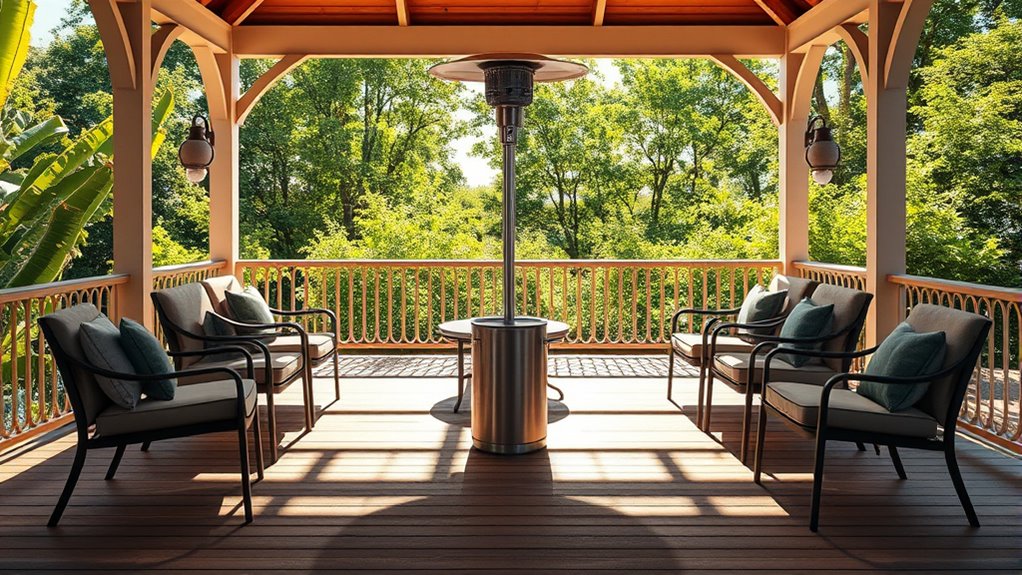
When using heaters in your gazebo, it’s essential to follow specific safety guidelines to prevent fire hazards. You need to maintain a minimum clearance of 3 feet for portable heaters and 4 feet for standalone units. Ignoring these distances can lead to dangerous situations, especially with flammable materials nearby. Understanding the factors that contribute to safe heater placement can enhance your outdoor experience considerably. Let’s explore these critical safety measures further.



Understanding Heater Types and Their Heat Output
When you’re choosing a heater, it’s important to understand the different types and their heat output. Electric heaters are often easy to use and maintain, providing instant warmth, while propane heaters offer greater mobility and a higher heat output, ideal for larger spaces. Next, consider radiant vs. convection heating. Radiant heaters warm objects directly, making them perfect for quick warmth in smaller areas. In contrast, convection heaters circulate warm air, heating the entire space more evenly. Understanding these differences helps you select the right heater for your needs, ensuring comfort while enjoying your outdoor space in freedom.
Recommended Clearance Distances
Maintaining proper clearance distances around heaters is essential for safety and efficiency. To comply with safety regulations and guarantee peak performance, follow these clearance guidelines:
| Heater Type | Minimum Clearance (Feet) | Recommended Distance (Feet) |
|---|---|---|
| Portable Heater | 3 | 5 |
| Wall-mounted Heater | 2 | 3 |
| Standalone Heater | 4 | 6 |
Factors Affecting Safe Distance
Understanding the recommended clearance distances for heaters is just the first step in ensuring safety. Several factors affect these distances. Heat radiation plays a vital role; as it dissipates, the intensity decreases, allowing you to position heaters closer to non-flammable materials. However, you must consider material flammability. Items like wood or fabric can ignite easily if placed too close. Assess your gazebo’s layout and the materials used in its construction. Always prioritize safety by maintaining greater distances for flammable materials, ensuring a secure and enjoyable environment where you can freely enjoy your outdoor space without worry.
Proper Installation and Placement Techniques
Proper installation and placement of heaters can greatly enhance safety and efficiency. Start by choosing the right installation materials, making sure they’re heat-resistant and suitable for outdoor use. When placing the heater, consider placement angles; direct the heat towards seating areas for ideal warmth. Maintain a safe distance from walls, furniture, and other flammable items—generally, at least three feet. Avoid corner placements, as they can trap heat and create hazards. Confirm the heater is stable and secured, reducing the risk of tipping. With the right techniques, you’ll enjoy a cozy gazebo experience while keeping safety a top priority.
Additional Safety Tips for Gazebo Heating
While you enjoy your time in the gazebo, it’s essential to keep a few additional safety tips in mind when using heaters. Always maintain a safe distance between heat sources and flammable materials, including furniture and decor. Make sure your heater is stable and on a flat surface to prevent tipping. Use safety gear, like heat-resistant gloves, when adjusting or refueling heaters. Regularly inspect your equipment for any signs of wear or damage. If you’re using propane heaters, guarantee proper ventilation to avoid carbon monoxide buildup. Stay aware, and never leave heaters unattended to enjoy a safe and cozy atmosphere.
Frequently Asked Questions
Can I Use a Heater in a Completely Enclosed Gazebo?
You shouldn’t use a heater in a completely enclosed gazebo due to enclosed gazebo safety concerns. Proper heater ventilation requirements aren’t met, increasing fire risks and carbon monoxide hazards. Always prioritize safety in your space.
What Materials Are Safest to Place Near Heaters?
Use fire resistant materials like brick or stone near heaters. For surfaces, choose heat resistant options such as metal or tempered glass. Avoid flammable items to guarantee safety while enjoying your space freely.
Are There Specific Heaters Designed for Gazebos?
Yes, there are specific heaters designed for gazebos, like propane heaters and electric heaters. Propane heaters provide portability, while electric heaters offer convenience. Choose based on your gazebo size and how you want to enjoy the space.
How Often Should I Inspect My Heater for Safety?
You should inspect your heater for safety at least once a month. Following heater maintenance and safety guidelines helps guarantee peak performance and reduces risks. Regular checks keep your space cozy and worry-free.
What Should I Do if My Heater Tips Over?
If your heater tips over, immediately unplug it and make sure it’s completely cool. Follow your emergency procedures, checking for gas leaks or damage. Prioritize safety; don’t attempt to use it until inspected.