
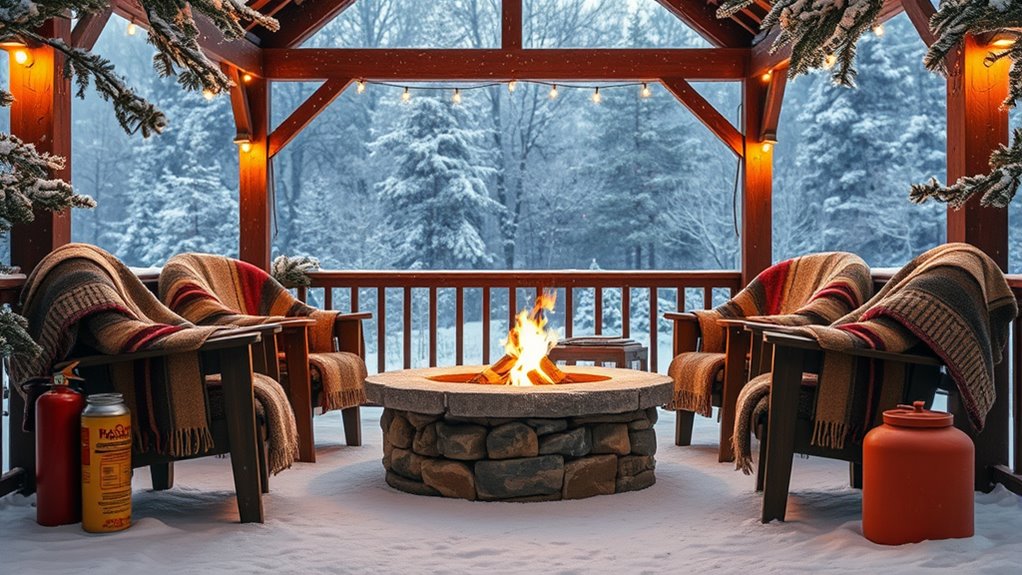
When using a fire pit in your winter gazebo, safety should be your top priority. You need to choose the right location, maintain proper ventilation, and keep flammable materials at a safe distance. Each of these factors plays an essential role in preventing accidents. But there’s more you should know about establishing a fire safety zone and preparing for emergencies. Understanding these key aspects can make your experience both enjoyable and secure.




Choosing the Right Location for Your Fire Pit
When it comes to choosing the right location for your fire pit, there are several important factors to contemplate. Consider your fire pit orientation; it’s essential to face it away from the gazebo structure to guarantee safety and comfort. You’ll want to maintain a safe distance to prevent sparks from reaching flammable materials. Additionally, think about wind direction, as it can affect smoke flow and heat distribution. Select a level, stable surface to avoid accidents, and make sure there’s enough space for seating around the pit. By carefully considering these factors, you’ll create a cozy, inviting atmosphere while prioritizing safety.
Understanding Fire Pit Regulations and Guidelines
Before you light up your fire pit in the winter gazebo, it’s crucial to understand the local regulations and guidelines that govern its use. Ignoring these can lead to fines or safety hazards.
- Check if you need fire pit permits.
- Familiarize yourself with any restrictions on fuel types.
- Follow distance requirements from structures and trees.
Staying informed about local regulations guarantees you enjoy your fire pit responsibly. By adhering to these guidelines, you not only maintain safety but also respect your neighbors’ comfort and your community’s standards. Enjoy your winter evenings safely!
Selecting the Appropriate Fire Pit Type
Understanding fire pit regulations sets the stage for selecting the right fire pit type for your winter gazebo. Consider various fire pit styles, such as portable, built-in, or tabletop options. Each style offers unique benefits and aesthetics. Next, evaluate fire pit materials—steel, stone, or copper can affect durability and heat retention. Confirm the materials you choose are safe for use in enclosed spaces. Always prioritize safety, selecting a design that complements your gazebo while adhering to guidelines. By carefully considering these factors, you’ll enjoy a cozy atmosphere while minimizing risks during your winter gatherings.
Ensuring Proper Ventilation in Your Gazebo
When using a fire pit in your gazebo, proper ventilation is essential for safety. Ensuring adequate airflow helps prevent the buildup of harmful gases, which can be dangerous. Additionally, the placement of your fire pit should allow for unobstructed air movement to maintain a safe environment.
Importance of Airflow
While enjoying a cozy evening by your fire pit in a winter gazebo, it’s crucial to verify proper airflow to maintain a safe and comfortable environment. Understanding airflow dynamics can greatly influence smoke dispersion, preventing harmful fumes from lingering.
- Confirm adequate ventilation openings in your gazebo.
- Position your fire pit away from enclosed walls to facilitate airflow.
- Regularly monitor smoke levels and adjust your fire as needed.
Placement of Fire Pit
After guaranteeing proper airflow, the next step is to contemplate the placement of your fire pit within the gazebo. Choose a location that allows for safe distances from flammable materials, guaranteeing your fire pit design promotes efficient heat distribution. Consider fire pit materials; non-combustible options like stone or metal are ideal. Avoid placing the fire pit directly against walls or furniture, as this could obstruct ventilation and increase fire risks. Instead, position it centrally, allowing for maximum airflow. Always check local regulations regarding fire pit placement to guarantee compliance and enjoy your winter gatherings safely and freely.
Keeping Flammable Materials at a Safe Distance
Maintaining a safe distance from flammable materials is essential for guaranteeing a secure environment around your fire pit, especially in a winter gazebo setting. You should always be aware of the items nearby that could ignite. Keep the following in mind:
Ensure a secure environment around your fire pit by keeping flammable materials at a safe distance.
- Wooden furniture: Position it at least 10 feet away from the fire pit.
- Decorative fabrics: Confirm blankets and cushions are stored safely, away from heat sources.
- Dry leaves or debris: Regularly clear these away to prevent accidental fires.
Using the Right Fuel for Your Fire Pit
When it comes to using your fire pit, choosing the right fuel is crucial for safety and efficiency. Different types of fuel can impact both the warmth and environmental footprint of your fire. Be mindful of safety considerations and explore eco-friendly options to guarantee a pleasant experience in your winter gazebo.
Types of Fire Pit Fuel
Choosing the right fuel for your fire pit is essential for both safety and efficiency. Understanding wood vs propane can greatly impact your experience. Here are a few options to take into account:
- Wood: Offers a traditional experience with crackling sounds and natural aromas, but requires more maintenance and cleanup.
- Propane: Provides convenience and consistent heat, ensuring fire pit efficiency with minimal effort.
- Natural Gas: A permanent solution that’s eco-friendly, delivering a steady flame without the hassle of refueling.
Select the fuel that aligns with your needs, keeping in mind the unique qualities of each type to enhance your winter gazebo enjoyment.
Safety Considerations for Fuel
Using the right fuel for your fire pit not only impacts your enjoyment but also plays an essential role in safety. Always consider fuel storage and make certain you keep your fuel in a cool, dry place away from the fire. Here’s a quick reference table to guide you on safe fuel choices:
| Fuel Type | Safety Tips |
|---|---|
| Propane | Store tanks upright, secure |
| Wood | Use seasoned wood, avoid soft |
| Charcoal | Keep covered, dry |
| Gel Fuel | Store away from heat sources |
| Alcohol-based | Handle with caution |
Always have fire extinguishing methods nearby for added safety!
Eco-Friendly Fuel Options
While traditional fuels can enhance the ambiance of your fire pit, eco-friendly options are becoming increasingly popular for those looking to reduce their environmental impact. By choosing sustainable fuel, you can enjoy your outdoor space guilt-free. Here are some alternative options to evaluate:
- Compressed wood logs: They burn cleaner and produce less smoke.
- Bioethanol: A renewable energy source that burns cleanly without harmful emissions.
- Propane: Emits fewer pollutants compared to wood, making it a safer choice.
Exploring these eco-friendly fuels allows you to enjoy the warmth of your fire pit while being kind to the planet.
Establishing a Fire Safety Zone
Establishing a fire safety zone is essential for guaranteeing a safe and enjoyable experience when using a fire pit in your winter gazebo. Start by clearing at least a 10-foot radius around the fire pit of any flammable materials, including furniture and decorations. Consider using fire pit accessories, like spark screens, to contain embers. It’s also wise to have safety gear, such as fire extinguishers and blankets, nearby in case of emergencies. Always ascertain your gazebo’s ventilation is adequate to prevent smoke buildup. By creating this safety zone, you can enjoy the warmth and ambiance of your fire pit with peace of mind.
Monitoring the Fire Closely
Monitoring the fire closely is essential to ensuring safety and preventing accidents. By keeping an eye on the flames, you can maintain proper flame control and understand fire behavior. Here are some key tips:
- Always have a fire extinguisher or water source nearby.
- Avoid distractions; stay present and attentive to the fire.
- Adjust logs and flames as needed to prevent flare-ups.
Being vigilant not only enhances your enjoyment but also protects everyone around. Embrace the freedom of a warm fire, but remember that your responsibility in monitoring it is vital for a safe and delightful experience.
Preparing for Emergencies
When using a fire pit in your winter gazebo, it’s essential to be prepared for emergencies. Make sure you have an emergency kit with essentials like a first aid kit, fire extinguisher, and a flashlight. Additionally, create a fire safety plan that includes evacuation routes and communication methods in case of an emergency.
Emergency Kit Essentials
While enjoying a cozy evening by the fire pit in your winter gazebo, it’s essential to be prepared for any unforeseen emergencies. Having an emergency kit can make all the difference. Here are a few vital items you should include:
- First aid supplies (bandages, antiseptics, and pain relievers)
- Flashlight with extra batteries
- List of emergency contacts (friends, family, and medical services)
Fire Safety Plan
Having an emergency kit ready is just one part of ensuring safety when using a fire pit in your winter gazebo. You should also establish a fire safety plan that includes proper fire extinguisher placement and smoke detector installation. Place the fire extinguisher within easy reach, ideally near the entrance of your gazebo, ensuring everyone knows its location. Install smoke detectors at appropriate heights to promptly alert you of any fire hazards. Regularly check these devices to guarantee they’re functional. By taking these precautions, you can enjoy your winter gatherings with peace of mind, knowing you’re prepared for any emergencies that may arise.
Maintaining Your Fire Pit for Safe Use
To guarantee your fire pit operates safely during winter gazebo use, regular maintenance is essential. You should perform seasonal checks to verify everything’s in top shape. Here are a few key maintenance tasks:
Regular maintenance is crucial for safe fire pit operation during winter gazebo use. Perform seasonal checks to ensure everything is in top shape.
- Inspect the fire pit for rust or damage.
- Clean out ash and debris after each use.
- Check gas lines and connections for leaks.
Frequently Asked Questions
Can I Use a Portable Fire Pit in My Gazebo?
You shouldn’t use a portable firepit in your gazebo without knowing local regulations. Gazebo firepit materials might not withstand high heat, so guarantee proper ventilation and safety measures are in place to avoid hazards.
What Weather Precautions Should I Take for Winter Fire Pit Use?
In winter’s clutch, you’ll want to stack your firewood wisely, ensuring heat retention while keeping pathways clear of snow. Always monitor the wind, and let warmth embrace you without inviting danger into your haven.
How Do I Extinguish a Fire Pit Safely?
To extinguish a fire pit safely, pour water evenly over the embers, ensuring they’re fully doused. Stir the ashes to confirm there’s no remaining heat, following proper safety measures to prevent any flare-ups.
Are There Specific Fire Pit Covers for Winter?
Yes, there are specific fire pit covers for winter. They’re often made from durable materials designed for fire pit maintenance, protecting your investment from harsh weather. Choosing the right cover means ensuring your fire pit’s longevity and performance.
Can I Use My Fire Pit During Snowfall?
Yes, you can use your fire pit during snowfall, but guarantee snow safety by keeping it clear of accumulation. Always monitor for fire hazards, and never leave it unattended to minimize risks and enjoy responsibly.