
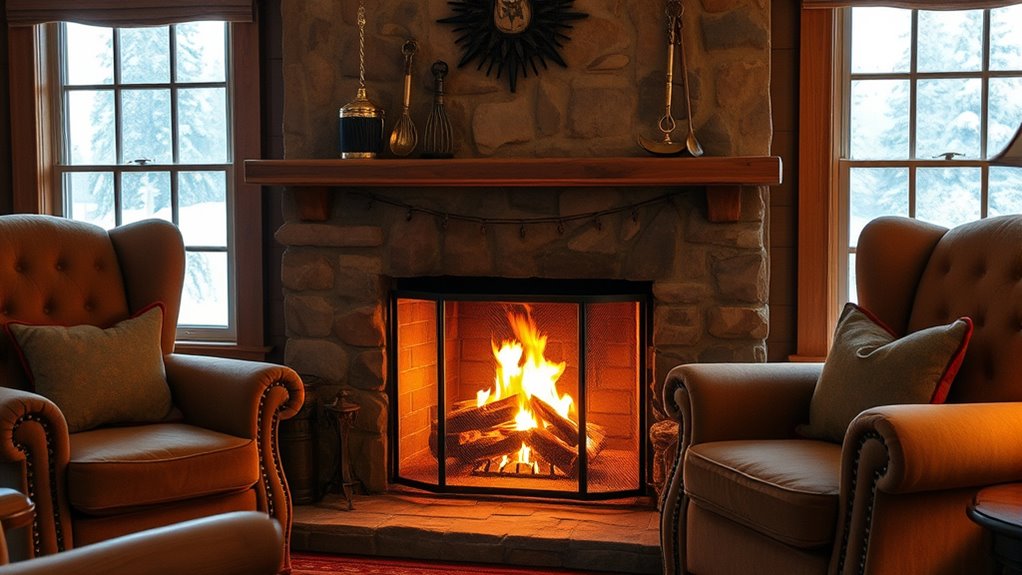
As winter approaches, guaranteeing your fireplace is safe and efficient is vital. Regular maintenance and inspections can help prevent hazards, while choosing the right fuel and storing firewood properly can enhance your experience. It’s also essential to take into account ventilation and have proper safety measures in place. Understanding these guidelines will not only keep your home cozy but also protect your loved ones. What steps will you take to guarantee a safe fireplace this season?



Regular Maintenance and Inspection
When it comes to keeping your fireplace safe and efficient, regular maintenance and inspection are crucial. Start with chimney cleaning to remove soot and creosote buildup, which can lead to dangerous chimney fires. Aim for at least an annual cleaning, or more often if you use your fireplace frequently. Additionally, a thorough flue inspection guarantees there’s no obstruction that could impede airflow. This inspection helps identify any structural issues before they become serious problems. By prioritizing these steps, you can enjoy the warmth of your fireplace while minimizing risks, allowing you to maintain your freedom in a safe and cozy environment.
Safe Fuel Choices
Choosing the right fuel for your fireplace is essential for safe and efficient operation. Traditional firewood is a popular choice, but you might want to contemplate alternative fuel sources like natural gas or propane for convenience and cleaner burns. These options produce less smoke and minimize harmful emissions, making them eco-friendly choices. If you prefer a more sustainable route, look into compressed logs made from recycled materials or biofuels. Always verify that whichever fuel you select is compatible with your fireplace model to avoid hazards. Making informed choices keeps your home cozy while protecting the environment and your well-being.
Proper Firewood Storage
Although it may seem simple, proper firewood storage is essential for maintaining the quality of your wood and ensuring a safe burning experience. First, choose the right firewood types; hardwoods like oak and maple burn longer and hotter. Store your firewood in a well-ventilated area, elevated off the ground to prevent moisture absorption. Using storage containers like metal racks or covered bins can protect your wood from rain and pests. Keep your firewood away from your home to reduce fire hazards. Finally, allow your wood to season properly; dry wood ignites more easily and burns cleaner. Happy burning!
Installation of a Spark Guard
Installing a spark guard is essential for preventing embers from escaping your fireplace and causing potential fires. There are various types of spark guards available, each offering different levels of protection and aesthetics. Knowing the proper installation techniques guarantees your spark guard functions effectively and enhances your fireplace safety.
Importance of Spark Guards
When it comes to maintaining a safe and cozy environment around your fireplace, the installation of a spark guard is essential. A spark guard helps prevent embers and sparks from escaping, reducing the risk of accidental fires. You can choose from various spark guard materials, including metal and glass, each offering unique benefits. Additionally, many spark guards come in aesthetic designs that complement your home decor, allowing safety to blend seamlessly with style. By investing in a spark guard, you enhance your fireplace’s safety while maintaining the inviting atmosphere you desire during the winter months.
Types of Spark Guards
Choosing the right type of spark guard for your fireplace is essential for ensuring safety and enhancing your living space. You’ve got two popular options: glass screens and mesh panels. Glass screens provide a sleek, modern look, effectively containing sparks while allowing you to enjoy the flames. They’re great for those who want a clear view of the fire. On the other hand, mesh panels offer a more traditional style and are typically more affordable. They effectively block sparks but may not provide the same visibility. Consider your aesthetic preferences and safety needs when selecting the perfect spark guard for your fireplace.
Proper Installation Techniques
A spark guard’s effectiveness hinges not just on its type but also on proper installation. To guarantee safety, consider the chimney height and flue design when positioning your guard. Follow these key steps:
| Step | Description | Importance |
|---|---|---|
| Measure Chimney Height | Ensure the guard fits snugly at the top | Prevents sparks from escaping |
| Align With Flue Design | Match guard design to flue specifications | Enhances airflow and efficiency |
| Secure Properly | Use screws or brackets for stability | Reduces risk of accidental falls |
Ventilation and Airflow Considerations
Since proper ventilation is vital for safe and efficient fireplace operation, understanding airflow considerations can greatly enhance your experience. Effective airflow management helps prevent smoke backdrafts, ensuring your home stays comfortable and safe. Make sure your ventilation systems are clear of obstructions and functioning properly. Regularly check chimneys and flues to maintain ideal airflow. Adequate outside air supply is important, especially in tightly sealed homes. Consider installing an air intake vent to promote a balanced airflow, preventing issues like carbon monoxide buildup. By prioritizing these ventilation and airflow strategies, you can enjoy your fireplace without worry this winter.
Emergency Preparedness and Fire Extinguishers
Understanding proper ventilation and airflow is just one part of maintaining a safe fireplace environment. You should also prepare for emergencies by assembling an emergency kit that includes a fire extinguisher. Make certain it’s easily accessible and suitable for putting out small fires. Regular fire drills can help you and your family respond quickly and effectively in case of an emergency. Familiarize everyone with the escape routes and how to use the fire extinguisher properly. Being proactive about safety guarantees that you can enjoy your fireplace while minimizing risks, giving you the freedom to relax without worry this winter.
Frequently Asked Questions
Can I Use My Fireplace During a Power Outage?
Yes, you can use your fireplace during a power outage for heating. Just make sure you follow safety precautions, like ensuring proper ventilation and checking for creosote buildup, to prevent any hazards while enjoying the warmth.
How Often Should I Clean My Chimney?
You should clean your chimney annually; about 25% of chimney fires occur due to neglect. Regular inspections help, and using methods like brushing or vacuuming guarantees safety and efficiency when enjoying your fireplace.
Are Gel Fuels Safe for Indoor Fireplaces?
Yes, gel fuels can be safe for indoor fireplaces if you follow proper precautions. Always guarantee ventilation, use approved containers, and keep flammable materials away. It’s essential to prioritize gel fuel safety for a worry-free experience.
What Should I Do if My Smoke Alarm Goes Off?
When the smoke alarm sounds like a siren in the night, don’t panic. Follow your smoke alarm response plan: evacuate immediately, check for fire, and guarantee safety measures are in place before re-entering.
Can I Burn Treated Wood in My Fireplace?
You shouldn’t burn treated wood in your fireplace. It can release harmful chemicals, posing serious burning safety risks. Stick to natural, untreated wood for a cleaner, safer fire that keeps your space enjoyable and healthy.