
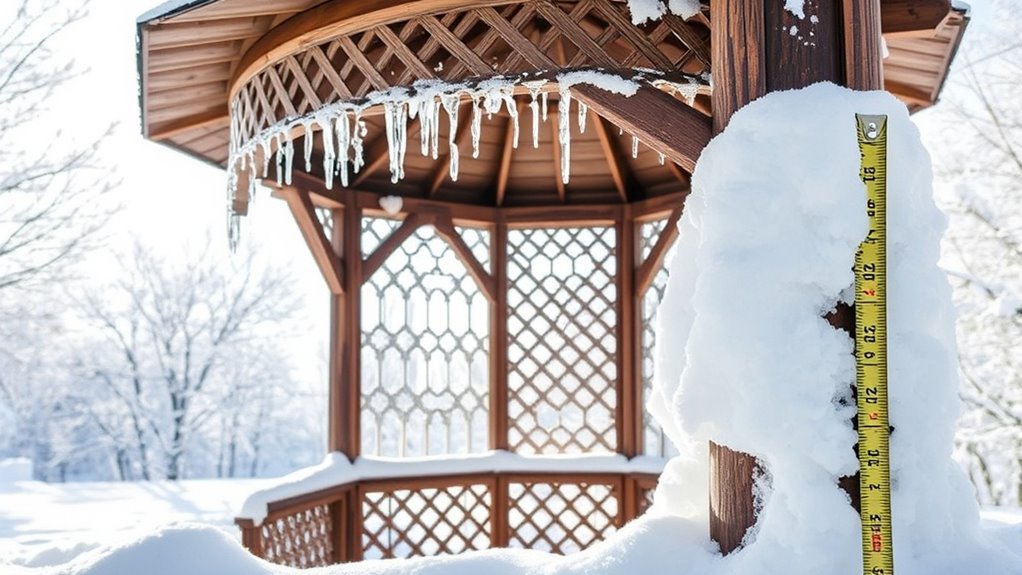
Your gazebo could collapse under a snow load heavier than a small car if not properly monitored. It’s essential to understand the risks associated with snow accumulation and how it impacts structural integrity. Regular inspections and proactive maintenance are key to ensuring safety and longevity. What specific strategies can you implement to safeguard your gazebo during the harsh winter months?




Understanding the Risks of Snow Accumulation
As winter sets in and snow begins to accumulate, it’s crucial to understand the risks that this added weight poses to your gazebo. Snow weight can exceed structural limits, leading to potential collapse. Additionally, ice formation beneath the snow creates a hidden hazard, compounding pressure on support beams. This accumulation can compromise the integrity of materials, especially if they’re not designed for heavy loads. Regularly monitoring snow depth and evaluating the potential for ice buildup can help mitigate risks. By staying proactive, you can preserve your gazebo’s functionality and guarantee your outdoor space remains a safe haven during winter months.
Assessing Your Gazebo’s Design and Materials
Snow accumulation poses considerable risks to your gazebo, making it crucial to assess its design and materials for winter resilience. First, evaluate design considerations such as roof pitch, which affects snow shedding. A steeper pitch reduces snow load, enhancing stability. Next, focus on material durability; choose weather-resistant materials like treated wood or metal that can withstand harsh winter conditions. Assess the structural integrity of joints and supports to ascertain they can bear added weight from snow. By prioritizing these elements in your gazebo’s design, you can greatly mitigate the risks posed by snow and prolong its lifespan through the winter months.
Regular Inspection Techniques for Winter Monitoring
While winter can be a beautiful season, it also demands vigilant monitoring of your gazebo to guarantee its stability and longevity. Implementing a well-structured inspection schedule is essential. Utilize monitoring tools such as moisture meters and structural stress gauges to assess your gazebo’s condition effectively.
| Inspection Type | Frequency | Monitoring Tools |
|---|---|---|
| Visual Check | Weekly | None |
| Structural Review | Biweekly | Stress gauges, levels |
| Moisture Assessment | Monthly | Moisture meters |
Stay proactive in your inspections, ensuring your gazebo withstands winter’s harsh demands.
Identifying Signs of Structural Stress
Recognizing the signs of structural stress in your gazebo is essential for maintaining its integrity during the winter months. Start with crack detection; inspect beams and joints for any visible fissures. These cracks can indicate material fatigue, often exacerbated by heavy snow loads. Pay attention to any sagging or misalignment as these may signal deeper structural issues. Listen for creaking sounds, which can also suggest stress on the materials. By proactively identifying these signs, you can address potential problems before they escalate, ensuring your gazebo remains a safe and enjoyable space throughout the snow season. Stay vigilant to protect your investment.
Recommended Snow Removal Methods
When it comes to snow removal from your gazebo, you’ll want to contemplate several effective methods. Manual shoveling techniques, roof rake usage, and the efficiency of snow blowers each have their own advantages and drawbacks. Understanding these options will help you maintain structural integrity while minimizing the risk of damage during the snow season.
Manual Shoveling Techniques
To effectively maintain your gazebo’s stability during the snow season, mastering manual shoveling techniques is crucial. Proper snow removal guarantees structural integrity and prevents undue stress on the gazebo. Here are some effective techniques:
| Technique | Description | Benefits |
|---|---|---|
| Push Technique | Push snow away from the gazebo | Reduces strain on your back |
| Lift and Toss | Lift snow and toss it aside | Clears heavy accumulations |
| Side Shovel | Shovel from the sides inward | Maintains even weight distribution |
Using these methods allows you to maintain your gazebo’s stability while enjoying the beauty of winter.
Roof Rake Usage
Manual shoveling techniques are effective, but utilizing a roof rake can greatly enhance snow removal efforts for your gazebo. Roof rake benefits include minimizing structural stress and preventing ice dams, which can lead to costly repairs. When using a roof rake, employ proper roof rake techniques: start at the edge and work upwards, maintaining a 45-degree angle to avoid damaging shingles. This method guarantees efficient snow removal while protecting your gazebo’s integrity. Regularly clearing snow can prevent excessive weight accumulation, assuring your structure remains stable throughout the snow season. Embrace the freedom of proactive maintenance with a reliable roof rake.
Snow Blower Efficiency
Although traditional shoveling methods have their merits, using a snow blower can greatly enhance the efficiency of snow removal around your gazebo. Opt for the right snow blower types—single-stage for light snowfall or two-stage for heavier accumulations—to maximize performance. Proper snow blower maintenance is vital; regularly check the auger and chute for blockages, and verify fuel is fresh to avoid malfunctions. Additionally, familiarize yourself with operational techniques to maneuver effectively, saving time and effort. By integrating a snow blower into your snow removal strategy, you’ll not only protect your gazebo’s structure but also enjoy a more liberated winter experience.
When to Seek Professional Help
When evaluating the stability of your gazebo during the snow season, it’s crucial to recognize signs that indicate the need for professional intervention. If you notice significant sagging, cracks in the structure, or shifting foundations, it’s time to call for a professional assessment. Additionally, if the snow load exceeds the recommended limits for your gazebo’s design, don’t hesitate to seek expert advice. Ignoring these warning signs could compromise safety and lead to costly repairs. Trust your instincts; if you’re uncertain about the stability, a professional evaluation can provide peace of mind and guarantee your gazebo remains safe and functional.
Preventative Maintenance Tips for Winter
After guaranteeing your gazebo’s stability with a professional assessment, implementing preventative maintenance can greatly enhance its resilience during the winter months. Start with thorough winter preparation: clear snow accumulation regularly to prevent excessive weight on the structure. Inspect the roof for leaks, and guarantee gutters are unclogged to facilitate drainage. Apply a protective sealant to wooden components, safeguarding against moisture damage. Additionally, reinforce connections and joints to withstand harsh winds. Finally, consider using a gazebo cover to shield it from snow and ice. These preventative tips will enhance structural integrity and prolong the life of your gazebo through the winter season.
Enhancing Gazebo Stability for Future Winters
To enhance your gazebo’s stability for future winters, consider implementing structural reinforcement techniques that bolster its overall framework. Additionally, effective snow load management strategies can considerably reduce the risk of collapse under heavy snowfall. By addressing these critical areas, you can guarantee your gazebo withstands harsh winter conditions.
Structural Reinforcement Techniques
Implementing effective structural reinforcement techniques can greatly enhance the stability of your gazebo during harsh winter conditions. Consider these methods:
- Reinforcement Materials: Utilize high-strength steel brackets and tension cables to fortify joints and connections, ensuring they withstand heavy snow loads.
- Design Modifications: Opt for a sloped roof design to facilitate snow runoff, preventing accumulation and reducing weight stress.
- Foundation Enhancement: Increase the depth and width of footings, or incorporate concrete piers to provide a stable base, minimizing movement during extreme weather.
Snow Load Management Strategies
Snow load management is essential for maintaining the stability of your gazebo through winters that can bring significant snowfall. To effectively manage snow weight, start by ensuring proper load distribution across the structure. Regularly inspect the roof and remove accumulated snow to prevent excessive pressure on beams and joints. Consider installing snow guards or structural supports that can redirect snow flow. Additionally, evaluate the gazebo’s design; a sloped roof can facilitate quicker snow runoff, minimizing weight. By implementing these strategies, you’ll enhance your gazebo’s resilience, ensuring it remains a safe and enjoyable space throughout the winter months.
Frequently Asked Questions
How Much Snow Weight Can My Gazebo Safely Support?
Your gazebo can safely support a snow load of typically 20-30 pounds per square foot, depending on its design and materials. Always check for structural integrity to prevent damage during heavy snowfalls.
Can I Use a Roof Rake for Snow Removal?
You can definitely use a roof rake for snow removal; it’s effective and efficient. Just be cautious to avoid damaging your gazebo. Combining it with other snow removal techniques can enhance overall safety and stability.
What Types of Materials Are Best for Winter Gazebo Construction?
For winter gazebo construction, metal’s durability outperforms wood, especially with insulation techniques. While wood provides aesthetic warmth, metal’s strength and resistance to snow load make it the superior choice for long-lasting stability and safety.
How Often Should I Inspect My Gazebo During Winter?
You should inspect your gazebo weekly during winter; neglecting winter maintenance could lead to catastrophic structural integrity failures. Regular checks guarantee it withstands snow loads, preserving your outdoor haven and your cherished moments in it.
Is It Safe to Use a Heater Under My Gazebo in Winter?
Using a heater under your gazebo in winter can be safe if proper precautions are taken. Guarantee adequate winter insulation and follow heater safety guidelines to prevent fire hazards and maintain a comfortable environment.