
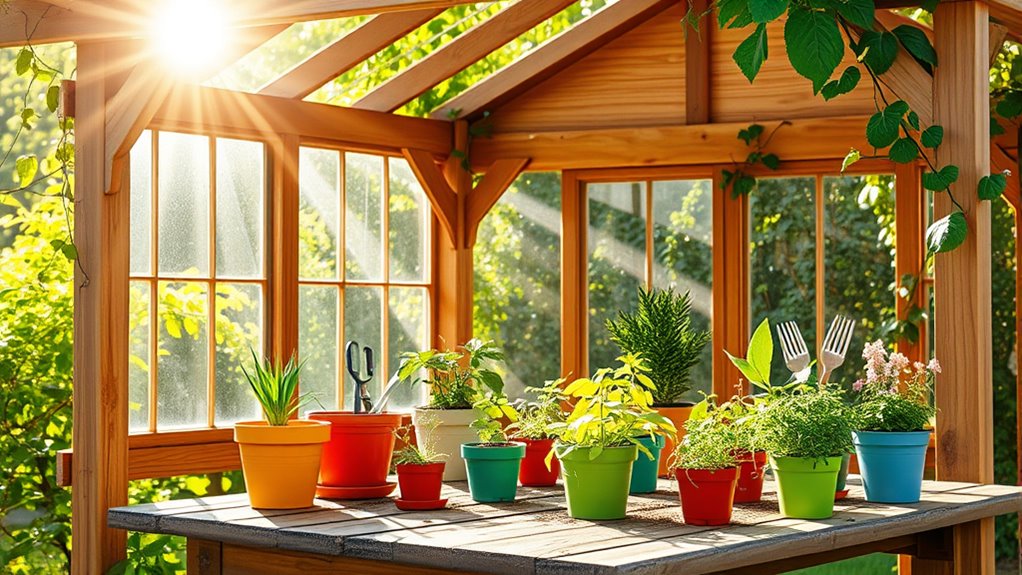
If you’re considering creating a mini greenhouse inside your gazebo, it’s crucial to begin by evaluating the available space and sunlight exposure. Understanding these factors will help you choose appropriate materials and plant varieties. To guarantee ideal growth, you’ll need to focus on insulation and ventilation as well. With the right approach, your gazebo can transform into a productive environment for your plants. Let’s explore the key elements that contribute to a thriving mini greenhouse.




Assessing Your Gazebo Space
Before you plunge into creating a mini greenhouse in your gazebo, it’s essential to assess the space you have available. Start by measuring the space dimensions, making certain you know the height, width, and length. This will help you determine how much room you can allocate for plants, shelving, and ventilation. Additionally, consider your gazebo orientation—whether it faces south, east, west, or north can considerably impact sunlight exposure and temperature control. A well-assessed space ensures your greenhouse thrives, allowing you the freedom to cultivate a diverse range of plants without feeling cramped or restricted in your growing environment.
Choosing the Right Greenhouse Materials
When selecting materials for your mini greenhouse, it’s essential to evaluate factors such as durability, insulation, and light transmission. Here’s a quick guide to help you:
- Polycarbonate Panels: These offer excellent light transmission and material durability, ensuring your plants thrive.
- PVC Framework: Cost-effective and lightweight, this option is easy to assemble and resistant to weather conditions.
- Shade Cloth: This is vital for controlling light intensity while allowing air circulation, promoting an ideal environment for growth.
Conducting a cost analysis on these materials will help you balance quality and budget, ultimately enhancing your gardening experience.
Insulating Your Mini Greenhouse
When insulating your mini greenhouse, selecting the right materials is essential for maintaining ideal temperatures. Consider options like bubble wrap or foam board, which can effectively reduce heat loss during colder months. Additionally, employing temperature regulation techniques, such as using thermal mass or strategically placing reflective materials, can enhance your greenhouse’s efficiency.
Material Selection for Insulation
Choosing the right materials for insulation is essential for maintaining ideal temperatures in your mini greenhouse, especially during extreme weather conditions. Different insulation types can greatly affect thermal performance, so here are three key materials to evaluate:
- Polycarbonate Panels – They offer excellent insulation and durability, allowing sunlight while minimizing heat loss.
- Reflective Foil – This lightweight option reflects heat back into the greenhouse, enhancing warmth without added weight.
- Fiberglass Insulation – Ideal for walls, it provides robust thermal performance and is relatively inexpensive.
Selecting these materials wisely will help you create a comfortable environment for your plants year-round.
Temperature Regulation Techniques
To effectively regulate temperature in your mini greenhouse, implementing a combination of insulation techniques is essential. Start by using thermal blankets or bubble wrap to insulate walls, reducing heat loss and improving temperature control. Consider installing reflective materials to maximize sunlight while minimizing heat buildup. For humidity management, integrate a moisture-retaining substrate and strategically place water trays to maintain ideal humidity levels. Adding vents and fans can enhance airflow, preventing overheating during sunny days. Remember, a well-insulated mini greenhouse not only protects your plants from temperature fluctuations but also creates a stable environment for growth year-round.
Installing Shelving and Planting Areas
While you’re planning the layout of your mini greenhouse inside the gazebo, installing shelving and designated planting areas is essential for maximizing space and ensuring ideal growth conditions for your plants. Consider these key elements:
- Shelving Options: Use adjustable shelves to accommodate various plant heights and sizes.
- Vertical Gardening: Implement vertical planting techniques to utilize wall space efficiently.
- Container Variety: Select diverse containers that suit your plants’ needs, ensuring proper drainage.
Maximizing Natural Light
To maximize natural light in your mini greenhouse, selecting transparent materials for walls and roofs is essential. Consider using polycarbonate panels or high-quality greenhouse glass, as they provide excellent light transmission and insulation. Additionally, strategically positioning your greenhouse to face south or southeast can enhance sunlight exposure throughout the day.
Transparent Material Selection
Choosing the right transparent materials for your mini greenhouse is essential, as they directly influence how much natural light your plants receive. Consider these options:
- Polycarbonate panels: They offer excellent insulation and light diffusion, ensuring your plants thrive without overheating.
- Glass alternatives: Lightweight and shatter-resistant, materials such as acrylic or fiberglass provide clarity and durability while maximizing sunlight.
- Greenhouse film: This cost-effective choice allows for UV protection and can be easily replaced, maintaining your greenhouse’s brightness.
Strategic Placement Techniques
When positioning your mini greenhouse within the gazebo, it’s essential to contemplate how sunlight moves throughout the day. Consider the sun orientation; placing your greenhouse where it receives maximum direct sunlight, particularly during peak hours, will enhance plant growth. Align it with the south-facing side if possible. Additionally, account for wind direction to protect your plants from harsh elements. Positioning your greenhouse in a sheltered area can reduce wind exposure, promoting a stable environment. Utilize reflective surfaces nearby to enhance light distribution, ensuring your plants thrive in this cozy, controlled space. Freedom to grow awaits you!
Ventilation Solutions for Optimal Growth
Although a mini greenhouse inside a gazebo provides an ideal environment for plant growth, proper ventilation is crucial to maintaining best conditions. Here are three effective solutions for airflow management:
- Passive Ventilation: Utilize strategically placed windows or vents to promote natural airflow, allowing hot air to escape.
- Active Ventilation Systems: Install fans or exhaust systems to guarantee consistent air movement, preventing heat buildup.
- Temperature Control: Use thermostats to automate fan operation, maintaining ideal temperatures for your plants.
Implementing these ventilation solutions will create a thriving atmosphere for your plants, ensuring they receive the airflow necessary for healthy growth.
Selecting the Right Plants for Your Space
When selecting plants for your mini greenhouse, consider the specific light and space conditions within your gazebo. Opt for varieties that thrive in your climate and can adapt to the limited space, such as herbs, leafy greens, or compact flowering plants. Understanding these factors will guarantee peak growth and a productive gardening experience.
Ideal Plant Types
Choosing the right plants for your mini greenhouse within a gazebo can greatly impact your gardening success. Here are three ideal plant types to evaluate:
- Herb Varieties: Basil, thyme, and parsley thrive in enclosed spaces, offering fresh flavors for your kitchen.
- Flower Choices: Opt for compact varieties like petunias or geraniums, which add vibrant colors and are easy to manage.
- Vegetable Options: Assess dwarf tomatoes or lettuce, which can flourish in limited space while providing fresh produce.
Space and Light Considerations
Since the success of your mini greenhouse hinges on effective space and light management, it is crucial to evaluate how much sunlight your gazebo receives throughout the day. Observe light diffusion patterns; direct sunlight can scorch sensitive plants, while shaded areas may limit growth. For ideal space utilization, consider vertical gardening or tiered shelving to maximize your planting area. Choose plants that thrive in your gazebo’s specific light conditions, such as herbs for partial shade or succulents for full sun. By understanding these factors, you can create a thriving environment that gives your plants the freedom to flourish.
Watering and Maintenance Tips
While maintaining a mini greenhouse inside your gazebo, it’s crucial to establish a consistent watering schedule tailored to the specific needs of your plants. Consider using a drip irrigation system to guarantee efficient water delivery and ideal soil moisture levels. Here are three key tips for effective watering and maintenance:
- Check Soil Moisture: Regularly monitor the soil to determine when watering is necessary.
- Water Early or Late: Aim to water during cooler parts of the day to reduce evaporation.
- Adjust Frequency: Be flexible with your watering schedule based on seasonal changes and plant growth.
Seasonal Considerations for Your Mini Greenhouse
Understanding the seasonal changes is essential for optimizing the conditions in your mini greenhouse. Different seasons affect temperature and humidity, which directly impacts your chosen seasonal plants. In spring, you’ll want to start seeds early, taking advantage of the mild climate; while summer may require additional shading to prevent overheating. Fall is perfect for harvesting, but you should prepare for cooler nights. Winter demands a focus on insulation and possibly supplemental heating to protect delicate plants. Always consider climate impacts in your area, adjusting your greenhouse strategy to guarantee your plants thrive year-round while maintaining a sense of freedom in your gardening pursuits.
Enhancing Aesthetics With Decor and Accessories
As you cultivate your mini greenhouse, adding decor and accessories can greatly enhance its overall aesthetics and functionality. To create a harmonious space, consider these elements:
- Decorative Accents: Use colorful pots and hanging planters to add visual interest and personality.
- Functional Accessories: Incorporate shelving units for better organization and efficient use of vertical space.
- Lighting Solutions: Install soft LED lights or lanterns to create a cozy atmosphere, especially for evening enjoyment.
These enhancements not only elevate the design but also improve plant care, allowing your mini greenhouse to flourish beautifully.
Frequently Asked Questions
Can I Use My Existing Gazebo for a Mini Greenhouse?
Yes, you can definitely use your existing gazebo for a mini greenhouse. By optimizing the space and implementing effective temperature control measures, you can create an ideal environment for growing plants while enjoying your outdoor setup.
What Are the Best Plants for Low Light Conditions?
In the world of low light gardening, shade loving plants like ferns, peace lilies, and snake plants thrive. These resilient species relish dim conditions, allowing you to cultivate a lush, green sanctuary even in the shadows.
How Do I Prevent Pests in My Mini Greenhouse?
To prevent pests in your mini greenhouse, implement effective pest control strategies. Use natural repellents like neem oil or garlic spray, ensuring you regularly check for infestations and maintain proper ventilation to deter unwanted visitors.
Can I Grow Vegetables Year-Round in My Gazebo?
Yes, you can absolutely embrace year-round gardening in your gazebo. With proper gazebo insulation, you’ll create a cozy microclimate, allowing your vegetables to thrive despite seasonal changes. Just monitor light and humidity levels regularly.
What Is the Best Soil Type for Greenhouse Plants?
The best soil type for greenhouse plants combines a balanced soil composition of loamy soil, peat, and perlite, ensuring ideal drainage requirements. This mix promotes healthy root growth and prevents waterlogging, enhancing your plants’ overall health.