
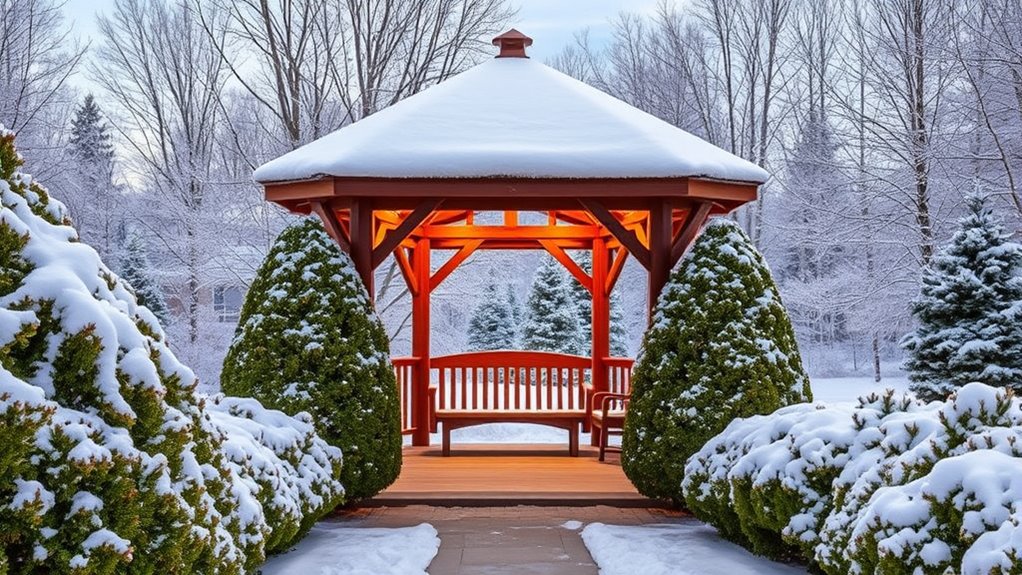
As winter approaches, it’s vital to understand how harsh weather can affect your gazebo. You might overlook signs of wear or neglect essential maintenance, leading to costly failures. Regular inspections and prompt snow removal are just the beginning. With the right techniques, you can guarantee your gazebo withstands the elements. But what specific steps should you take to prepare it for the winter months ahead?
Understanding Winter Weather Impacts on Gazebos
When you consider how winter weather can affect your gazebo, it’s essential to recognize the unique challenges posed by snow, ice, and freezing temperatures. The impact of temperature fluctuations can compromise materials, causing expansion and contraction that may lead to structural weaknesses. Additionally, changing precipitation patterns may result in heavy snow accumulation, placing undue stress on the gazebo’s framework. This combination can create vulnerabilities that, if unaddressed, could lead to significant damage. By understanding these winter weather impacts, you can take proactive steps to guarantee your gazebo remains a sanctuary of freedom, even in the harshest conditions.
Inspecting for Structural Integrity
As winter’s harsh conditions set in, it’s vital to inspect your gazebo for structural integrity to prevent potential damage. Conducting thorough structural assessments guarantees your gazebo can withstand heavy snow loads and fierce winds. Load testing is essential; it evaluates how well your gazebo can support weight without compromising safety.
| Inspection Focus | Action Required |
|---|---|
| Roof Stability | Check for sagging |
| Joint Integrity | Examine connections |
| Post Condition | Inspect for rot |
| Floor Support | Assess load-bearing |
| Overall Stability | Perform load tests |
Taking these steps helps maintain your gazebo’s freedom and beauty.
Cleaning and Maintaining Your Gazebo
After ensuring your gazebo’s structural soundness, it’s time to focus on cleaning and maintaining its surfaces. Establishing a regular cleaning routine can enhance longevity and aesthetics. Consider this maintenance schedule:
Ensure your gazebo remains beautiful and durable by following a consistent cleaning and maintenance routine.
- Monthly: Sweep debris and dust off surfaces.
- Quarterly: Wash with mild soap and water, removing stains or mildew.
- Biannually: Inspect and tighten loose screws or joints.
- Annually: Apply a protective finish to wood or sealant to metal.
Protecting Against Snow Accumulation
While winter can transform your gazebo into a picturesque retreat, it also poses significant challenges, particularly from snow accumulation. To safeguard against excessive snow load, consider your roof design carefully. A steep pitch can help shed snow, while a flat roof might require regular clearing. Below is a guide to help you assess your gazebo’s snow resilience:
| Roof Design Type | Snow Load Capacity |
|---|---|
| Steep Pitch | High |
| Gabled Roof | Moderate |
| Flat Roof | Low |
| Curved Roof | Moderate |
| Canopy Style | Variable |
Implementing these strategies guarantees your gazebo remains a sanctuary all winter long.
Ensuring Proper Drainage
Effective drainage is essential for maintaining your gazebo’s integrity during winter months. Without proper water management, you risk structural damage and costly repairs. Here are some drainage solutions to contemplate:
Effective drainage is crucial for preserving your gazebo’s structure and preventing costly winter repairs.
- Install gutters to direct rain and melting snow away from the gazebo.
- Grade the soil around the base, ensuring water flows away from the structure.
- Use permeable pavers for the gazebo’s flooring to absorb excess water.
- Regularly clear debris from drainage areas to prevent blockages.
Securing Loose Components
Before winter’s chill sets in, it’s crucial to secure any loose components of your gazebo to prevent wind damage and structural wear. Inspect each joint and connection, prioritizing fasteners selection that suits your gazebo’s materials. Choose corrosion-resistant screws and bolts for longevity. As you perform component tightening, verify each piece fits snugly, allowing no room for movement during harsh winds. A well-secured gazebo not only stands resilient against winter storms but also offers you a sanctuary to enjoy nature’s beauty. Embrace the freedom of outdoor spaces by taking these proactive steps to maintain your gazebo’s integrity and longevity.
Using Covers and Tarps Wisely
As winter approaches, utilizing covers and tarps wisely can considerably enhance your gazebo’s protection against the elements. Choosing the right cover types and tarp materials is essential. Follow these guidelines for best results:
- Waterproof Tarps: Select heavy-duty, waterproof materials to shield against rain and snow.
- UV-Resistant Covers: Make sure covers resist harmful UV rays to prevent fading and deterioration.
- Breathable Fabrics: Opt for breathable tarps to prevent moisture buildup and mold growth.
- Secure Fastening: Use strong ties and weights to keep your covers secure during harsh winds.
These strategies will help maintain your gazebo’s integrity and extend its lifespan.
Checking Electrical Features
While the beauty of a winter gazebo can be mesmerizing, guaranteeing that its electrical features are in top shape is essential for both safety and functionality. Start with thorough wiring inspections to identify any wear or damage that could lead to hazards. Check connections, switches, and outlets for moisture and guarantee they’re rated for outdoor use. Invest in GFCI outlets to enhance electrical safety, providing peace of mind during winter gatherings. Regularly test lighting and heating elements, guaranteeing they deliver warmth and ambiance. By prioritizing these checks, you’re not just preserving your gazebo; you’re embracing the freedom to enjoy it all season long.
Preparing for Wind and Storms
When preparing your gazebo for harsh winter winds and storms, it’s vital to implement secure anchoring techniques that can withstand nature’s fury. Utilizing weather-resistant materials not only enhances durability but also protects your investment from the elements. By focusing on these essential elements, you’ll guarantee your gazebo remains a safe haven, even in the most challenging conditions.
Secure Anchoring Techniques
To guarantee your gazebo withstands the harshest winter winds and storms, implementing secure anchoring techniques is essential. Consider these effective methods for ground anchors:
- Choose the Right Ground Anchors: Opt for heavy-duty, weather-resistant materials.
- Proper Installation Techniques: Drive anchors deep into the ground to maximize stability.
- Use Multiple Anchors: Distribute weight evenly to prevent tipping.
- Regular Inspections: Check anchors and connections frequently for wear and looseness.
Weather-Resistant Materials
Even with secure anchoring techniques in place, the choice of materials for your gazebo plays a pivotal role in its ability to withstand winter’s fury. Opt for composite materials or treated wood, which resist moisture and decay, ensuring longevity.
| Material | Durability | Maintenance |
|---|---|---|
| Composite | High | Low |
| Treated Wood | Moderate | Moderate |
| Vinyl Coating | High | Low |
| Aluminum Frame | Very High | Minimal |
| Cedar Wood | Moderate | High |
Selecting the right materials empowers you to embrace winter’s beauty, unburdened by structural failures.
Frequently Asked Questions
What Materials Are Best for Winter Gazebo Construction?
For winter gazebo construction, you’ll want durable wood types like cedar or redwood, paired with effective insulation options such as foam boards or spray foam. This combination guarantees warmth while maintaining an inviting, open atmosphere.
How Often Should I Check My Gazebo During Winter?
Your gazebo’s like a ship weathering a storm; you should inspect it weekly during winter. Regular winter maintenance and gazebo inspections guarantee it remains sturdy, allowing you to enjoy your outdoor escape without worry.
Can I Use a Heater Inside My Gazebo in Winter?
Yes, you can use a heater inside your gazebo in winter, but consider heating options carefully. Make certain you follow safety precautions, like proper ventilation and distance from flammable materials, to enjoy a cozy, worry-free experience.
What Signs Indicate My Gazebo Needs Immediate Repair?
If you notice sagging roofs or cracks, your gazebo’s stability is compromised. Statistically, 30% of winter gazebos face structural issues. Guarantee proper winter insulation to maintain its charm and preserve your freedom to enjoy the outdoors.
Are There Specific Winter Plants Safe to Keep in a Gazebo?
You can keep hardy winter plant options like pansies and ornamental kale in your gazebo. For ideal gazebo plant care, make certain they receive adequate sunlight and protection from harsh winds, promoting vibrant growth and resilience.