
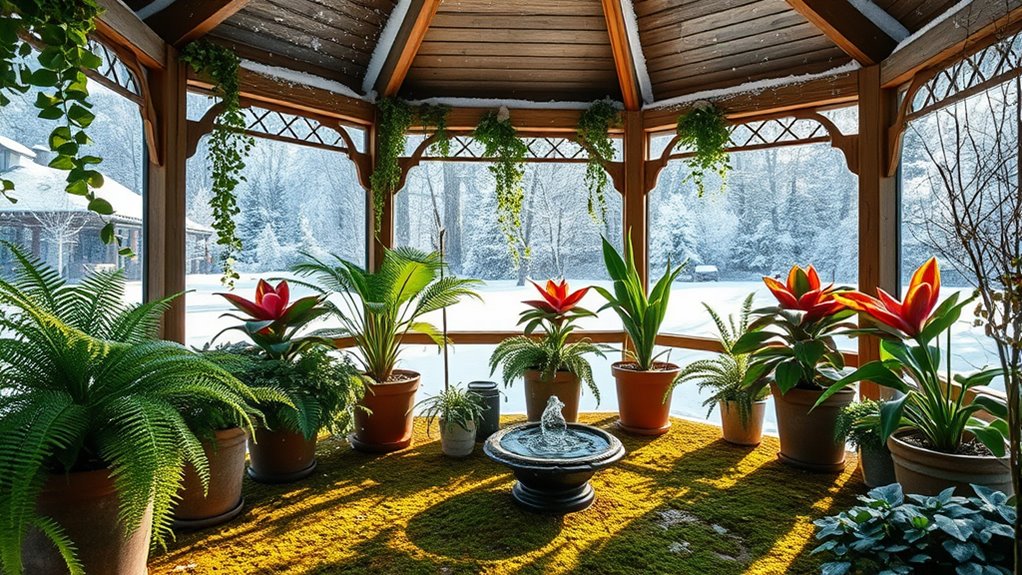
Imagine transforming your enclosed winter gazebo into a lush oasis amidst the chill. Selecting the right plants is essential for maintaining a vibrant atmosphere while ensuring they thrive in low light and humidity. With options like Pothos and Snake Plant, you can enjoy minimal maintenance and improved air quality. Curious about which plants will truly flourish in your space? Let’s explore the best choices to enhance your winter retreat.




Pothos
Pothos, a popular choice for indoor greenery, thrives in a winter gazebo setting. With various pothos varieties, such as Golden, Marble Queen, and Neon, you can easily find one that complements your space. These plants excel in low light and are forgiving of irregular watering, making them ideal for busy lifestyles. For pothos propagation, you can simply cut a stem with at least one node and place it in water. In a few weeks, roots will develop, allowing you to grow new plants. Their trailing vines create a lush, inviting atmosphere, enhancing your winter retreat’s aesthetic appeal.
Snake Plant
The Snake Plant, known for its impressive low light tolerance, thrives in winter gazebos where sunlight may be limited. Its upright, architectural leaves not only add aesthetic value but also possess air purifying qualities that help improve indoor air quality. By incorporating this resilient plant, you can enhance both the visual appeal and health of your winter space.
Low Light Tolerance
When it comes to low light tolerance, few plants can rival the Snake Plant (Sansevieria). Its remarkable light adaptation allows it to thrive in dimly lit spaces, making it ideal for your winter gazebo. This hardy plant requires minimal sunlight, flourishing even under fluorescent lighting. While it prefers moderate humidity, Snake Plants can adapt to varying humidity needs, making them versatile companions. Just make sure you avoid overwatering, as they are prone to root rot in overly moist conditions. With their unique upright leaves and resilience, Snake Plants can bring life to your winter retreat without demanding too much attention or care.
Air Purifying Qualities
How can a Snake Plant enhance the air quality in your winter gazebo? This hardy indoor plant excels at removing toxins like formaldehyde and benzene from the air, making it ideal for enclosed spaces. Through a process called phytoremediation, it absorbs these harmful substances, improving overall air quality. Additionally, the Snake Plant converts carbon dioxide into oxygen at night, promoting healthier breathing while you relax in your gazebo. Incorporating it into your indoor gardening routine not only beautifies the space but also contributes to a fresher, cleaner atmosphere, allowing you to enjoy your winter sanctuary with peace of mind.
Peace Lily
The Peace Lily is an excellent choice for winter gazebos due to its low care requirements and impressive air purification capabilities. You’ll find that it thrives in low light and only needs moderate watering, making it easy to maintain during the colder months. Additionally, it effectively removes toxins from the air, enhancing the overall atmosphere of your gazebo space.
Care Requirements
Although peace lilies are known for their striking beauty and air-purifying qualities, their care requirements are essential to maintaining their health, especially in the unique environment of a winter gazebo. You should establish consistent watering schedules, ensuring the soil remains moist but not soggy. Overwatering can lead to root rot, so let the top inch of soil dry out between waterings. Additionally, peace lilies thrive in higher humidity levels; consider misting them or using a humidity tray to create a suitable microclimate. Regularly check for signs of stress, adjusting care as needed to keep your plant flourishing in winter’s embrace.
Air Purification Benefits
Maintaining proper care for peace lilies not only guarantees their health but also maximizes their air purification benefits. These plants are highly effective in enhancing indoor air quality by removing common toxins. Here are three key air purification benefits you can enjoy:
- Formaldehyde Removal: Peace lilies can absorb formaldehyde, a common pollutant found in many household items.
- Benzene Reduction: They help to reduce benzene levels, contributing to a healthier living environment.
- Mold Spore Absorption: Their leaves trap mold spores, improving overall air quality and providing health benefits.
Incorporating peace lilies into your winter gazebo promotes well-being and freedom from harmful contaminants.
ZZ Plant
Known for its striking glossy leaves and resilience, the ZZ plant (Zamioculcas zamiifolia) thrives in low-light conditions, making it a perfect choice for winter gazebos. One of the key zz plant benefits is its ability to tolerate neglect; it requires minimal water and can survive in various soil types. For ideal zz plant care, place it in indirect light and allow the soil to dry out between waterings. This hardy plant not only adds aesthetic appeal but also purifies the air, contributing to a healthier indoor environment. Enjoy the beauty and ease of maintaining a ZZ plant in your winter oasis.
Spider Plant
If you’re looking to enhance your winter gazebo with another low-maintenance option, consider the spider plant (Chlorophytum comosum). This resilient houseplant thrives in indirect light and tolerates varying humidity levels. For ideal spider plant care, remember to:
- Water moderately; allow the soil to dry out between waterings.
- Fertilize every month during the growing season to promote lush foliage.
- Propagate easily by snipping off the baby spiderettes and placing them in soil or water until roots develop.
With its air-purifying qualities and charming appearance, the spider plant can transform your winter retreat into a vibrant oasis.
Christmas Cactus
While the winter months can be dreary, adding a Christmas cactus (Schlumbergera) to your gazebo can bring a burst of color and cheer. Known for its vibrant holiday blooms, this succulent thrives with proper cactus care. Place it in bright, indirect light and water when the top inch of soil feels dry. Avoid overwatering, as it can lead to root rot. These plants prefer cooler temperatures during the night for ideal blooming. With a bit of attention, your Christmas cactus will not only brighten your space but also serve as a delightful reminder of warmth and joy during the cold season.
Ferns
Ferns can transform your winter gazebo into a lush retreat, as their intricate foliage adds texture and depth to the space. With numerous ferns varieties to choose from, you can easily find the perfect fit. To guarantee their health, focus on proper fern care:
- Light: Most ferns thrive in indirect light; avoid harsh sunlight.
- Humidity: Keep the humidity high; misting or a pebble tray can help.
- Watering: Maintain consistent moisture; let the top inch of soil dry out before watering.
Dracaena
Dracaena plants are an excellent choice for adding a touch of elegance to your winter gazebo, thanks to their striking, elongated leaves and varied color patterns. With numerous dracaena varieties available, you can easily find one that complements your space. For ideal dracaena care, make certain they receive indirect light and minimal watering. Here’s a quick reference table to help you choose:
| Variety | Light Requirements | Watering Frequency |
|---|---|---|
| Dracaena Marginata | Indirect light | Every 2-3 weeks |
| Dracaena Fragrans | Bright indirect light | Weekly |
| Dracaena Goldiana | Low light | Every 2 weeks |
| Dracaena Sanderiana | Moderate light | Every 10 days |
Calathea
If you’re looking to infuse your winter gazebo with vibrant foliage, Calathea plants are an excellent option due to their stunning patterns and colors. These tropical beauties thrive in low light and add a lush atmosphere. Here are three popular Calathea varieties you should consider:
- Calathea ornata – Known for its striking pink stripes.
- Calathea medallion – Features round leaves with intricate patterns.
- Calathea rattlesnake – Displays snake-like patterns on elongated leaves.
For ideal health, focus on proper Calathea care: maintain humidity, avoid direct sunlight, and keep the soil consistently moist. Enjoy your vibrant winter oasis!
Frequently Asked Questions
How Much Light Do These Plants Need in Winter?
In winter, most plants need reduced light, so adjust your light requirements accordingly. Aim for 8-10 hours of indirect sunlight daily, and consider supplemental lighting to maintain health during seasonal adjustments in your enclosed space.
Can These Plants Survive in Low Humidity?
Tropical plants typically thrive at humidity levels above 40%. In low humidity, they may struggle, leading to browning leaf tips or stunted growth. Make certain you maintain moisture for their ideal health and vigor.
Are These Plants Safe for Pets?
Not all plants are safe for pets. When selecting, consider pet friendly options and plant toxicity considerations. Research each species to guarantee your choices won’t pose any health risks to your furry companions.
How Often Should I Water These Winter Plants?
You should water your winter plants every 1-2 weeks, depending on humidity and temperature. Proper winter watering is essential for plant care, ensuring roots stay healthy without becoming waterlogged in the enclosed environment.
What Pests Should I Watch for in Winter?
Did you know that nearly 25% of indoor plant diseases stem from pests? In winter, watch for spider mites and aphids. Regular inspections and pest prevention measures can help keep your plants healthy and thriving.