
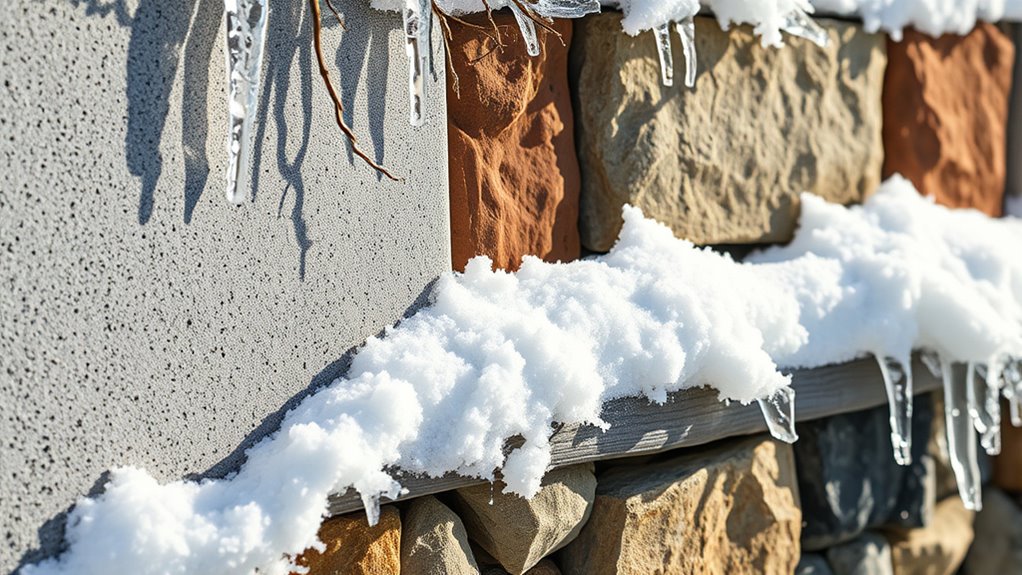
When constructing walls for harsh winter climates, the choice of materials can greatly impact energy efficiency and structural integrity. Insulated Concrete Forms (ICFs), Structural Insulated Panels (SIPs), and Fiber Cement Siding are among the top contenders. Each material presents unique advantages that cater to snow resistance and moisture management. Understanding these options can guide you in making informed decisions about your building’s durability and comfort during winter storms.
Insulated Concrete Forms (ICFs)
When considering building materials that can withstand harsh winter conditions, insulated concrete forms (ICFs) emerge as a superior choice. ICF advantages include exceptional thermal insulation, which minimizes heat loss and reduces energy costs. This is essential for maintaining comfort in frigid climates. Additionally, ICFs resist moisture and pests, enhancing durability. The versatility of ICF applications allows for various structures, from residential homes to commercial buildings. Their lightweight nature simplifies transport and installation, promoting efficient construction. Ultimately, ICFs provide a reliable solution for those seeking robust, energy-efficient walls that can endure the challenges of winter while offering the freedom of versatile design.
Structural Insulated Panels (SIPs)
Structural Insulated Panels (SIPs) offer significant energy efficiency benefits, making them an attractive choice for snow-prone areas. You’ll find that their structural integrity advantages contribute to overall building resilience, particularly under heavy snow loads. Understanding the installation process is essential to maximizing these benefits and ensuring ideal performance in harsh winter conditions.
Energy Efficiency Benefits
If you’re looking to enhance energy efficiency in snow-prone areas, Structural Insulated Panels (SIPs) offer significant advantages. Their superior thermal performance reduces heat loss, ensuring your space remains comfortable during harsh winters. With a continuous layer of insulation, SIPs minimize thermal bridging, leading to substantial energy savings. This efficiency not only lowers your heating costs but also contributes to a reduced carbon footprint. By choosing SIPs, you’re investing in a sustainable building solution that promotes energy independence while maintaining comfort and safety. Ultimately, SIPs are a smart choice for those seeking freedom from high energy bills in challenging climates.
Structural Integrity Advantages
The robustness of Structural Insulated Panels (SIPs) greatly enhances the structural integrity of buildings in snow-prone regions. Their design contributes to superior structural resilience and exceptional load-bearing capacity, making them ideal for heavy snow loads. With SIPs, you’re investing in a system that minimizes structural failures and maintains safety standards.
| Feature | Benefit |
|---|---|
| Structural Resilience | Withstands extreme weather |
| Load Bearing Capacity | Supports heavy snow loads |
| Energy Efficiency | Reduces heating costs |
Choosing SIPs guarantees your construction can withstand the elements while offering freedom from potential structural issues.
Installation Process Overview
Having established the advantages of Structural Insulated Panels (SIPs) regarding structural integrity, it’s important to understand how these panels are installed to maximize their benefits. Begin with thorough wall preparation, confirming surfaces are clean, level, and free from obstructions. Utilize precise installation techniques, aligning the panels according to your design specifications. Secure SIPs with appropriate fasteners and guarantee airtightness by sealing joints effectively. It’s vital to follow manufacturer guidelines for insulation continuity and structural connections. By adhering to these steps, you’ll optimize the performance of your SIPs, enhancing energy efficiency and resilience against snow-related challenges.
Fiber Cement Siding
Fiber cement siding offers exceptional durability against snow damage, making it a reliable choice for harsh climates. Its composition not only withstands the weight and moisture of snow but also provides superior insulation and energy efficiency. By choosing fiber cement, you can enhance your home’s resilience while optimizing energy costs.
Durability Against Snow Damage
While winter’s snow can wreak havoc on building materials, fiber cement siding stands out for its impressive durability against such harsh conditions. Its engineered composition allows it to withstand significant snow load without warping or cracking. Furthermore, its moisture resistance guarantees that melting snow doesn’t penetrate, reducing the risk of mold or structural damage. Unlike traditional materials, fiber cement resists the effects of freeze-thaw cycles, making it a reliable choice for snowy climates. When you choose fiber cement siding, you’re investing in a material that offers both long-term performance and peace of mind against snow damage.
Insulation and Energy Efficiency
When considering insulation and energy efficiency, fiber cement siding proves to be an excellent choice for homeowners in snowy regions. Its dense composition minimizes thermal bridging, ensuring less heat loss during winter months. By effectively insulating your home, fiber cement siding can markedly enhance energy efficiency, leading to lower heating costs. Conducting energy audits can help you identify potential areas for improvement, verifying the effectiveness of your siding. This material not only protects against snow damage but also contributes to a sustainable living environment, allowing you to enjoy comfort without compromising on energy performance or freedom from excessive utility bills.
Stone and Brick Masonry
Stone and brick masonry stands out as a robust choice for snow-resistant wall materials, thanks to its inherent durability and thermal mass. Utilizing various masonry techniques, these materials absorb and retain heat, reducing energy costs while providing a stable structure against snow loads.
| Material Type | Thermal Mass | Benefits |
|---|---|---|
| Stone | High | Excellent durability |
| Brick | Moderate | Good insulation properties |
| Concrete Block | High | Versatile and strong |
| Reclaimed Brick | Moderate | Eco-friendly and aesthetic |
Choosing stone and brick masonry guarantees long-lasting protection and efficiency.
Vinyl Siding With Insulation
Although many might overlook vinyl siding as a serious contender for snow-resistant wall materials, its combination of insulation and durability makes it a practical choice for harsh winter climates. With advanced insulation benefits, vinyl siding considerably reduces heat loss, helping maintain a comfortable indoor temperature during frigid weather. Its resistance to moisture and snow accumulation minimizes the risk of mold and structural damage. Additionally, the lightweight nature of vinyl siding facilitates easier installation and maintenance, granting you freedom from extensive repairs. Consequently, when considering winter resilience, vinyl siding with insulation emerges as a smart, efficient option for your home.
Wood Composite Materials
While vinyl siding offers notable benefits in winter climates, wood composite materials present another viable option for snow-resistant wall applications. These materials leverage composite advantages, combining the natural aesthetics of wood with enhanced durability. Wood composites boast superior weather resistance, standing up to the harsh effects of snow and moisture without warping or cracking. Additionally, their low maintenance requirements mean you won’t spend valuable time worrying about upkeep. If you’re looking for a sustainable choice that provides both beauty and functionality, wood composites can be an ideal solution, offering you freedom from the concerns tied to traditional materials in snowy environments.
Frequently Asked Questions
How Do Snow Loads Affect Wall Material Choices?
When considering snow loads, haven’t you thought about how they impact structural integrity? Snow load considerations dictate that you choose materials capable of withstanding significant weight, ensuring your walls remain safe and durable under winter’s pressures.
Are Snow-Resistant Materials More Expensive?
Yes, snow-resistant materials often have a higher initial cost due to their enhanced durability. However, when considering long-term performance and maintenance, a cost comparison may reveal savings that justify the upfront investment.
What Insulation Options Complement Snow-Resistant Walls?
To complement snow-resistant walls, consider insulation types like spray foam, rigid foam board, or cellulose. These enhance thermal performance, reducing heat loss and ensuring energy efficiency, allowing you to maintain a comfortable indoor environment despite harsh conditions.
How Do Different Materials Handle Moisture in Snowy Climates?
Different materials handle moisture variably; some absorb it, leading to freeze-thaw cycles that can deteriorate them. It’s essential to choose materials that minimize moisture absorption to enhance durability and maintain structural integrity in snowy climates.
Can Snow-Resistant Walls Reduce Heating Costs?
“An ounce of prevention is worth a pound of cure.” Snow-resistant walls enhance energy efficiency, leading to significant cost savings on heating. By minimizing heat loss, you’re investing in comfort and financial freedom during harsh winters.