
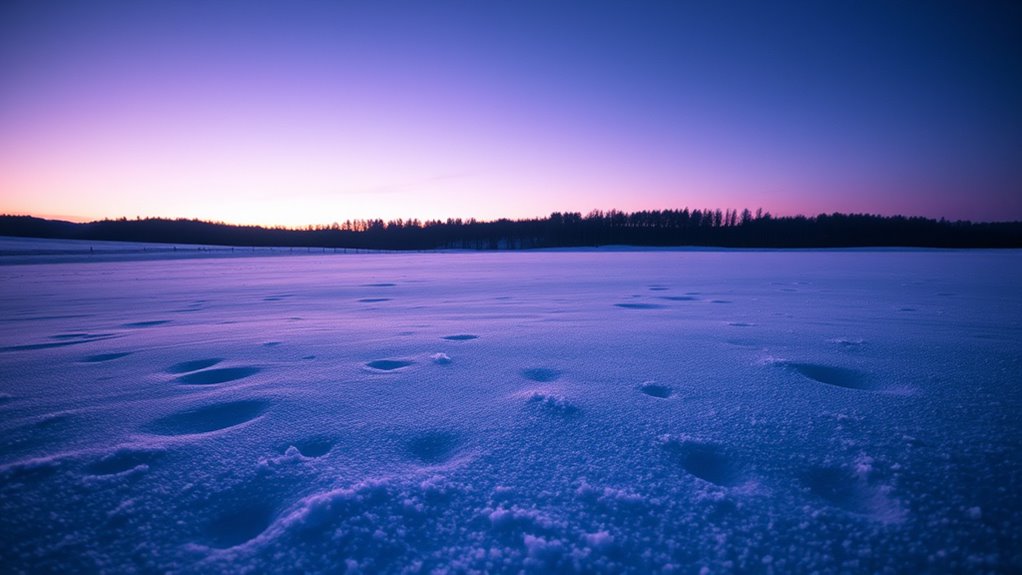
Did you know that the angle of sunlight can drastically change how snow reflects light, creating an ethereal glow? By experimenting with different positions and sources of light, you can transform ordinary winter scenes into breathtaking compositions. Whether you’re capturing intricate textures in fresh powder or crafting a vibrant light installation, the techniques you employ can elevate your photography. The possibilities are endless, waiting for you to explore.
Capturing the Magic of Snowy Landscapes
As the first flakes of snow begin to blanket the world in a soft, white layer, you might find yourself yearning to capture that enchanting scene through your lens. The beauty of snowy landscapes lies in their contrast; the delicate snowy silhouettes of trees and structures emerge against the vibrant background. Consider how the light dances off frosty reflections, creating a mirror-like quality that can transform an ordinary scene into a winter wonderland. Use a wide aperture to emphasize these contrasts, allowing the soft bokeh of the snow to highlight the foreground. Experiment with angles to reveal hidden textures and patterns within the snow, ensuring each shot tells a story of this ephemeral beauty. Embrace the freedom of exploration; the magic awaits!
Experimenting With Natural Light
How can you harness the beauty of natural light to elevate your snowy landscape photography? By experimenting with its nuances, you can create stunning images filled with depth and vibrancy. Consider the angle of sunlight and how it interacts with the snow, allowing you to manipulate light to enhance natural reflections.
| Time of Day | Light Quality | Effect on Snow |
|---|---|---|
| Sunrise | Soft, warm glow | Creates a golden hue |
| Midday | Harsh, bright light | Sharp shadows, high contrast |
| Sunset | Rich, colorful tones | Enhances warmth, dramatic skies |
Venture into your snowy surroundings, let the light guide your lens, and discover the magic of nature’s reflections.
Reflection Techniques for Photography
While capturing the enchanting beauty of snow-covered landscapes, mastering reflection techniques can transform your photography into a visual symphony. Look for reflection surfaces like icy ponds or glistening snowbanks that mirror the world around them. Position your camera at low angles to create dynamic reflective compositions, where the foreground and background blend seamlessly. Experiment with different times of day; the golden hour can produce warm reflections that dance across the snow. Utilize polarizing filters to enhance colors and reduce glare, making your images pop with vibrancy. Don’t shy away from including the sky in your frame; it can add depth and drama to your reflections. Embrace the freedom of exploration, and let the magic of reflection elevate your snowy captures.
Creating Light Installations in the Snow
When you’re creating light installations in the snow, the type of lights you choose can transform a winter landscape into a mesmerizing spectacle. Think about how interactive displays can invite viewers to engage with your art, while the use of color and texture adds depth and intrigue to your installation. By harmonizing these elements, you’ll craft an enchanting experience that captivates and inspires.
Choosing Light Types
As you begin creating light installations in the snow, the choice of light types can dramatically influence both the aesthetic and ambiance of your setup. LED options offer versatility; you can experiment with soft lighting for a cozy atmosphere or use harsh contrasts for dramatic effects. Natural sources, like moonlight, can enhance the scene’s tranquility, while colored gels can infuse your installation with vibrant cool hues or warm tones. Consider ambient light to create a gentle glow that dances on the snow, or use directional lighting to highlight specific features. For enchanting diffused effects, layering lights softly will provide depth, transforming the snowy landscape into a magical wonderland of illumination, inviting freedom and exploration.
Designing Interactive Displays
To create an engaging light installation in the snow, you’ll want to contemplate how interactivity can elevate the experience for your audience. Imagine designing interactive installations where visitors can influence the light patterns with their movements. Use motion sensors to trigger vibrant displays that dance across the snowy landscape, transforming each step into an immersive experience. Consider incorporating sound elements, allowing your audience to hear the lights as they interact, creating a symphony of light and sound. As they walk through, they’ll leave trails of color, making each interaction unique. This fusion of light, snow, and interactivity invites exploration, sparking joy and wonder, encouraging freedom of movement and creativity in an enchanting winter wonderland.
Utilizing Color and Texture
While embracing the enchanting qualities of snow, utilizing color and texture in your light installations can transform a simple winter landscape into a mesmerizing spectacle. By applying color theory, you can select hues that evoke emotion and wonder, like vibrant reds or calming blues, creating a visual symphony against the white canvas of snow. Incorporate texture contrast using materials such as frosted glass or rough-hewn wood, allowing light to play and dance across surfaces. Consider layering lights in varying intensities, casting dynamic shadows that enhance the overall effect. As you experiment, let your creativity flow freely, illuminating the night with a unique blend of colors and textures that invite viewers to lose themselves in your winter wonderland.
Utilizing Shadows for Dramatic Effect
Shadows can transform an ordinary scene into something fascinating, enhancing the interplay of light and form. By embracing shadow play, you can create dramatic contrasts that captivate the viewer. When the sun dips low, experiment with angles to stretch shadows across the snow, forming intricate patterns that dance with the light. Consider using objects like branches or fences to cast long, mysterious silhouettes. These shapes can evoke emotions, turning a simple landscape into a narrative. Play with depth too—layering shadows can add dimension, drawing the eye deeper into your composition. Don’t shy away from darkness; it’s in those deep shadows where magic often hides, waiting for you to reveal its beauty. Let your imagination roam as you harness the artistry of shadows.
Incorporating Color Into Winter Scenes
Building on the enchanting play of shadows, the winter landscape offers a unique canvas where color can breathe life into the scene. By embracing vibrant palettes and striking color contrasts, you can transform the starkness of winter into a visual feast. Here are some ideas to ignite your creativity:
- Add bright scarves or hats to your subjects for striking pops of color.
- Utilize colorful props, like sleds or skates, to create focal points.
- Experiment with colored lights to illuminate the snow, casting magical hues.
- Capture the warm glow of sunset against the icy blue backdrop.
- Incorporate nature’s colors by highlighting berries or pine needles against the white snow.
Let your imagination run wild and paint your winter scenes with a burst of color!
Painting With Light on Snowy Backdrops
As you step into the snowy landscape, the soft, reflective surface beckons you to explore the art of painting with light. Picture yourself wielding a flashlight or sparklers, creating mesmerizing light trails that dance across the snow, illuminating its pristine beauty. Experiment with different angles and intensities to capture unique snow patterns, where each flicker reveals hidden textures and shapes.
Consider long-exposure photography to blend your light trails into the serene backdrop, transforming the ordinary into the extraordinary. The contrast between the vibrant light and the cool whiteness of snow invites a sense of freedom and creativity. So, let your imagination run wild, and embrace the magic of this winter wonderland as you paint with light, leaving your mark on the snow.
Exploring Macro Photography in the Snow
While the vast expanse of snow may seem uniform at first glance, getting up close reveals a hidden world bursting with intricate details. Embracing macro photography in the snow allows you to capture stunning snow textures and macro details that often go unnoticed. Here are some tips to elevate your snowy macro shots:
- Focus on snowflakes to reveal their unique structures.
- Capture the glistening surface of packed snow under sunlight.
- Explore animal tracks and the delicate patterns they create.
- Photograph frost on branches, showcasing nature’s artistry.
- Use a low angle to emphasize the textures and depth of snow.
Using Long Exposures to Create Dreamy Effects
Imagine standing in a winter wonderland, your camera poised to capture the ethereal beauty of snowflakes swirling in the breeze. By using long exposures, you can transform these fleeting moments into soft, dreamy scenes where light dances and shadows blur. To achieve this magical effect, knowing the ideal conditions and techniques is essential for creating stunning winter images.
Techniques for Long Exposure
When you embrace long exposure photography, you reveal a world where time stretches and movement transforms into ethereal beauty. To achieve dreamy effects, explore these creative techniques:
- Use a tripod to guarantee stability during those extended exposures.
- Experiment with neutral density filters to control light and extend exposure times even in bright conditions.
- Incorporate moving elements like water or clouds, creating soft, surreal textures.
- Adjust your aperture to manipulate depth of field, enhancing the dreaminess.
- Play with shutter speed—longer speeds will amplify movement, while shorter speeds can capture exquisite details.
These techniques invite you to explore your artistic vision, capturing moments that dance between reality and dreams, all through the magic of long exposure.
Ideal Conditions for Shooting
To capture the enchanting effects of long exposure photography, you’ll want to shoot under specific conditions that enhance your artistic vision. The best times are often during twilight or dawn when the light is soft, creating a magical glow. Opt for calm weather conditions; a gentle breeze can disrupt those dreamy water reflections. Here’s a quick overview of ideal shooting conditions:
| Best Times | Weather Conditions | Tips |
|---|---|---|
| Early Morning | Clear Skies | Use a sturdy tripod |
| Late Afternoon | Overcast | Experiment with ND filters |
| Twilight | Light Snowfall | Capture moving clouds |
| Dusk | Calm Winds | Focus on water surfaces |
With these insights, you’re ready to release your creativity!
Crafting Winter-Themed Mixed Media Art
As winter blankets the landscape in a shimmering layer of snow, you can harness this season’s enchanting beauty to create mixed media art that captures its essence. Engage your creativity by exploring various artistic techniques and textures that evoke the magic of winter.
Consider these elements for your winter-themed mixed media project:
- Snow Textures: Use materials like cotton balls or modeling paste to mimic fluffy snow.
- Layering: Combine paper, fabric, and paint for depth.
- Color Palette: Choose cool tones like icy blues and whites to reflect winter’s chill.
- Natural Elements: Incorporate twigs or dried leaves for a rustic touch.
- Personal Touch: Add photographs or mementos from winter adventures to make it uniquely yours.
Let your imagination flow and celebrate winter through your art!
Frequently Asked Questions
What Camera Settings Are Best for Snow Photography?
To capture snow’s brilliance, adjust your exposure compensation to +1 or +2, ensuring details shine. Set your white balance to cloudy for warmth. Embrace the chill; your lens can turn frost into art.
How Do I Protect My Equipment From Cold Weather?
To protect your gear in cold weather, keep it insulated in padded bags. Avoid rapid temperature changes, and use hand warmers. Always guarantee equipment’s dry before packing, preventing moisture buildup that can damage delicate components.
Can I Use a Tripod in Snowy Conditions?
You can definitely use a tripod in snowy conditions, like a snowflake resting on still water. Just guarantee its legs are stable on snowy surfaces to avoid sinking, and you’ll capture breathtaking shots with ease.
What Time of Day Is Ideal for Snowy Landscape Photography?
For snowy landscape photography, aim for the golden hour just after sunrise or before sunset, where warm light enhances textures. The blue hour, with its cool tones, creates a magical, serene atmosphere perfect for capturing winter’s beauty.
How Do I Edit Snow Photos to Enhance Reflections?
To enhance reflections in your snow photos, adjust contrast and brightness during snow editing. Use selective sharpening on reflective areas, and consider adding subtle color adjustments for depth, creating a vibrant, enchanting winter scene.