
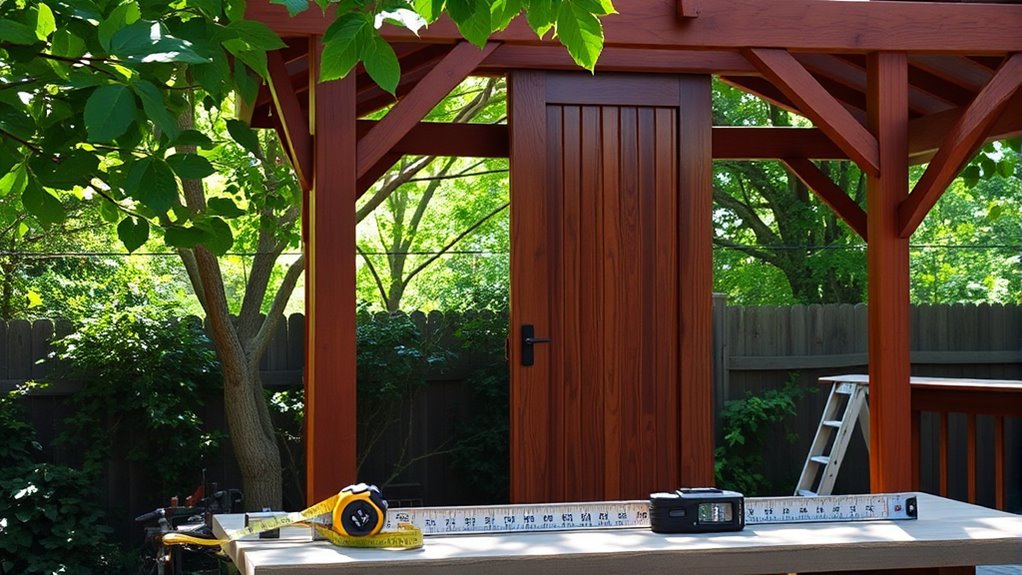
Did you know that a well-installed sliding door can greatly improve both the usability and visual appeal of your gazebo? To get started, you’ll need to gather the right tools and materials, as the success of your project hinges on precise measurements and a sturdy structure. From setting the track to hanging the door, each step is essential for smooth operation. Let’s explore how to turn your gazebo into a functional space with a stylish sliding door.
Tools and Materials Needed
Before you plunge into your sliding door installation, it’s essential to gather the right tools and materials. Start with a level, drill, screws, and a measuring tape for precision. You’ll also need a saw to cut the door to size if necessary. Don’t forget quality door hardware; this includes handles, locks, and brackets. Choose sliding mechanisms that suit your door’s weight and design. Having a stud finder can help guarantee you secure the hardware to the wall properly. With these essentials at hand, you’ll be ready to enjoy the freedom of your new sliding door installation.
Measuring and Planning Your Door Size
Before you start your sliding door installation, you need to measure your door frame dimensions accurately. Make certain to evaluate the gazebo opening size to guarantee a proper fit, and take some time to reflect on your door style preferences that will complement your space. These steps will help you plan effectively and avoid costly mistakes.
Determine Door Frame Dimensions
To guarantee a smooth and successful sliding door installation, accurately measuring your door frame dimensions is essential. Start by using measurement techniques like a tape measure to get the width and height of the frame. Measure at multiple points to confirm consistency, as uneven surfaces can affect your door’s fit. Don’t forget to account for any hardware that’ll be attached, like tracks or handles, which can add to the overall size. Once you’ve got your dimensions, double-check them to avoid costly mistakes. With precise measurements, you’re one step closer to enjoying the freedom of your new sliding door!
Assess Gazebo Opening Size
When evaluating the gazebo opening size, it’s crucial to measure both the width and height accurately to guarantee a proper fit for your sliding door. Start by using a tape measure to determine the opening measurements, noting the door dimensions you’ll need for a seamless installation. Verify you measure at multiple points to account for any irregularities in your gazebo structure. Once you have these measurements, consider adding a little extra space to accommodate the door’s track system. This attention to detail will provide you with a functional and aesthetically pleasing entryway that enhances your outdoor freedom.
Consider Door Style Preferences
As you consider your door style preferences, it’s essential to think about how both aesthetics and functionality can complement your gazebo. Begin by exploring various door design options, like sliding or bi-fold styles, which can enhance accessibility and natural light. Next, evaluate style compatibility with your gazebo’s architecture; rustic wood may suit a traditional gazebo, while sleek glass could fit a modern design. Don’t forget to measure your opening accurately, ensuring your chosen style functions smoothly without compromising space. Ultimately, your door should reflect your vision while providing a seamless connection between your indoor and outdoor living areas.
Preparing the Gazebo Structure
Preparing the gazebo structure is essential for a successful sliding door installation. First, check the stability of your gazebo; it should stand firm and level. If any posts or beams are damaged, repair them to maintain structural integrity. Ascertain the area where the door will be installed is clear of obstructions and debris. Measure the opening accurately, confirming that it aligns with the intended door size. Additionally, reinforce the framework if necessary, as this will support the door’s weight and usage. Taking these steps will guarantee a solid foundation for your sliding door, allowing for easy access and a seamless experience.
Installing the Sliding Door Track
Before you start installing the sliding door track, make certain you have all the necessary tools and materials on hand. Begin by measuring the desired position for the track, ensuring proper track alignment with the door frame. Use a level to confirm accuracy. Secure the track to the structure with screws, making sure it’s straight and firmly in place. The sliding mechanism should glide smoothly along the track, so double-check that it’s free from obstructions. Once everything’s set, test the movement of the door before proceeding. This step is essential for a seamless, functional entrance that enhances your gazebo’s charm.
Hanging the Sliding Door
Before you hang the sliding door, gather the necessary tools and materials, such as a level, screws, and a drill. You’ll follow a step-by-step process to guarantee the door is secure and operates smoothly. Let’s go through each stage so you can achieve a professional-looking installation.
Required Tools and Materials
To successfully hang your sliding door, you’ll need a specific set of tools and materials that guarantee a smooth installation process. Start with essential tool types like a drill, level, and screwdriver. You’ll also need a measuring tape for precision. For materials, consider sturdy options like a wooden or aluminum frame for the door and a reliable track system to assure smooth movement. Don’t forget the necessary hardware, including rollers, brackets, and screws. Having the right tools and materials will empower you to create a functional and stylish entrance to your gazebo, giving you the freedom to enjoy your outdoor space.
Step-by-Step Installation Process
With your tools and materials gathered, you’re ready to begin the installation process for your sliding door. Start by attaching the track materials to the top of your doorframe, confirming they’re level and secure. Once the track is in place, hang the door by sliding the rollers onto the track. Adjust the door design to confirm smooth movement, making any necessary height adjustments. Next, install the bottom guide to keep the door aligned. Finally, check that it opens and closes effortlessly, making any tweaks to the track or rollers as needed. Enjoy your newly installed sliding door!
Finishing Touches and Maintenance Tips
As you finish your sliding door installation, adding the right touches and keeping up with maintenance can greatly enhance its functionality and lifespan. Start by incorporating decorative accents like trim or paint to match your gazebo’s style. Establish a maintenance schedule—check rollers and tracks regularly to guarantee smooth operation, and lubricate them as needed. Consider cleaning the glass periodically to maintain clarity. If you notice any wear or damage, address it promptly to prevent bigger issues. With these finishing touches and maintenance tips, you’ll enjoy the freedom of your beautifully functional sliding door for years to come.
Frequently Asked Questions
Can I Install a Sliding Door on Any Gazebo Design?
You can install a sliding door on various gazebo styles, but consider the door materials and structural integrity of your design. Make certain the frame supports the weight and operation for maximum functionality and aesthetics.
What Type of Sliding Door Is Best for Outdoor Use?
For outdoor use, aluminum doors are durable and resistant to rust, while vinyl doors provide excellent insulation and low maintenance. Consider your climate and aesthetic preferences to choose the best option for your space.
How Do I Ensure My Sliding Door Is Weatherproof?
To keep your sliding door weatherproof, use high-quality weatherproof materials and apply sealing techniques like caulking and weatherstripping. These steps’ll guarantee you enjoy your outdoor space without worrying about the elements creeping in.
Can I Add Locks to My Sliding Door?
Yes, you can add locks to your sliding door for better door security. Consider various lock types, like hook or mortise locks, ensuring they’re compatible with your door’s design and materials for ideal functionality and safety.
What Should I Do if the Door Gets Stuck?
If your door gets stuck, first check the sliding track for debris. Clean it regularly using a soft brush. Consider applying lubricant to guarantee smooth movement. Regular door maintenance tips can prevent future issues and enhance your freedom.