
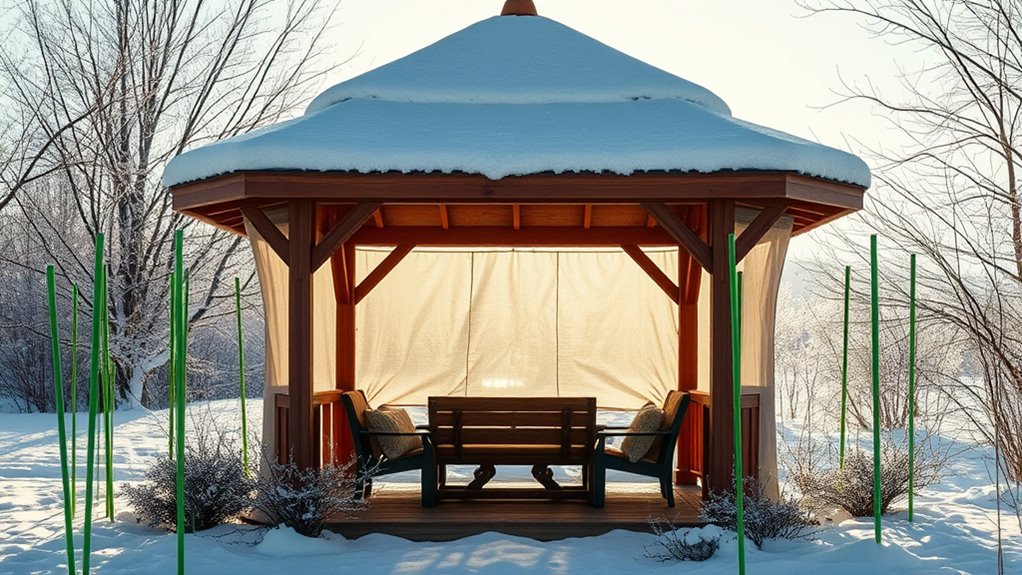
It’s often said that a well-prepared gazebo can withstand the harshest winter conditions, but is that really true? To guarantee your structure remains intact and functional through the snow season, you’ll need to take several essential steps. From inspecting the foundation to reinforcing the roof, each detail plays a vital role in weatherproofing your gazebo. So, what are the specific tasks that will make certain your outdoor retreat survives the winter months?
Clear Out Debris and Leaves
Before winter sets in, it’s vital to clear out debris and leaves from your gazebo, as neglecting this task can lead to water accumulation and structural damage over time. Start with effective debris removal techniques—use a sturdy broom or leaf blower to gather loose leaves and twigs. For stubborn clumps, a rake can be handy. Once collected, explore leaf disposal options like composting or municipal yard waste services. By maintaining a clean gazebo, you guarantee it remains a sanctuary of freedom throughout the snowy months, free from moisture-related issues and ready for your enjoyment when winter fades.
Inspect and Repair the Structure
With the debris cleared away, it’s time to turn your attention to the gazebo’s structure. Inspecting it is essential for guaranteeing structure stability throughout the snow season. Look for any signs of wear or damage, and make necessary repairs. Remember, seasonal adjustments might be required to maintain its integrity.
- Check for loose boards and nails
- Inspect joints for signs of stress
- Verify the foundation is level and secure
- Look for signs of rot or pest damage
Taking these steps will help you enjoy your gazebo while it stands strong against winter’s challenges.
Reinforce the Roof
As winter approaches, reinforcing the roof of your gazebo becomes essential to withstand the heavy snowfall and harsh weather conditions. Start by evaluating your roof materials; consider using durable options like metal or reinforced wood for better resilience. Guarantee even weight distribution across the surface to prevent sagging.
| Reinforcement Method | Benefits |
|---|---|
| Cross-bracing | Enhances stability |
| Additional support beams | Improves weight distribution |
| Waterproof sealant | Prevents leaks |
Secure Loose Parts
Before the snow settles in, you need to make certain that all loose parts of your gazebo are secure. Start by inspecting for any damage that might compromise stability, then tighten all fasteners to prevent movement during harsh weather. Finally, remove decorative elements that could become projectiles in strong winds or heavy snow, safeguarding both your gazebo and surrounding areas.
Inspect for Damage
Inspecting your gazebo for damage is essential, especially as snow season approaches. A thorough damage assessment guarantees your structure can withstand heavy snowfall. Start with a visual inspection, checking for signs of wear, cracks, or rust. Pay close attention to:
- Roof integrity and drainage capabilities
- Support beams for any bending or breaks
- Railings and steps for stability
- Fasteners and fittings for corrosion
Identifying and addressing issues now will save you time and trouble later. Remember, a well-maintained gazebo not only enhances your outdoor experience but also protects your investment during the harsh winter months.
Tighten Fasteners Properly
Ensuring that all fasteners are tight is essential for your gazebo’s stability during the snow season. Start by identifying the various fastener types—bolts, screws, and nuts. Each type requires specific tightening techniques; for instance, use a torque wrench for bolts to reach ideal tension without over-tightening. Check screws with a screwdriver, ensuring they sit flush against the wood. Don’t forget to inspect brackets and connectors, as they can loosen over time. A thorough tightening session not only prevents structural failure but also preserves your gazebo’s freedom to withstand harsh winter conditions. Remember, a secure gazebo is a happy gazebo!
Remove Decorative Elements
After securing all fasteners, turn your attention to the decorative elements that embellish your gazebo. For effective decorative element removal, you’ll want to make sure nothing is left to become damaged by heavy snow. Here are some seasonal styling tips to reflect on:
- Remove hanging lanterns or lights to prevent breakage.
- Store cushions and fabrics indoors to avoid moisture damage.
- Detach any decorative banners or garlands, as they may catch the wind.
- Take down potted plants or seasonal decorations to eliminate weight on the structure.
Waterproofing and Sealing
To protect your gazebo from the harsh winter elements, selecting the right sealant is essential for preventing water damage. Once you’ve chosen a high-quality product, applying a waterproof coating will create a barrier that keeps moisture out while allowing the wood to breathe. This proactive approach not only enhances durability but also maintains the aesthetic appeal of your outdoor space.
Choosing the Right Sealant
When it comes to protecting your gazebo from the harsh winter elements, selecting the right sealant can make all the difference. Here are some key points to take into account:
- Sealant Types: Choose between acrylic, polyurethane, or silicone for ideal waterproofing.
- Durability: Confirm the sealant can withstand extreme temperatures and moisture.
- Application Techniques: Follow the manufacturer’s guidelines for a smooth application; think about using a caulking gun for precision.
- Drying Time: Allow adequate drying time before exposing your gazebo to snow.
Applying Waterproof Coating
As you prepare your gazebo for the snow season, applying a waterproof coating is essential for safeguarding it against moisture intrusion and potential damage. Start with thorough cleaning, removing debris and old coatings. Choose a high-quality sealant, employing effective waterproofing techniques for maximum protection. When applying the sealant, use a brush or sprayer for even coverage, focusing on joints and seams. Allow adequate drying time between coats, typically two to four hours, depending on conditions. This meticulous sealant application not only enhances durability but also preserves the natural beauty of your gazebo, granting you peace of mind through winter’s harshest days.
Protect Furniture and Accessories
Protecting your furniture and accessories from the harsh winter elements is essential for maintaining their longevity and appearance. Start by ensuring that your outdoor cushions are stored properly; moisture can lead to mold and mildew. Invest in high-quality furniture covers that fit snugly to shield your pieces from snow and ice. Here are some tips to help you:
Properly storing outdoor cushions and using quality covers is key to protecting your furniture from winter’s harsh elements.
- Use breathable covers to prevent condensation.
- Store lightweight items indoors to avoid wind damage.
- Keep metal furniture dry to prevent rust.
- Regularly check for any signs of wear or damage.
Taking these steps will keep your gazebo’s furnishings in great shape throughout the season.
Consider a Snow Load Management Plan
After ensuring your furniture and accessories are safeguarded, it’s time to think about how to manage the snow load on your gazebo. A proactive snow load management plan is essential for maintaining structural integrity. Here’s a quick reference table to help you assess your gazebo’s capacity:
| Factor | Importance |
|---|---|
| Roof Design | Influences snow accumulation |
| Material Strength | Affects load-bearing capacity |
| Regular Inspections | Identify weaknesses early |
| Snow Removal Technique | Prevents excess buildup |
Regular Maintenance Throughout Winter
While you might think your gazebo can withstand winter’s challenges on its own, regular maintenance is essential to guarantee its longevity and structural integrity. Winter weather can take a toll, but by staying proactive, you can protect your investment.
- Clear snow buildup regularly to prevent excessive weight
- Check gazebo insulation for any gaps or damage
- Inspect the roof and walls for leaks or cracks
- Treat wooden elements with protective sealants
Frequently Asked Questions
How Often Should I Check My Gazebo During Winter?
During winter, you should check your gazebo at least every two weeks. Picture the serene snow blanketing it, but don’t let hidden damage fester; regular inspections guarantee your winter maintenance keeps it standing strong and beautiful.
Can I Use a Heater in My Gazebo During Snow Season?
Yes, you can use a heater in your gazebo during snow season. Consider electric or propane heating options, but guarantee proper ventilation and follow safety tips to avoid fire hazards and guarantee a cozy, safe environment.
What Type of Snow Can Damage My Gazebo?
Heavy, wet snow can compromise your gazebo’s structural integrity due to excessive snow weight. Light, powdery snow poses less risk, but it’s essential to regularly assess and clear any accumulation to prevent damage.
Are There Specific Materials That Resist Snow Damage Better?
Snow-resistant materials like aluminum or treated wood, along with winter-proof designs featuring sloped roofs, can help you combat snow damage. Prioritizing durability guarantees your gazebo stands strong against winter’s harsh conditions, preserving your outdoor freedom.
How Can I Prevent Ice Buildup on My Gazebo?
To prevent ice buildup on your gazebo, prioritize roof maintenance by regularly clearing snow. For effective ice removal, consider using a roof rake and guarantee proper drainage to keep your structure free and functional during winter.