
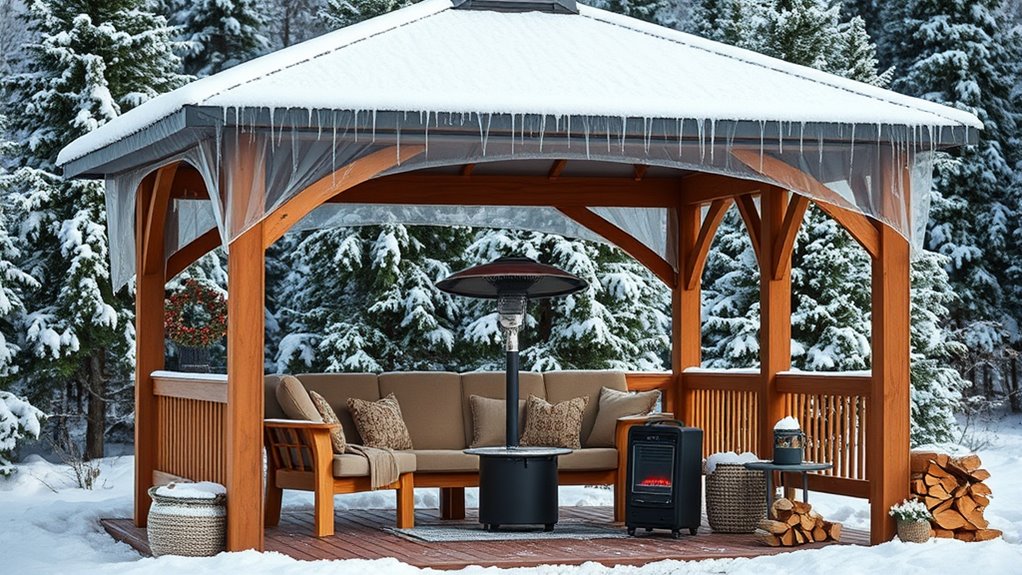
Winterizing your gazebo is vital for maintaining its longevity and usability. Start by evaluating its structural integrity, as weak joints and supports can lead to significant issues. You’ll need to clean debris and inspect for any rust or loose screws. But that’s just the beginning. With the right approach, you can transform your gazebo into a cozy winter retreat. Let’s explore the essential steps to effectively winter-proof your space.
Assessing Your Gazebo’s Condition
Before you plunge into winter-proofing your gazebo, it’s essential to assess its condition—after all, a sturdy foundation makes all the difference. Examine the structural integrity, focusing on joints, beams, and supports. Look for signs of wear from weather exposure, such as cracks or rot. If you notice any weaknesses, now’s the time to address them. Reinforcing weak points can prevent costly damage down the line. Consider the materials used; some withstand harsh conditions better than others. By prioritizing this assessment, you guarantee your gazebo remains a sanctuary of freedom, ready to weather whatever winter has in store.
Cleaning and Maintenance Before Winter
Once you’ve assessed your gazebo’s condition, it’s time to tackle cleaning and maintenance to guarantee it stands resilient through the winter months. Start with thorough gazebo cleaning: sweep away debris, scrub surfaces, and check for mold. Pay attention to joints, as moisture can lead to decay. Here are some maintenance tips to keep in mind:
| Task | Frequency | Tool Needed |
|---|---|---|
| Sweep debris | Monthly | Broom |
| Clean surfaces | Biannually | Mild detergent |
| Inspect joints | Before winter | Screwdriver |
| Check for rust | Annually | Wire brush |
| Tighten screws | Every season | Wrench |
Applying Weather-Resistant Sealants
Choosing the right weather-resistant sealant is essential for protecting your gazebo against harsh winter conditions. You’ll want to take into account factors like material compatibility and durability to guarantee maximum effectiveness. Once you’ve made your selection, mastering the application techniques will help you create a robust barrier against moisture and temperature fluctuations.
Choosing the Right Sealant
While you might be keen to winter-proof your gazebo, selecting the right sealant is essential for ensuring its longevity and protection against the elements. Start by exploring different sealant types, such as acrylic, polyurethane, and silicone, each offering unique benefits. Acrylics are great for ease of application and flexibility, while polyurethanes provide superior durability. You’ll also need the right application tools—brushes, rollers, or sprayers—to achieve an even coat. Consider your gazebo’s material and exposure when making your choice. By investing time in this process, you’ll enhance your gazebo’s resilience, allowing you to enjoy it for years to come.
Application Techniques Explained
Before you plunge into applying weather-resistant sealants, it’s essential to understand the best techniques to guarantee a flawless finish. Start by selecting the right application methods; brushes work well for corners, while rollers cover larger areas efficiently. Verify your gazebo is clean and dry—seasonal preparations are vital for adhesion. Apply the sealant in thin, even coats to prevent drips and puddles. Allow adequate drying time between layers, and always follow the manufacturer’s instructions. Don’t rush; patience during this process results in lasting protection, giving you the freedom to enjoy your winter-proof gazebo without worry.
Reinforcing the Structure
Before winter hits, you’ll want to guarantee your gazebo can withstand the elements by reinforcing its structure. Start by checking for any existing damage, then strengthen the roof support to handle heavy snow loads, and secure the foundation for ideal stability. These steps will help you maintain the integrity of your gazebo throughout the harsh winter months.
Check for Damage
Checking for damage is essential when winter-proofing your gazebo, as a sturdy structure can withstand harsh weather conditions. Start with a thorough damage assessment; examine beams, joints, and the foundation. Look for signs of wear or rot that could compromise structural integrity.
| Area to Inspect | Common Issues | Recommended Action |
|---|---|---|
| Roof | Leaks, sagging | Repair or replace shingles |
| Posts | Cracks, rot | Reinforce or replace |
| Flooring | Warping, mold | Treat and seal or replace |
Regular checks will guarantee your gazebo remains safe and functional.
Strengthen Roof Support
Once you’ve assessed the overall condition of your gazebo, it’s time to focus on strengthening the roof support. Start by selecting durable support beam materials, like treated wood or metal, to guarantee longevity. Incorporate roof bracing techniques, such as diagonal bracing, which redistributes weight and enhances stability against winter elements. You may also consider adding additional supports at the rafters’ joints to prevent sagging. This proactive approach not only reinforces your gazebo but also preserves the freedom it offers as a cozy retreat. With these strategies, you’ll enjoy peace of mind while embracing the beauty of winter.
Secure Foundation Stability
To guarantee your gazebo withstands the harsh winter months, securing foundation stability is essential. Begin by evaluating your foundation materials; verify they’re robust enough to endure frost heave and shifting soil. Incorporate ground stabilization techniques, such as using gravel or compacted soil, to create a solid base. This not only supports the structure but also prevents water accumulation, which can lead to rot. If your gazebo sits on piers, consider reinforcing them with concrete footings to enhance stability. By prioritizing foundation integrity, you’ll safeguard your oasis, allowing you the freedom to enjoy it year-round, no matter the weather.
Installing Heavy-Duty Covers
As winter approaches, guaranteeing your gazebo is adequately protected becomes essential, and installing heavy-duty covers is a practical solution. These covers, made from heavy-duty materials, shield your gazebo from harsh elements, extending its lifespan.
- Choose a cover that fits snugly to prevent wind lift.
- Opt for UV-resistant materials to prevent fading and deterioration.
- Guarantee proper cover installation with secure fastenings for maximum protection.
Protecting Against Snow Accumulation
When it comes to protecting your gazebo from snow accumulation, roof reinforcement techniques are essential to prevent structural damage. You’ll need to contemplate effective snow removal strategies to keep the weight off, ensuring your gazebo remains safe throughout the winter months. By addressing these aspects, you can safeguard your outdoor space against the harsh winter elements effectively.
Roof Reinforcement Techniques
While the beauty of a gazebo can be compromised by heavy snow accumulation, employing effective roof reinforcement techniques can protect its structure and prolong its lifespan. Start with a thorough structural integrity assessment to identify weak points. Consider these roof material options for enhanced durability:
- Metal roofing offers excellent strength and snow-shedding abilities.
- Asphalt shingles are a cost-effective choice, providing decent insulation and flexibility.
- Polycarbonate panels are lightweight, allowing for easy snow removal while maintaining transparency.
Snow Removal Strategies
To guarantee your gazebo withstands the harsh winter months, implementing effective snow removal strategies is essential. Start by utilizing specialized snow removal tools, like a snow rake or lightweight shovel, to prevent damage to the structure. Employ snow removal techniques that prioritize safety and efficiency—remove snow before it becomes too heavy, and work from the top down to avoid adding stress to the roof. Consider using a tarpaulin for easy snow accumulation collection. Regularly inspecting and clearing snow will not only protect your gazebo but also maintain its aesthetic appeal, granting you the freedom to enjoy it year-round.
Ensuring Proper Drainage
Ensuring proper drainage around your gazebo is essential for preventing water accumulation that can lead to structural damage and mold growth. Effective water management is key to preserving your outdoor haven. Consider these drainage solutions:
- Install a French drain to redirect water away from your gazebo.
- Grade the landscape around your structure, ensuring a sloped surface for efficient water flow.
- Utilize rain barrels to collect runoff, promoting sustainable water use.
Adding Insulation for Cold Weather
When temperatures drop, adding insulation to your gazebo can make all the difference in maintaining a comfortable space. Consider various insulation types, like foam boards or reflective barriers, which act as effective thermal barriers against the cold. You can install these materials in walls and ceilings, ensuring they fit snugly to minimize air leaks. Additionally, think about using insulated curtains or double glazing for windows, enhancing heat retention. By strategically employing these insulation methods, you’ll create a cozy haven that resists the chill, allowing you the freedom to enjoy your gazebo all winter long without the discomfort of frigid temperatures.
Creating a Cozy Space With Heating Options
How can you transform your gazebo into a warm retreat during the winter months? Start by exploring various heating options to create a cozy atmosphere. Consider these elements:
- Electric heaters: Efficient and easy to install, they provide instant warmth.
- Propane patio heaters: Portable and powerful, they’re perfect for larger spaces.
- Cozy blankets: Add them for extra warmth and a touch of comfort.
Regular Winter Inspections and Upkeep
As winter rolls in, regular inspections and upkeep of your gazebo become essential to maintain its integrity and comfort. Start by checking for structural damage, like loose beams or cracked panels. Inspect the roof for snow buildup, which can lead to leaks or collapse. Seasonal upkeep includes cleaning gutters and guaranteeing proper drainage to prevent ice accumulation. Don’t forget to protect wooden surfaces with weatherproof sealant, and consider reinforcing the foundation against heavy snow. By prioritizing these tasks, you’ll guarantee your gazebo stands strong against winter’s harsh elements, allowing you the freedom to enjoy your outdoor space all season long.
Frequently Asked Questions
How Often Should I Inspect My Gazebo During Winter?
You should inspect your gazebo weekly during winter weather to guarantee its integrity. Regular gazebo maintenance helps identify potential issues early, allowing you to enjoy the freedom of your outdoor space without worry.
Can I Use a Tarp Instead of a Heavy-Duty Cover?
Yes, you can use a tarp, but consider its advantages like cost-effectiveness and lightweight nature. However, tarp disadvantages include less durability and potential water pooling, which could harm your gazebo over time.
What Materials Are Best for Insulating My Gazebo?
You’d think using an ice fortress would be ideal! Instead, opt for insulation types like foam board or fiberglass, combined with weatherproof materials like vinyl wraps. They’ll keep your gazebo cozy, allowing you to enjoy winter magic!
Will Snow Damage My Gazebo if Not Removed Promptly?
Yes, if you don’t remove snow promptly, it can cause structural damage to your gazebo. Regular snow removal is essential for maintaining its integrity and ensuring a lasting, enjoyable outdoor space throughout winter.
How Can I Prevent Ice Buildup on My Gazebo?
To prevent ice buildup on your gazebo, guarantee proper drainage solutions are in place. Consider sloped surfaces for melting ice runoff, and install heated cables to facilitate ice melting, promoting a safer, more carefree outdoor space.