
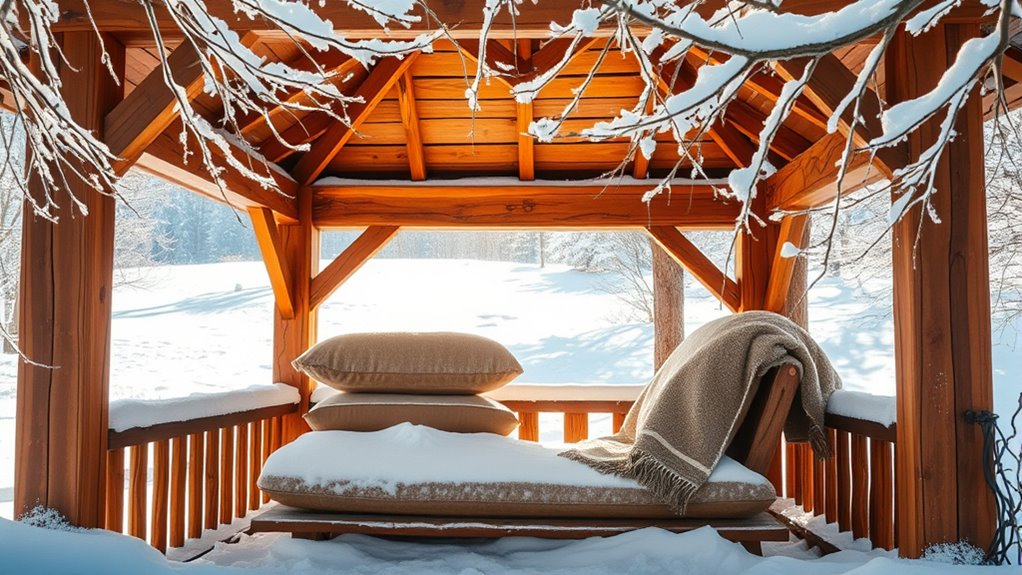
To winterize a wooden gazebo, you’ll need to inspect for damage, clean thoroughly, and protect the wood. Each step is vital to guarantee your structure withstands harsh winter conditions. You might not realize how much snow and ice can affect your gazebo’s integrity. If you want to maintain its beauty and functionality through the colder months, understanding these strategies is fundamental. What’s the best way to start?
Inspect and Repair Any Damage
Before you plunge into winterizing your wooden gazebo, it’s essential to inspect and repair any damage that may have occurred over the seasons. Start with a thorough damage assessment; look for cracks, rot, or insect infestations. Use a pry bar to check for loose boards, and tap them gently to hear any hollow sounds indicating hidden decay. For repairs, consider wood fillers for minor cracks and replace severely damaged planks. Use waterproof sealants to protect joints. Employing proper repair techniques now guarantees your gazebo withstands winter’s wrath, granting you the freedom to enjoy it come spring, unencumbered by lingering issues.
Clean the Gazebo Thoroughly
To winterize your wooden gazebo effectively, you need to start by removing all debris and dirt that’s accumulated over the warmer months. This thorough cleaning not only enhances the gazebo’s appearance but also allows you to inspect for any hidden damage that could worsen during winter. By addressing these issues now, you’ll guarantee your gazebo remains sturdy and inviting for seasons to come.
Remove Debris and Dirt
Start by sweeping away any debris and dirt that has accumulated on your wooden gazebo. This debris removal is essential for dirt prevention, as it helps maintain your gazebo’s aesthetics and structural integrity. Use a broom or leaf blower for efficiency, ensuring you reach corners and crevices.
| Tool | Purpose |
|---|---|
| Broom | For loose debris |
| Leaf Blower | For larger debris |
| Vacuum Cleaner | For fine dust |
| Soft Cloth | For surfaces |
Inspect for Damage
After clearing away debris, it’s crucial to inspect your gazebo for any signs of damage. The weather effects can be harsh, so take the time to check thoroughly. Look for:
- Cracks or splits in the wood.
- Signs of rot or mold.
- Loose or damaged fasteners.
- Areas needing wood treatments.
Addressing these issues now can save you from costly repairs later. Use a wood treatment to protect against moisture and pests, ensuring your gazebo stays beautiful through the winter. By being proactive, you maintain your freedom to enjoy this outdoor space year-round.
Seal and Protect the Wood
As winter approaches, sealing and protecting the wood of your gazebo becomes essential to prevent moisture damage and wood decay. Start by applying a high-quality wood treatment that penetrates deeply, enhancing the wood’s natural resilience. Look for products specifically designed to create a moisture barrier, effectively repelling water and reducing the risk of rot. Make certain you cover all surfaces, including the joints and corners, where moisture tends to accumulate. Don’t forget to inspect and reapply your sealant periodically, maintaining that protective layer. With proper care, your gazebo will not only survive winter but thrive, allowing you to enjoy your outdoor sanctuary year-round.
Manage Snow and Ice Buildup
Managing snow and ice buildup on your wooden gazebo is vital to prevent structural damage and decay. Regularly removing snow with a roof rake can help avoid excess weight on the roof, while applying a de-icing agent can minimize ice formation in essential areas. By implementing these techniques, you’ll guarantee your gazebo remains safe and functional throughout the winter months.
Regular Snow Removal
To guarantee your wooden gazebo remains in good condition throughout the winter months, it’s essential to regularly remove snow and ice that can accumulate on its roof and surrounding areas. This snow accumulation can compromise the structural integrity of your gazebo. Here are four tips for effective snow removal:
- Use a soft-bristled broom to gently sweep off light snow.
- For heavier accumulation, a snow shovel with a plastic blade minimizes damage.
- Avoid using metal tools, as they can scratch and harm the wood.
- Inspect the gazebo after each removal to catch any potential issues early.
Ice Prevention Techniques
While snow removal is essential, preventing ice buildup is equally important to protect your wooden gazebo during winter. To guarantee winter safety, consider applying a commercial ice melting product that’s safe for wood surfaces. Regularly check for spots where snow collects, as these areas are prime for ice formation. Installing a roof rake can help you manage heavy snow loads, reducing the risk of ice beneath. Additionally, clear gutters to prevent water from pooling and freezing. Emphasizing proactive measures not only preserves the integrity of your gazebo but also enhances its longevity, allowing you to enjoy it year-round.
Remove or Store Furniture and Accessories
Before the cold weather sets in, it’s essential to remove or store furniture and accessories from your wooden gazebo to protect them from moisture and freezing temperatures. Proper furniture storage and accessory organization will extend their lifespan and keep your space inviting for next season.
Here’s how to do it effectively:
- Clean: Wipe down all surfaces to remove dirt and debris.
- Disassemble: Take apart larger pieces if possible for easier storage.
- Store: Use a dry, covered area like a shed or garage for furniture.
- Organize: Keep accessories in labeled bins to make retrieval easy.
Check the Roof and Gutters
As winter approaches, checking the roof and gutters of your wooden gazebo is essential to prevent water damage and structural issues. Start with roof maintenance; inspect for missing shingles or cracks that could lead to leaks. Confirm your roof’s integrity by addressing any damages before snow accumulates. Next, tackle gutter cleaning—remove leaves and debris to promote proper drainage. Clogged gutters can cause ice dams, leading to further water infiltration. By safeguarding your gazebo with these measures, you not only protect your investment but also maintain the freedom to enjoy your outdoor space all year round. Take action now for peace of mind!
Frequently Asked Questions
How Often Should I Winterize My Gazebo?
You should winterize your gazebo annually, like wrapping a precious gift in layers of protection. Regular winter maintenance and seasonal preparation keep it safe from harsh elements, ensuring it remains your outdoor sanctuary for years to come.
Can I Use Regular Paint to Seal the Wood?
You can’t use regular paint to seal wood effectively; instead, opt for specialized wood sealants. These products penetrate deeply, providing superior protection against moisture and UV damage, ensuring your gazebo stays vibrant and durable through harsh winters.
What Materials Are Best for Gazebo Furniture Covers?
For gazebo furniture covers, consider durable materials like heavy-duty polyester for strength, vinyl for waterproofing, and breathable fabric options to prevent mold. These outdoor waterproofing options guarantee your furniture stays protected while allowing freedom of airflow.
Is It Necessary to Winterize a Gazebo in Mild Climates?
In mild climates, it isn’t strictly necessary to winterize your gazebo, but regular gazebo maintenance can extend its lifespan. A little care now prevents future issues, ensuring your outdoor space remains inviting year-round.
How Can I Prevent Pests in the Gazebo During Winter?
To keep pests from invading your gazebo during winter, guarantee thorough pest control measures, like sealing gaps and applying repellents. Regular winter maintenance, including inspections, can help maintain a pest-free sanctuary for your outdoor adventures.