
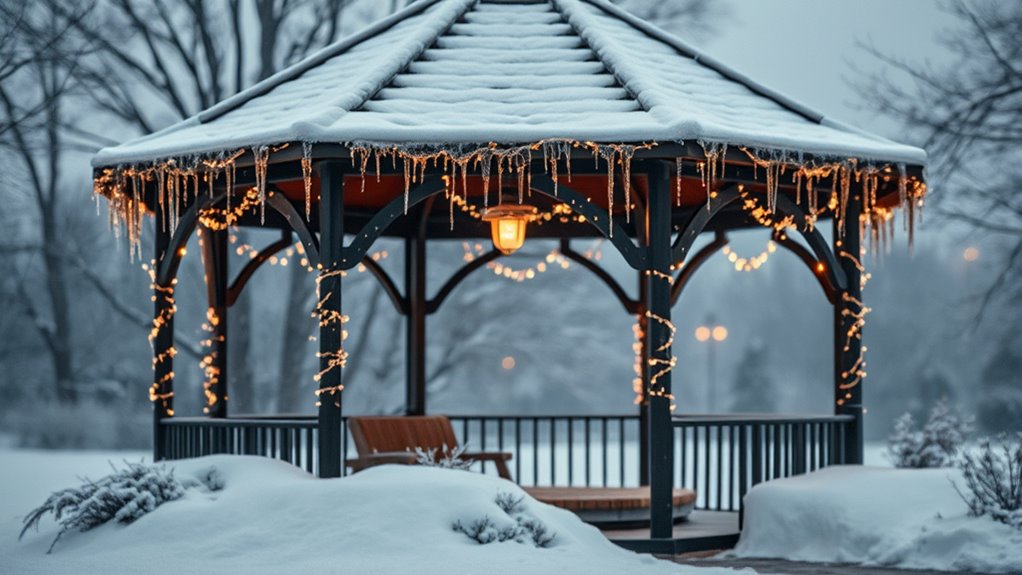
It’s a common belief that gazebo lights simply give up when the temperature drops, leaving you in the dark during winter months. However, this idea overlooks the advancements in lighting technology and design. Many modern fixtures, particularly LED and well-constructed solar options, are engineered to thrive in colder conditions. Understanding how to choose and maintain these lights can make a significant difference in your outdoor experience, especially when winter rolls around.
Understanding Gazebo Lights and Their Components
Gazebo lights are essential for enhancing outdoor spaces, especially during colder months when entertaining becomes more challenging. Understanding the various gazebo light types and their lighting components can help you make informed decisions. You’ll find options like string lights, LED fixtures, and solar-powered lamps, each providing unique aesthetics and functionality.
String lights create a warm, inviting atmosphere, while LED fixtures offer energy efficiency and longevity. Solar-powered lamps are convenient, relying on renewable energy, but may require sunlight exposure for peak performance.
Key components include bulbs, fixtures, and wiring, which determine installation ease and durability. By selecting the right combination, you can create a versatile outdoor space that remains enjoyable, even when temperatures drop, ensuring your gatherings stay lively and memorable.
The Impact of Cold Weather on Outdoor Lighting
As temperatures plummet, outdoor lighting systems can face significant challenges that impact their performance and longevity. Cold weather effects can lead to reduced brightness, flickering, or even complete failure of your lights. Components like wiring and fixtures may become brittle, compromising outdoor lighting durability. Additionally, ice and snow accumulation can obstruct light fixtures, diminishing their effectiveness. When selecting outdoor lights, consider those specifically designed to withstand harsh conditions. Look for products with weather-resistant features and energy-efficient bulbs, as they’re generally more resilient. Regular maintenance is essential; check your system periodically for damage caused by freezing temperatures. By understanding these factors, you can guarantee your outdoor lighting remains reliable and effective even in the coldest months.
Common Misconceptions About Gazebo Lights
What do you really know about gazebo lights? Many people believe they can’t withstand cold weather, but that’s a misconception. In reality, well-designed gazebo lights enhance outdoor aesthetics year-round, regardless of temperature. Some assume only specific types of lighting work in winter; however, various options, including LED and solar lights, can perform effectively even in chilly conditions. Seasonal lighting doesn’t have to be limited to summer evenings; with the right fixtures, your gazebo can become a cozy gathering spot in winter too. It’s important to understand that proper installation and weather-resistant materials play a significant role. So, don’t let myths deter you from enjoying beautifully lit outdoor spaces, no matter the season.
Choosing the Right Gazebo Lights for Winter
When selecting lights for your gazebo during winter, it’s important to evaluate factors like durability and energy efficiency. You’ll want to focus on choosing fixtures that can withstand harsh temperatures and potential moisture. LED light types are ideal, as they consume less energy and have a longer lifespan compared to traditional bulbs. Opt for weatherproof fixtures, ensuring they’re rated for outdoor use to prevent damage from cold or precipitation. Additionally, consider the brightness and color temperature that best suits your winter ambiance, as warmer tones can create a cozy atmosphere. By prioritizing these elements, you can enhance your gazebo’s functionality and aesthetics, allowing you to enjoy your outdoor space even in the coldest months.
Tips for Maintaining Your Gazebo Lights in Cold Conditions
Maintaining your gazebo lights in cold conditions requires proactive measures to guarantee their longevity and functionality. Here are some essential tips for effective lighting maintenance during cold weather:
- Inspect Connections: Regularly check all electrical connections for corrosion or damage, as cold can exacerbate wear.
- Use Weatherproof Fixtures: Invest in fixtures designed for cold weather; they’ll better withstand harsh conditions.
- Clean Regularly: Remove dirt and ice build-up, which can impede light output and damage components.
- Store During Extreme Cold: If temperatures drop considerably, consider storing removable lights indoors to prevent potential failure.
Energy Efficiency and Cold Weather Performance
When considering energy efficiency in cold weather, LED lights stand out for their ability to maintain performance even in low temperatures. You can also implement heat retention strategies to minimize energy loss in your gazebo, ensuring that your lighting remains effective while reducing overall consumption. Understanding these factors will help you optimize your gazebo lighting for both energy efficiency and performance during colder months.
LED Efficiency in Cold
Although cold temperatures can challenge many lighting technologies, LED lights demonstrate impressive efficiency and performance even in frigid conditions. Here are four key points about LED performance in cold:
- Higher Output: LEDs often maintain consistent brightness, ensuring reliable illumination.
- Lower Energy Consumption: They consume less power than traditional bulbs, enhancing energy efficiency.
- Longer Lifespan: Cold temperatures can actually extend the lifespan of LED lights, reducing replacements.
- Immediate Start: Unlike some lighting options, LEDs reach full brightness instantly, avoiding warm-up delays.
Incorporating LEDs in your gazebo lighting means you can enjoy beautiful, reliable illumination regardless of cold temperatures. Embrace the freedom to light up your outdoor spaces without worrying about performance issues!
Heat Retention Strategies
In colder climates, effective heat retention strategies are essential for maximizing energy efficiency and ensuring consistent performance of your gazebo. To achieve ideal heat retention, consider investing in high-quality insulation materials. Insulated walls and roofs can considerably reduce heat loss, maintaining a comfortable environment despite frigid temperatures. Additionally, using thermal curtains or window films can enhance insulation, further trapping warmth inside.
Another effective approach is to incorporate heat-reflective barriers, which redirect warmth back into your space. Placing your gazebo in a sheltered location can minimize exposure to cold winds, enhancing its energy efficiency. By combining these strategies, you’ll not only improve heat retention but also enjoy a cozy, inviting atmosphere throughout the winter months.
Real-Life Experiences: Gazebo Lights in Winter Settings
When using gazebo lights in winter, you’ll notice how they perform under cold conditions and the common installation challenges that arise. Proper maintenance is essential for extending their lifespan despite harsh weather. Understanding these real-life experiences can help you optimize your gazebo lighting setup for the winter months.
Winter Performance Observations
As temperatures drop, many enthusiasts have observed how gazebo lights perform under winter conditions. Users have reported impressive performance reliability during winter usage. Here are some key observations:
- Brightness Consistency: Lights maintain consistent brightness, even in sub-zero temperatures.
- Durability: Many fixtures withstand harsh weather without issues, proving their build quality.
- Energy Efficiency: LED options remain energy-efficient, minimizing power consumption during winter months.
- Easy Maintenance: Most gazebo lights require minimal upkeep, making them a hassle-free choice for winter settings.
These real-life experiences confirm that gazebo lights can thrive in cold climates, offering both functionality and aesthetic appeal. So, don’t let the chill deter you—your gazebo can still shine bright all winter long!
Common Installation Issues
Although winter brings its own set of challenges, installing gazebo lights in cold weather can lead to some common issues that many users encounter. One of the primary installation challenges is the brittleness of materials in low temperatures, which can make components more prone to breaking during setup. Additionally, wiring issues can arise when dealing with frozen ground or moisture, leading to faulty connections or short circuits. It’s vital to guarantee that all wiring is properly insulated and rated for cold weather. Moreover, the adhesive used for mounting may not bond effectively in frigid conditions, potentially compromising the stability of your lights. Taking these factors into account will help you achieve a successful installation that withstands the winter elements.
Maintenance Tips for Longevity
Proper maintenance of gazebo lights during winter is key to guaranteeing their longevity and ideal performance. By following these tips, you can keep your lights shining bright:
- Regularly check for bulb replacement: Inspect bulbs for any signs of wear or damage. Replace them promptly to maintain consistent illumination.
- Guarantee fixture protection: Use weatherproof covers to shield fixtures from snow, ice, and moisture.
- Clean fixtures regularly: Remove dirt and debris to prevent corrosion and enhance brightness.
- Secure wiring: Check all connections and wiring for any signs of wear; guarantee they’re insulated and protected from the elements.
Frequently Asked Questions
Can I Use Regular Light Bulbs in Gazebo Lights During Winter?
You can use regular light bulbs in gazebo lights during winter, but LED compatibility is better. Confirm bulb insulation meets cold weather standards to avoid issues, as regular bulbs may struggle with extreme temperatures and efficiency.
How Long Do Gazebo Lights Typically Last in Cold Weather?
Gazebo lights typically last around 25,000 to 50,000 hours, depending on their light durability and winter performance. Using high-quality LED bulbs enhances longevity, ensuring consistent illumination even during the coldest months. You’ll enjoy reliable lighting year-round.
Do Solar Gazebo Lights Work in Winter?
Yes, solar gazebo lights can work in winter, though their efficiency may decline due to shorter days and cloud cover. Exploring winter lighting solutions guarantees you still enjoy your outdoor space, even in frosty conditions.
Are There Specific Brands Recommended for Winter Gazebo Lighting?
For winter gazebo lighting, consider brands like Ring and Ecolight. Their durability and winter performance guarantee reliable illumination. Research specifications and user reviews to find the best fit for your needs and environment.
How Do I Protect My Gazebo Lights From Snow Accumulation?
To protect your gazebo lights from snow accumulation, use light insulation materials and install covers designed for snow protection. It’ll keep your lights safe, allowing you to enjoy winter evenings without worrying about potential damage.