
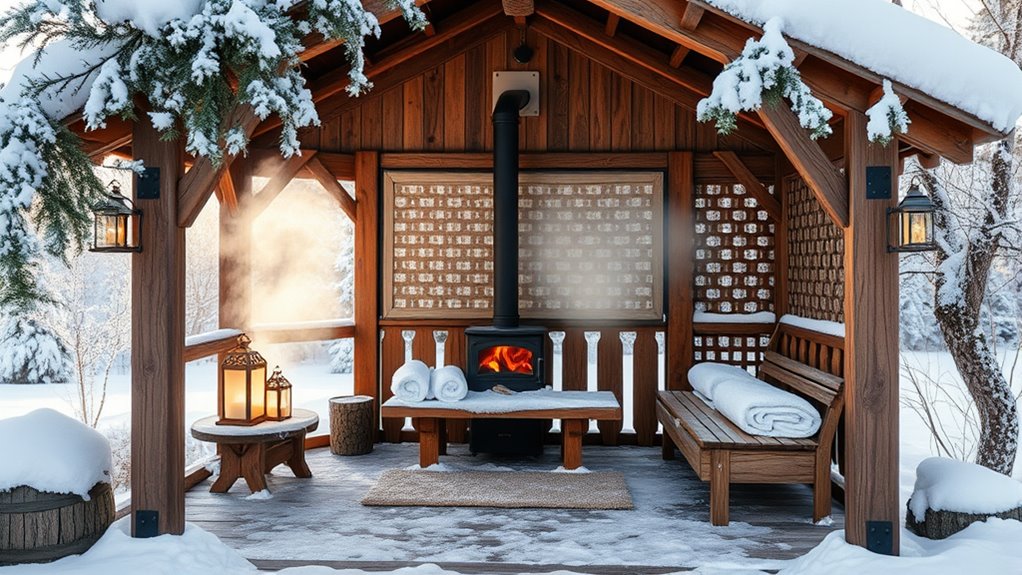
You might find it surprising that transforming your gazebo into a winter sauna could be one of the best projects you tackle this season. With the right materials and a bit of planning, you can create a cozy retreat that beckons on chilly days. Imagine stepping inside, surrounded by warmth and the soothing scent of cedar. But before you start, there are important factors to take into account for a successful conversion.
Assessing Your Gazebo’s Structure and Location
Before diving into your winter sauna project, it’s vital to evaluate your gazebo’s structure and location. First, check the structural integrity of your gazebo—look for any signs of wear or damage that could compromise safety. A sturdy frame is essential for supporting the added weight and heat of a sauna. Next, consider the location; is it positioned to catch the sunlight? Natural light not only enhances the sauna experience but also helps in maintaining a comfortable temperature. A sunny spot can warm your space during chilly days, creating a cozy retreat. By ensuring both structural soundness and ideal sunlight, you’re setting the stage for a fantastic winter sauna experience that truly embodies freedom and relaxation.
Essential Materials for Your Sauna Conversion
With your gazebo’s structure and location assessed, it’s time to gather the right materials for your sauna conversion. Start with the ideal wood types, like cedar or hemlock, which not only withstand humidity but also emit a pleasant aroma. These woods are naturally resistant to warping, ensuring your sauna lasts through the seasons. Don’t forget to install moisture barriers, such as foil or vapor barriers, to protect your gazebo’s walls from dampness. This step is essential for maintaining an inviting, warm atmosphere inside. You’ll also need a reliable heater, whether electric or wood-burning, and sturdy benches for comfort. With these essentials, you’re one step closer to enjoying your personal winter retreat, where freedom and relaxation await.
Insulation Techniques for Optimal Heat Retention
To guarantee your sauna remains cozy and warm during those chilly winter months, effective insulation techniques are essential. Start by installing thermal barriers like rigid foam boards or reflective insulation, which can greatly minimize heat loss. Don’t forget to seal any gaps or cracks with weather stripping or caulk to keep that precious warmth inside. When choosing insulating materials, consider fiberglass or mineral wool, both excellent for trapping heat while allowing moisture to escape—vital for sauna comfort. Finally, insulating the floor with heavy-duty mats can add an extra layer of warmth, ensuring you step onto a cozy surface. With these techniques, you’ll create a haven of relaxation, allowing you to enjoy your sauna freely, no matter how cold it gets outside.
Choosing the Right Heating Source
Once you’ve nailed down your insulation, the next step is selecting the right heating source for your gazebo sauna. You’ve got a couple of great options: electric heaters and wood stoves. Electric heaters offer convenience and precise temperature control, letting you step into a warm oasis with just a flip of a switch. They’re low-maintenance and perfect if you want a hassle-free sauna experience. On the other hand, wood stoves bring a rustic charm and a cozy ambiance, filling your space with the delightful scent of burning wood. They require more effort with regard to wood supply and maintenance, but the experience is undeniably rewarding. Consider your lifestyle, preferences, and the freedom you desire, then choose the source that resonates with you.
Designing the Interior for Comfort and Functionality
As you start planning your sauna’s interior, keep in mind that comfort and functionality go hand in hand. Begin with an efficient interior layout that accommodates seating for you and your guests, allowing for easy movement. Consider installing benches at varying heights so everyone can enjoy the heat as they relax.
Incorporate comfort features like soft, natural wood accents that invite warmth and a calming atmosphere. Use plush towels and cushions to enhance relaxation, while strategically placed lighting can create a soothing ambiance. You might even add shelves for easy access to your favorite essentials, like herbal teas or essential oils. With thoughtful design, your sauna can become a true retreat, blending serene comfort with practical functionality.
Ventilation Considerations for Safety
While the soothing heat of a sauna can be incredibly relaxing, guaranteeing proper ventilation is essential for your safety and comfort. You need to focus on airflow management to prevent a buildup of humidity and harmful gases. Installing vents near the floor and ceiling creates a natural flow, allowing fresh air to circulate while hot air escapes. Make sure your setup meets safety standards to protect against overheating and guarantee a safe environment. Additionally, consider using a ventilation fan for extra support, especially during intense sessions. This way, you can fully enjoy the freedom of your sauna experience without worrying about air quality. Prioritize these ventilation strategies, and you’ll create a safe, enjoyable escape from the winter chill.
Adding Finishing Touches for a Relaxing Atmosphere
After ensuring proper ventilation in your sauna, it’s time to focus on creating a relaxing atmosphere that enhances your experience. Start by incorporating mood lighting—soft, warm tones can transform the space. Consider using LED strips or lanterns to create a gentle glow that soothes your senses. Next, add aromatic elements to elevate your relaxation. Essential oils like eucalyptus or lavender can be diffused or added to water for steam. You might even consider hanging dried herbs for a natural touch. Finally, incorporate comfortable seating with plush cushions or soft blankets to invite you to unwind. With these finishing touches, your gazebo sauna will become a personal sanctuary where you can escape the winter chill and embrace tranquility.
Frequently Asked Questions
Can I Use My Gazebo Year-Round After Converting It to a Sauna?
Yes, you can use your gazebo year-round after converting it into a sauna. With proper gazebo insulation, you’ll enjoy year-round benefits, transforming it into a cozy retreat for relaxation and rejuvenation, no matter the season.
What Maintenance Is Required for a Winter Sauna Gazebo?
You’ll need to regularly clean your sauna to prevent buildup and guarantee hygiene. Proper gazebo insulation’s essential, too, as it maintains warmth during winter. Check for wear, and replace materials as needed for peak performance.
How Long Does the Sauna Take to Heat Up?
Your sauna typically takes about 30 to 40 minutes to heat up, depending on its size and insulation. Maximizing sauna efficiency can shorten this time, letting you enjoy warmth and relaxation sooner.
Is It Safe to Use Electrical Heaters in a Wooden Gazebo?
Using electrical heaters in a wooden gazebo isn’t always safe. Think of it as a dance with fire; choose heater types designed for outdoor use, and prioritize electrical safety to protect your cozy retreat.
What Are the Best Practices for Sauna Etiquette?
To enjoy sauna benefits, arrive clean, hydrate beforehand, and limit sessions to 15-20 minutes. Always listen to your body, take health precautions, and respect others’ space for a rejuvenating experience that promotes freedom and relaxation.