
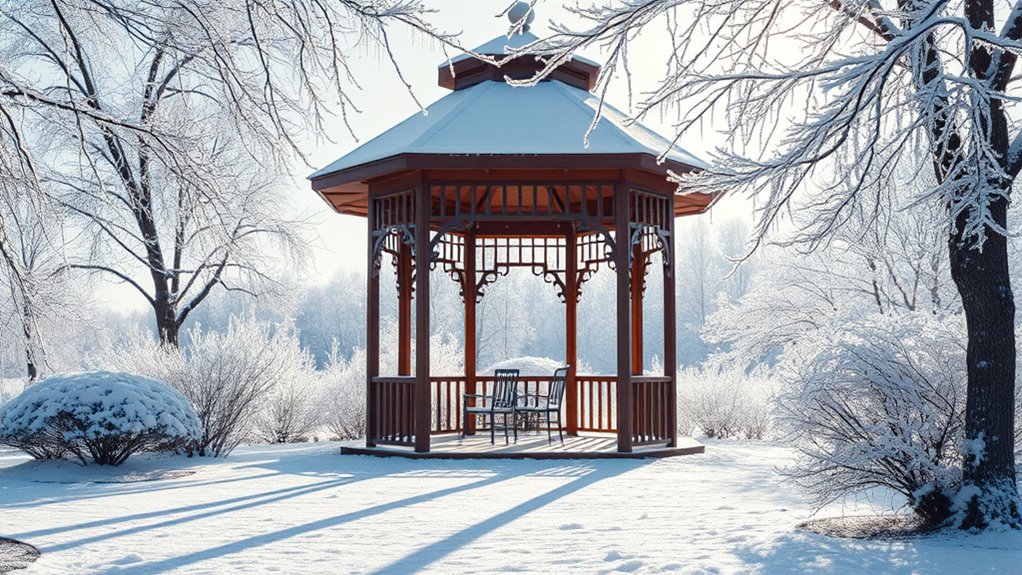
When considering winter photography, a gazebo can serve as a striking focal point amidst a snowy landscape. Its architectural details contrast beautifully with frosted surroundings, creating opportunities for compelling compositions. By selecting the right time of day and exploring various angles, you can showcase its charm effectively. But there’s more to capturing that perfect shot than just framing the structure; understanding how to incorporate natural elements and lighting is key. Let’s explore those techniques further.
The Aesthetic Appeal of Gazebos in Winter
While gazebos are often associated with summer gatherings, their aesthetic appeal in winter can create striking photographic opportunities. The unique interplay of gazebo designs against a snowy backdrop offers a canvas rich with seasonal contrasts. You’ll find that the intricate details of the structure stand out beautifully against the white, allowing for enchanting compositions. Consider framing your shots to highlight the gazebo’s lines, juxtaposed with frosted branches and distant landscapes. Embrace the freedom winter brings; capture the serene stillness that enhances the gazebo’s charm, turning each photograph into a masterpiece of nature and architecture seamlessly intertwined.
Choosing the Right Time of Day for Winter Photography
Timing is essential in winter photography, and the golden hour offers a breathtaking glow that can transform your gazebo shots. However, don’t overlook the subtle beauty of overcast days, which can enrich colors and soften shadows. Understanding these conditions allows you to craft images that truly capture the winter magic.
Golden Hour Magic
As the sun dips low on the horizon during winter, it casts a warm, golden glow that transforms the landscape into a breathtaking winter wonderland. Capturing this golden hour magic requires timing and attention to detail. Here’s how to make the most of it:
- Plan your shoot: Know the exact time of golden hour.
- Scout your location: Identify spots that catch the light beautifully.
- Use reflective surfaces: Snow can amplify that golden glow.
- Experiment with angles: Find the best perspective for depth.
- Adjust your settings: Lower ISO and wider aperture enhance the warmth.
Get ready to release your creativity!
Overcast Day Benefits
Although many photographers shy away from overcast days, these conditions can actually enhance winter photography in unique ways. Overcast lighting provides a soft, diffused glow that minimizes harsh shadows, bringing out the beauty of your subject. You’ll notice improved color saturation, making winter scenes pop with vibrancy. Take advantage of this serene atmosphere to capture stunning images.
| Benefit | Description |
|---|---|
| Soft Light | Reduces contrast and harsh shadows |
| Enhanced Colors | Boosts color saturation and vibrancy |
| Uniform Exposure | Guarantees even lighting throughout |
Embrace the freedom of creativity that overcast days offer!
Incorporating Natural Elements Into Your Shots
While capturing the serene beauty of winter, incorporating natural elements into your shots can elevate your photography from ordinary to extraordinary. By focusing on natural textures and seasonal colors, you can create striking compositions. Consider these elements:
- Frost-covered branches for a delicate touch
- Snow-laden rooftops to evoke warmth
- Pine cones and evergreen boughs for rich textures
- Reflections in frozen ponds to add depth
- Sunlight filtering through trees for a magical glow
These components can harmonize with your gazebo setting, enhancing the overall aesthetic. Embrace the freedom to experiment and let nature’s beauty guide your creative vision.
Experimenting With Different Angles and Perspectives
To elevate your winter photography, try shooting from low angles to capture the gazebo’s grandeur against the winter sky. Framing your shots with overhanging branches can add depth and a sense of intimacy to your images. Don’t forget to experiment with wide-angle perspectives to showcase the expansive beauty of your surroundings and create a mesmerizing composition.
Low Angle Shots
One powerful technique in winter photography is capturing low angle shots, which can dramatically alter the viewer’s perception of your subject. By experimenting with this perspective, you’ll enhance winter contrast and create a sense of grandeur. Here are some tips to reflect upon:
- Get down low to the ground for interesting foreground details.
- Include the sky in your frame for dramatic clouds or sunlight.
- Capture reflections in snow or water at a low angle.
- Use the gazebo’s architecture to frame your subject creatively.
- Experiment with depth of field to pull focus on your subject against the winter landscape.
Embrace the freedom this angle brings!
Framing With Branches
Framing your subject with branches can instantly elevate your winter photography, creating layers and depth in your composition. Using branch framing as natural borders not only draws the eye but also adds a touch of artistry. Experiment with different angles and perspectives to find the perfect balance. Below is a table to inspire your creative vision:
| Angle | Composition Tip | Effect |
|---|---|---|
| Low Angle | Capture upward branches | Highlights the sky |
| Eye Level | Frame the subject tightly | Creates intimacy |
| High Angle | Overhead branches | Adds a unique perspective |
| Diagonal | Use angled branches | Creates dynamic movement |
| Layered | Overlapping branches | Enhances depth and richness |
Wide-Angle Perspectives
While exploring winter landscapes, using wide-angle perspectives can transform your photography by capturing expansive scenes that convey the vastness of the season. A wide angle lens allows you to experiment with perspective distortion, emphasizing foreground elements while stretching the background. Here are some tips to take into account:
- Position yourself low to the ground for dramatic depth.
- Include leading lines to guide the viewer’s eye.
- Frame the gazebo to enhance its prominence.
- Capture reflections in snow or ice for added interest.
- Play with light and shadows to create mood.
Embrace the freedom of creativity and let your vision shine!
Utilizing Lighting to Enhance Your Photos
When you harness the unique qualities of natural light, your winter photography can transform into something truly magical. Experiment with various lighting techniques to capture the essence of your gazebo in a snowy landscape. Early morning and late afternoon, when the sun casts a warm glow, are perfect for achieving rich color temperatures that enhance your images. Use reflectors to bounce light into shadowed areas, revealing intricate details. Don’t shy away from overcast days—soft, diffused light can create a serene ambiance. With thoughtful adjustments, you’ll create stunning winter compositions that resonate with freedom and creativity, capturing the beauty of the season.
Styling the Gazebo for a Winter Wonderland Look
To create a winter wonderland look for your gazebo, start by selecting a cohesive color palette that complements the snowy backdrop. Consider these winter decorations to enhance your seasonal themes:
- Soft white fairy lights to add warmth
- Plush, frosted garlands draping across railings
- Elegant, silver and blue ornaments hanging from the ceiling
- Rustic wooden accents for a natural touch
- Cozy blankets and pillows for a welcoming vibe
Capturing Movement and Action in a Winter Scene
As you step into the wintery scene around your gazebo, capturing movement and action can transform a static photograph into a dynamic composition. Utilize movement techniques like panning to follow a subject, blurring the background while keeping the action sharp. This adds depth and energy to your shots. Experiment with fast shutter speeds to freeze a snowball mid-air or slow speeds to create a dreamy effect with falling snow. Action captures, like children playing or animals frolicking, infuse life into your photos. Be ready; the beauty of winter is fleeting, and seizing these moments will elevate your photographic storytelling.
Post-Processing Tips for Winter Gazebo Photography
Although capturing the perfect shot of your gazebo in winter can be exhilarating, post-processing is where you can truly enhance the magic of your images. Here are some tips to elevate your winter photos:
- Color grading: Emphasize cool tones to evoke a frosty atmosphere.
- Contrast adjustments: Make your gazebo pop against the snowy backdrop.
- Sharpening: Bring out fine details in the wood and surroundings.
- Denoising: Clean up any graininess from low-light shots.
- Vignetting: Draw focus to the gazebo by subtly darkening the edges.
These techniques can transform your photos into enchanting winter scenes.
Frequently Asked Questions
What Camera Settings Are Best for Winter Photography in a Gazebo?
For winter photography, use a lower exposure compensation to avoid overexposure, and set your white balance to ‘cloudy’ or ‘shade’ for warmer tones. Experiment with aperture and shutter speed for creative effects in the gazebo.
How Can I Protect My Camera From Cold Weather Conditions?
To protect your camera in cold weather, keep spare batteries warm in your pockets for ideal battery care, and use a lens hood or protective filter to shield the lens from moisture and frost.
Are There Specific Lenses Recommended for Winter Gazebo Photography?
You don’t need to limit yourself; wide-angle lenses capture expansive winter scenes beautifully, while telephoto options excel at isolating details. Choose based on your creative vision, ensuring every shot reflects your unique perspective.
What Clothing Should I Wear for Outdoor Winter Photography Sessions?
For outdoor winter photography, wear insulated gloves to keep your hands warm while adjusting settings. Layer thermal clothing for maximum comfort, ensuring you can move freely and focus on capturing stunning, crisp images without distractions.
How Do I Avoid Reflections on My Camera Lens in Snowy Conditions?
To dodge reflections, pop on a lens hood and a polarizing filter; they’re your trusty shields against glare. Embrace the snowy wonderland, capturing pure moments without distractions—freedom lies in sharp, vibrant imagery.