
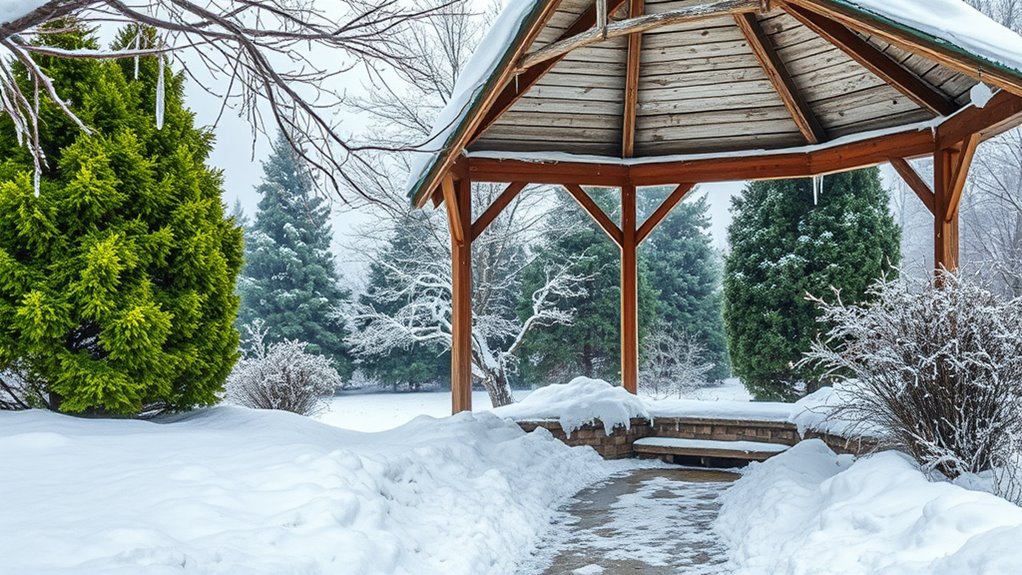
Designing a winter gazebo can transform your outdoor space into a cozy retreat, but it’s easy to overlook essential details. Many homeowners make mistakes that can compromise both comfort and longevity. From the materials you choose to the gazebo’s location, each decision plays a significant role in its success. Are you aware of the common pitfalls that could turn your dream gazebo into a seasonal regret? Let’s explore the key missteps to avoid.
Ignoring Weather-Resistant Materials
When you’re planning to install a gazebo for winter use, overlooking weather-resistant materials can lead to costly mistakes. Choosing durable materials is essential, as they’ll withstand harsh elements like snow and ice. Opt for wood treated with weather-resistant coatings to prevent rot and decay. Metal frames should be galvanized or powder-coated to resist rust. By using UV-resistant fabrics for canopies, you guarantee longevity against fading and tearing. Remember, investing in quality materials not only enhances your gazebo’s aesthetic appeal but also grants you the freedom to enjoy your outdoor space all winter long, without the worry of damage or deterioration.
Failing to Insulate Properly
Although you might envision your gazebo as a cozy retreat during winter, failing to insulate properly can turn it into an uncomfortable space. To guarantee warmth, utilize effective insulation techniques like spray foam or fiberglass, which create robust thermal barriers against the cold. Seal any gaps in windows and doors to prevent drafts, allowing you to enjoy the serene winter landscape without shivering. Consider adding insulated curtains for an extra layer of protection. With proper insulation, your gazebo can transform into a snug haven, inviting you to relish winter’s beauty while staying warm and comfortable throughout the chilly months.
Overlooking Heating Options
While you might have invested in a beautifully designed gazebo, overlooking heating options can leave you shivering during winter gatherings. Consider various heating sources like electric heaters or propane fire pits that can create a cozy atmosphere. Don’t forget about insulation options—adding thermal curtains or insulated panels can greatly enhance warmth retention. Strategically place heaters to guarantee even heat distribution, avoiding cold spots that can spoil your outdoor enjoyment. By combining effective heating sources with smart insulation options, you’ll transform your gazebo into a comfortable retreat, allowing you to savor winter nights with friends and family, free from the chill.
Neglecting Regular Maintenance
If you neglect regular maintenance on your winter gazebo, you might find yourself facing costly repairs and diminished enjoyment of your space. Seasonal inspections are crucial to keep your gazebo in top shape. Create a maintenance checklist to guarantee you cover all necessary tasks.
| Task | Frequency | Importance |
|---|---|---|
| Inspect roof for leaks | Every season | Prevent water damage |
| Clean gutters | Monthly | Avoid overflow |
| Check for rot | Bi-annually | Structural integrity |
| Lubricate hinges | Annually | Smooth operation |
Stay proactive to preserve your winter retreat’s charm and functionality!
Choosing the Wrong Location
When you’re picking a spot for your winter gazebo, consider how sunlight hits the area throughout the day. It’s essential to shield your space from harsh winds while ensuring it’s easily accessible for those chilly gatherings. A well-thought-out location can transform your gazebo from a mere structure into a cozy winter retreat.
Sunlight Exposure Considerations
Choosing the wrong location for your winter gazebo can lead to inadequate sunlight exposure, which greatly impacts its usability and comfort. Consider the sunlight angles during winter months and how seasonal variations affect the amount of sunlight your gazebo receives. Placing your gazebo in a shaded area or too far from south-facing exposure can leave it cold and uninviting. Aim for a spot that maximizes sunlight, allowing you to enjoy those rare sunny winter days. This thoughtful positioning not only enhances warmth but also creates a vibrant atmosphere, giving you the freedom to embrace winter’s beauty from the comfort of your gazebo.
Wind Protection Areas
While maximizing sunlight is essential for comfort, the impact of wind protection on your winter gazebo can’t be overlooked. Choosing the wrong location can expose your structure to harsh gusts, compromising both your comfort and the gazebo’s integrity. Think about natural wind barriers, like trees or hills, that can shield your shelter design from relentless winds. Positioning your gazebo away from open spaces will enhance its durability and create a cozy retreat. Remember, the right placement not only enhances your experience but also preserves your investment. Prioritize wind protection to enjoy your winter oasis without the chill biting at your peace.
Accessibility and Convenience
Although you may be tempted to place your winter gazebo in a picturesque spot, overlooking accessibility can lead to frustration and inconvenience. A user-friendly layout is essential, ensuring you can enjoy your space without encountering obstacles. Choose a location with easy access from your home and paths that are well-maintained, making winter visits hassle-free. Consider proximity to utilities like power and water for added convenience. Avoid secluded areas that may require cumbersome trips through snow drifts or icy patches. Your winter gazebo should be a sanctuary, allowing you the freedom to relax and unwind effortlessly, regardless of the season.
Skipping Drainage Solutions
Ignoring proper drainage solutions can lead to serious problems for your winter gazebo. Without effective systems in place, water accumulation could compromise the structure and create a breeding ground for mold. Let’s explore how choosing the right drainage methods and avoiding common pitfalls can protect your investment.
Importance of Proper Drainage
When you overlook proper drainage for your winter gazebo, you risk significant structural damage and costly repairs. A well-designed drainage system is essential for effective water management, ensuring that melting snow or rainwater flows away from your structure. Without it, water can pool around your gazebo’s foundation, leading to rot, mold, and even collapse. Think of your gazebo as your sanctuary; protecting it from the elements keeps it inviting and enjoyable. By prioritizing drainage, you’re not just safeguarding your investment; you’re preserving a space where you can experience freedom, relaxation, and the beauty of winter without worry.
Choosing Effective Drainage Solutions
As you plan for your winter gazebo, selecting effective drainage solutions is essential for maintaining its integrity and longevity. Consider installing a drainage system that promotes ideal water flow away from your gazebo’s foundation. Utilize French drains or gravel trenches to redirect runoff and prevent water pooling. Confirm that the surrounding landscape slopes away, enhancing natural drainage. Incorporate downspouts that channel rainwater directly into designated areas, reducing the risk of erosion. By prioritizing these drainage solutions, you’ll protect your gazebo from winter’s harsher elements, allowing it to remain a sanctuary of freedom and enjoyment throughout the seasons.
Common Drainage Mistakes to Avoid
Even with the best drainage solutions in place, overlooking certain common mistakes can still lead to significant issues for your winter gazebo. Failing to install gutters or downspouts properly can cause water pooling around the foundation, compromising stability. Additionally, neglecting to grade the land away from your gazebo may trap moisture, leading to rot and mildew. Regularly clearing debris from drainage paths is essential; otherwise, blockages can create unwelcome puddles. Finally, don’t underestimate the importance of seasonal maintenance—frozen pipes or thawed water can wreak havoc if not properly managed. Stay proactive to guarantee your winter escape remains a serene sanctuary.
Forgetting About Lighting
One common mistake people make when designing a winter gazebo is overlooking the importance of lighting. Proper ambient lighting transforms your space, creating an inviting atmosphere even in the coldest months. Think strategically about fixture placement; position sconces and fairy lights to highlight architectural features and surrounding nature. Incorporate warm hues to foster a cozy ambiance, encouraging gatherings and relaxation. Don’t forget to take into account functionality; pathways and seating areas need adequate illumination to guarantee safety and comfort. By thoughtfully integrating lighting into your gazebo design, you’ll enhance both aesthetics and usability, allowing freedom to enjoy your winter retreat day or night.
Underestimating Snow Load
When designing a winter gazebo, it’s crucial not to underestimate the snow load that your structure will need to support. Ignoring potential snow accumulation can compromise your gazebo’s structural integrity, leading to costly repairs or even collapse.
| Snow Load (lbs/sq ft) | Potential Damage |
|---|---|
| 10 | Minor stress on the frame |
| 20 | Possible roof sagging |
| 30 | Risk of structural failure |
To guarantee your gazebo thrives through harsh winters, calculate the expected snow load carefully and choose resilient materials that can withstand the weight. Don’t leave your winter retreat to chance!
Not Adding Windbreaks
While it might be tempting to leave your winter gazebo open to the elements for an unobstructed view, not adding windbreaks can lead to detrimental effects on both comfort and structural stability. Incorporating windbreak types, such as lattice panels or evergreen shrubs, can greatly reduce wind chill while maintaining that sense of openness you crave. Strategic windbreak placement is vital; positioning them on the most exposed sides can maximize their effectiveness. By carefully selecting and placing windbreaks, you’ll create a cozy retreat, allowing you to enjoy your gazebo all winter long without the harshness of biting winds disrupting your peace.
Disregarding Aesthetic Considerations
When designing your winter gazebo, it’s essential to take into account how it interacts with the surrounding landscape. Using materials that clash with the natural environment can create a jarring visual effect, detracting from the overall beauty. By harmonizing your gazebo’s design with its setting, you’ll enhance both its functionality and aesthetic appeal.
Ignoring Surrounding Landscape
Although it might seem like a minor detail, ignoring the surrounding landscape when planning your winter gazebo can lead to a disjointed and visually unappealing space. To achieve true landscape integration, consider how your gazebo complements existing plants, trees, and structures. Imagine the visual harmony created by selecting colors and materials that resonate with nature’s palette. Don’t forget to incorporate pathways or seating that invites exploration and connection with your garden. By embracing your environment, you’ll create a serene retreat that feels like a natural extension of your property, allowing for the freedom to enjoy your outdoor space all winter long.
Choosing Incompatible Materials
Choosing materials for your winter gazebo can be a challenging task, especially if you disregard how they harmonize with your overall aesthetic vision. Incompatible materials can disrupt design cohesion, impacting both beauty and function. To guarantee material compatibility, consider these factors:
- Climate Resistance: Select materials that withstand winter weather without deteriorating.
- Visual Harmony: Ensure colors and textures complement your home and landscape.
- Durability: Opt for long-lasting materials that maintain their appeal throughout the seasons.
Frequently Asked Questions
How Much Does a Winter Gazebo Typically Cost?
A winter gazebo typically costs between $3,000 to $10,000, depending on gazebo materials and winter insulation options. Higher-quality materials and superior insulation can enhance durability and comfort, ensuring you enjoy your space all season long.
Can I Build a Gazebo Myself or Hire a Contractor?
You can definitely build a gazebo yourself, but hiring a contractor offers expertise and saves time. Consider your DIY skills and the benefits of professional help; it’s like choosing between a solo voyage or a guided adventure.
What Style of Gazebo Is Best for Winter Use?
A winter gazebo with solid wood or vinyl materials, paired with proper insulation, is best. These choices guarantee durability against harsh weather, providing you with a cozy retreat to enjoy the beauty of winter outside.
Are There Any Permits Required for Building a Gazebo?
Yes, you’ll often need permits for building a gazebo, as permit requirements vary by location. Check local gazebo regulations to guarantee compliance, avoiding potential fines or construction delays that could restrict your creative freedom.
How Long Does It Take to Build a Winter Gazebo?
Building a winter gazebo? You’ll need a time machine—just kidding! Typically, a construction timeline spans 4-6 weeks, especially with winter materials. Patience is key while ensuring everything withstands the frosty embrace of winter.