
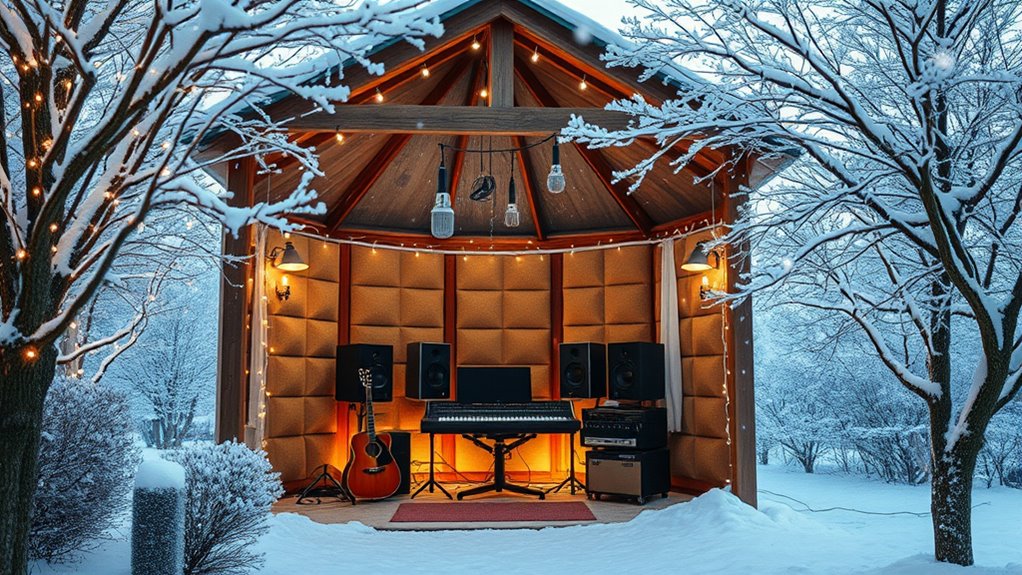
Setting up a winter gazebo recording studio requires precise planning and execution. You’ll need to take into account factors like location, insulation, and equipment suitability for cold weather. Effective acoustic treatment is vital for capturing clear sound amidst the winter environment. As you navigate these considerations, you’ll discover key strategies to guarantee both comfort and quality. The effectiveness of your setup hinges on several important decisions that can greatly impact your recording experience.
Choosing the Right Location for Your Gazebo
Choosing the right location for your gazebo is vital for optimizing your recording studio’s acoustics and functionality. You’ll need to take into account gazebo orientation carefully; aligning your structure to minimize sound interference from external sources, like traffic or wind, is essential. Positioning the gazebo away from reflective surfaces, such as walls or large windows, can enhance sound quality. Environmental factors, including vegetation and terrain, also play a significant role. Dense trees can act as natural sound barriers, while the slope of the land may affect sound dispersion. Monitor seasonal changes, as winter winds and snow accumulation can impact both acoustics and accessibility. By thoughtfully selecting your gazebo’s location, you create a space that fosters creativity and freedom in your recording endeavors.
Insulating Your Gazebo for Winter Comfort
Although insulating your gazebo may seem like a challenging task, it’s crucial for maintaining a comfortable recording environment during the winter months. Start by selecting effective insulation materials, such as fiberglass batts or rigid foam boards, which provide excellent thermal resistance. Make sure that the walls, floor, and ceiling are adequately insulated to prevent heat loss.
Consider sealing gaps and cracks with weatherstripping or caulk, as even small openings can greatly reduce your gazebo’s warmth. For heating options, portable electric heaters or infrared panels can maintain a cozy atmosphere, allowing you to focus on your recordings without interruptions. By prioritizing insulation and heating, you’ll create a more inviting and productive space, enhancing your overall recording experience in the winter.
Essential Equipment for Recording in Cold Weather
Once your gazebo is properly insulated and heated, the next step is to secure you have the right equipment to handle the challenges of recording in cold weather. Microphone selection is essential—opt for models that can withstand temperature fluctuations without affecting sound quality. Additionally, consider investing in weatherproof gear to protect your equipment from humidity and extreme cold.
- High-quality dynamic microphones
- Pop filters designed for outdoor use
- Weatherproof microphone stands
- Portable audio interfaces with robust casing
- Insulated cables to prevent signal interference
These items not only enhance your recording experience but also guarantee your creative freedom remains uninterrupted, allowing you to focus on capturing the perfect sound in your winter gazebo studio.
Acoustic Treatment Tips for Outdoor Spaces
To achieve ideal sound quality in your outdoor recording space, effective acoustic treatment is crucial, especially in a winter gazebo where external noise can interfere with your recordings. Start by installing acoustic panels on walls to absorb unwanted sound reflections. Consider using thick soundproofing materials, like specialized foam or heavy curtains, to reduce noise intrusion. Ascertain you cover windows and doors to minimize leaks that disrupt audio clarity. Additionally, employing bass traps in corners can help control low-frequency buildup, enhancing overall sound quality. Don’t forget to evaluate your gazebo’s location; avoid areas with high traffic or loud environments. With these strategies, you’ll create a more controlled acoustic environment, allowing your recordings to shine despite outdoor challenges.
Creating a Cozy Atmosphere With Lighting
After addressing the acoustic treatment of your winter gazebo, it’s time to focus on the lighting. Creating a cozy atmosphere is vital for enhancing your recording experience. Ambient lighting not only sets the mood but also improves focus and creativity. Here are some elements to take into account:
- Soft LED string lights for gentle illumination
- Dimmable lamps to adjust brightness as needed
- Candles or flameless candles for warmth and ambiance
- Colored bulbs to add a personal touch
- Light-diffusing curtains to soften harsh light
Setting Up Your Recording Gear Efficiently
To set up your recording gear efficiently, you need to focus on optimizing space utilization and arranging essential equipment strategically. Prioritize key tools based on their frequency of use, ensuring easy access and minimizing clutter. This systematic approach not only enhances workflow but also improves overall sound quality in your winter gazebo studio.
Optimize Space Utilization
While setting up your recording gear, it’s crucial to maximize the available space to enhance both functionality and workflow. Utilizing space saving solutions and multi functional furniture can greatly improve your studio’s efficiency. Here are some strategies to contemplate:
- Vertical storage: Use wall-mounted racks for instruments and cables.
- Compact desks: Opt for desks that provide storage without occupying too much floor space.
- Foldable chairs: Incorporate chairs that can be easily stored when not in use.
- Cable management: Implement cable organizers to reduce clutter.
- Modular units: Choose furniture that can be reconfigured based on your needs.
Essential Equipment Arrangement
Maximizing space utilization lays the groundwork for an effective studio setup, but the arrangement of your recording gear is equally important for achieving optimal workflow. Start by ensuring ideal microphone placement; position your mics to capture sound accurately while avoiding unwanted noise. This might mean angling them strategically relative to instruments or vocals. Next, focus on cable management; using cable ties or organizers can prevent tangling and reduce clutter, allowing for a smoother workflow. Arrange your equipment in a logical sequence—mixers, interfaces, and monitors should be easily accessible. By prioritizing these elements, you’ll create an efficient environment that enhances creativity while minimizing distractions, ultimately giving you the freedom to focus on your music production without unnecessary interruptions.
Maintaining Equipment in Low Temperatures
As temperatures drop, the performance and longevity of your recording studio equipment can be considerably impacted, necessitating careful maintenance practices. To guarantee your gear remains in prime condition, follow these essential guidelines:
- Monitor temperature fluctuations to avoid thermal stress.
- Utilize silica gel packs for effective moisture control.
- Store equipment in insulated cases when not in use.
- Regularly inspect cables and connectors for signs of corrosion.
- Keep your workspace dry and well-ventilated to minimize dampness.
Capturing Winter Sounds: Techniques and Tips
To effectively capture the unique sounds of winter, you’ll need to adapt your recording techniques to account for the season’s distinct acoustic characteristics. Begin with field recordings in serene, open spaces to capture the subtle nuances of snow crunching or wind rustling through trees. Use high-quality microphones with windshields to minimize unwanted noise. Experiment with sound layering by recording multiple sources—like distant birds and close-up snow sounds—to create a rich auditory tapestry. Pay attention to the time of day; early mornings often yield the clearest acoustics. Finally, consider the temperature’s effect on your equipment; cold can impact performance, so test your gear before diving into a session. This meticulous approach will help encapsulate the essence of winter.
Staying Warm While You Record
While capturing winter sounds can be exhilarating, it’s crucial to stay warm during your recording sessions to maintain focus and efficiency. Here are some effective strategies to guarantee you’re comfortable while you create:
- Invest in heating solutions: Portable heaters can considerably increase your comfort level.
- Layer your clothing: Opt for thermal base layers to trap heat while allowing movement.
- Use insulated footwear: Keep your feet warm with insulated, non-slip boots.
- Incorporate hand warmers: Disposable or rechargeable hand warmers can provide quick relief.
- Avoid caffeine: It can make you feel colder; instead, sip on warm herbal teas.
With these strategies, you can create a warm environment that fosters creativity and productivity during your winter recording sessions.
Inspiring Creativity in Your Winter Studio
Although winter’s chill can be stifling, the season also offers unique opportunities for inspiration in your studio. The serene winter ambiance can enhance your focus, allowing for deeper creativity. Embrace the stark contrasts outside your window; they can evoke powerful emotions in your compositions. Utilize natural light during the day to illuminate your workspace and stimulate your senses. Experiment with softer, warmer artificial lighting in the evening to create a cozy atmosphere. Surround yourself with winter-themed art or soundscapes that evoke the season’s essence, fostering creative inspiration. Additionally, consider incorporating winter sounds, like wind or snow, to enrich your recordings. By harmonizing your studio environment with winter’s unique qualities, you’ll unveil new avenues for artistic expression.
Frequently Asked Questions
Can I Use a Portable Heater in My Gazebo Studio?
Yes, you can use a portable heater, but make certain it’s safe. Consider gazebo insulation options to maximize efficiency and reduce heat loss. Always monitor the heater to prevent fire hazards and maintain a comfortable environment.
What Types of Microphones Work Best in Cold Conditions?
In cold conditions, consider cardioid condensers for their superior sensitivity and dynamic range. These mics capture crisp clarity despite chilly challenges, ensuring your recordings resonate with rich, vibrant sound, granting you the freedom to create effortlessly.
How Do I Prevent My Recording Gear From Freezing?
To prevent your recording gear from freezing, employ gear insulation techniques and guarantee temperature monitoring. Use insulated cases and thermal wraps to maintain warmth, and regularly check temperature to protect your equipment from extreme cold.
Are There Specific Winter Music Genres to Explore?
You’ll find winter soundscapes bursting with ethereal beauty, where seasonal melodies intertwine like frosty vines. Explore ambient, chill-out, and even folk genres to capture that crisp, cold essence, transforming your recordings into seasonal masterpieces.
How Can I Protect My Gazebo From Snow Accumulation?
To protect your gazebo from snow accumulation, regularly perform snow removal and consider adding gazebo insulation. This combination minimizes weight stress and prevents moisture damage, ensuring your structure remains functional and aesthetically pleasing throughout winter.