
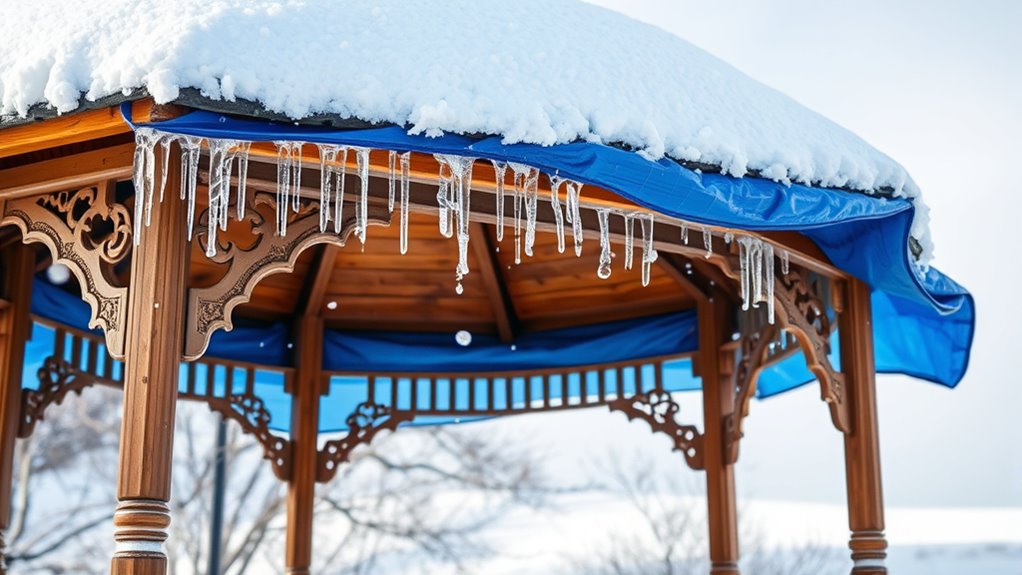
You might think winter roof damage isn’t a big concern for your gazebo, but neglecting it can lead to costly repairs. To guarantee your structure remains intact and functional, a proactive approach is essential. It starts with evaluating its current condition and implementing a thorough maintenance routine. Understanding the necessary steps for protection will help you maintain your gazebo’s integrity through harsh winter conditions. What should you prioritize first?
Assessing Your Gazebo’s Current Condition
Before the winter weather sets in, it’s vital to assess your gazebo’s current condition to identify any vulnerabilities that could lead to roof damage. Start with a thorough visual inspection; check for cracks, loose shingles, or signs of rot. Next, conduct a structural assessment to evaluate the integrity of the framework. Verify all joints are secure and that the roof supports are stable. Pay special attention to areas where water may accumulate, as this can lead to leaks. By addressing any issues now, you’ll protect your gazebo and maintain its functionality throughout the winter season.
Clearing Snow and Ice Regularly
As winter progresses and snow accumulates, it’s crucial to clear snow and ice from your gazebo regularly to prevent excessive weight that could compromise the roof structure. Employ effective snow removal techniques, such as using a roof rake to minimize stress on the gazebo while avoiding damage to the roofing materials. Additionally, consider ice prevention methods like applying de-icing agents or using heat cables to reduce ice buildup. Make it a habit to inspect your gazebo after heavy snowfalls, ensuring you maintain its integrity and prolong its lifespan, ultimately allowing you to enjoy your outdoor space without concern.
Reinforcing the Roof Structure
Regular snow and ice removal is an essential step in maintaining your gazebo, but reinforcing the roof structure is another proactive measure that can enhance its durability in winter conditions. Consider implementing roof truss reinforcement to provide additional structural support. This involves adding braces or extra supports to distribute weight evenly and reduce stress on the roof. Use high-quality materials, like treated wood or metal brackets, for longevity. By ensuring your gazebo’s roof can withstand harsh winter elements, you’re not just protecting your investment; you’re also creating a safe and enjoyable space for relaxation and gatherings throughout the season.
Applying Protective Coatings
Applying protective coatings to your gazebo’s roof is an essential step in preventing damage from winter weather. Start by applying a high-quality protective paint designed for outdoor use; this creates a barrier against moisture and UV rays. Once the paint dries, use a weatherproof sealant to further enhance protection. Focus on areas prone to leaks, ensuring a thorough application for ideal results. These coatings not only extend the life of your roof but also enhance its appearance. Regular maintenance and reapplication will help you maintain that freedom to enjoy your gazebo, regardless of the harsh winter elements.
Installing Snow Guards
When winter arrives and snow accumulates on your gazebo’s roof, installing snow guards becomes essential to prevent potential damage. These devices help manage snow flow, reducing the risk of sudden avalanches.
Here are three snow guard types to take into account:
- Barriers – These prevent snow from sliding off, ideal for steep roofs.
- Pucks – Small, discrete units that hold snow in place without obstructing aesthetics.
- Rails – Long structures that distribute weight evenly, suitable for larger roofs.
For effective installation, verify proper spacing, adhere to manufacturer’s guidelines, and take into account roof material compatibility. These tips will help maintain your gazebo’s integrity throughout winter.
Inspecting and Repairing Roof Seals
Although winter can be harsh on gazebo roofs, inspecting and repairing roof seals is essential for preventing leaks and structural damage. Start by evaluating the existing seals for wear and tear. Different sealant types, like silicone or polyurethane, can be effective depending on your gazebo’s material. Here are some maintenance tips to keep in mind:
| Sealant Type | Use Cases |
|---|---|
| Silicone | Flexible applications |
| Polyurethane | High durability needs |
| Butyl Rubber | Weather-resistant seals |
Regular inspections will guarantee your gazebo remains safe and sound throughout the winter season. Don’t neglect this critical maintenance task!
Choosing the Right Roofing Material
Choosing the right roofing material for your gazebo is essential, especially in winter conditions. Selecting durable, weather-resistant options can prevent damage and extend your gazebo’s lifespan. Here are three suitable materials to examine:
- Metal Roofing: Lightweight and robust, metal roofing withstands snow and ice accumulation, reducing the risk of collapse.
- Asphalt Shingle Options: Affordable and versatile, high-quality shingles offer decent insulation and can handle winter weather when properly installed.
- Cedar Shake Shingles: Natural and aesthetically pleasing, these shingles provide excellent insulation but require regular maintenance to prevent moisture damage.
Evaluate these materials based on your climate and aesthetic preferences.
Enhancing Drainage Systems
Proper roofing materials contribute greatly to a gazebo’s durability, but an effective drainage system is equally important for winter weather resilience. A well-thought-out drainage design guarantees proper water diversion, reducing the risk of ice accumulation and roof damage. Consider incorporating gutters, downspouts, and drainage channels to facilitate water flow.
| Component | Function | Benefits |
|---|---|---|
| Gutters | Collect rainwater | Prevents overflow |
| Downspouts | Direct water away | Reduces foundation risk |
| Drainage channels | Guides water flow | Minimizes ice buildup |
Preparing for Future Winters
As winter approaches, it’s important to evaluate and prepare your gazebo for the harsh conditions ahead. Effective winter maintenance can prevent significant damage and extend your structure’s life. Here are three key seasonal preparations to reflect upon:
- Inspect the Roof: Look for any loose shingles or structural weaknesses.
- Clear Debris: Remove leaves and snow buildup to prevent excess weight.
- Apply Protective Sealants: Use weather-resistant coatings to shield materials from moisture.
Frequently Asked Questions
How Do I Know if My Gazebo Needs a New Roof?
To determine if your gazebo needs a new roof, conduct a roof inspection. Look for damage signs like missing shingles, leaks, or rot. If you see these issues, it’s time to contemplate a replacement.
Can I Use a Regular Shovel to Clear Snow off My Gazebo?
You shouldn’t use a regular shovel for snow removal on your gazebo. Instead, opt for lightweight shovel types, like a plastic or roof rake, to prevent roof damage and maintain your structure’s integrity during winter.
What Are the Best Roofing Materials for Winter Weather?
For winter weather, metal and asphalt shingles offer the best insulation and weather resistance. Imagine your shelter standing strong against fierce storms, protecting you from nature’s wrath while providing freedom to enjoy the outdoors year-round.
How Often Should I Inspect My Gazebo During Winter?
You should inspect your gazebo at least once a month during winter. Regular winter maintenance guarantees structural integrity and safety, allowing you to enjoy the freedom of your outdoor space without worrying about potential damage.
Are There Specific Brands of Protective Coatings You Recommend?
You might consider brands like Rust-Oleum and Thompson’s WaterSeal for protective coatings. These offer excellent weather resistance. Compare their features and user reviews to find what suits your gazebo’s materials and your specific needs best.