
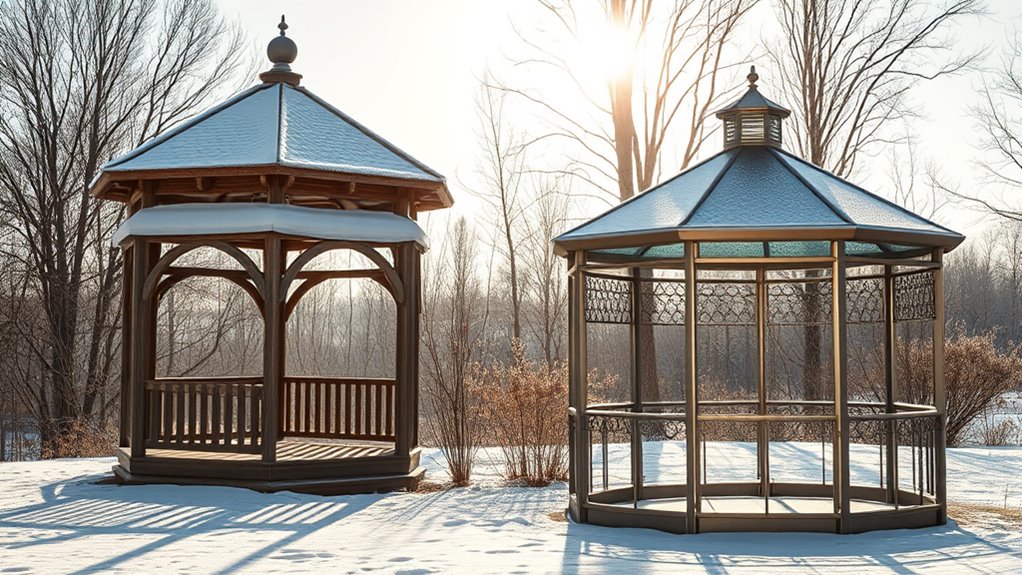
When considering a gazebo for winter conditions, you need to weigh the merits of wooden versus metal options carefully. Wooden gazebos offer a natural charm and insulation but come with maintenance challenges. On the other hand, metal structures provide superior durability and lower upkeep. Each choice has its implications for aesthetics, maintenance, and cost. Understanding these differences can help you make an informed decision that suits your specific environment and needs. What factors will influence your choice?
Pros and Cons of Wooden Gazebos in Winter
When considering a wooden gazebo for winter conditions, it’s essential to weigh both its advantages and disadvantages. Wooden gazebos offer aesthetic appeal and natural insulation properties, helping to retain warmth. However, durability factors come into play, as wood can warp, crack, or rot when exposed to moisture and extreme temperatures. Regular maintenance is necessary to prolong their lifespan. Additionally, while wood can insulate against the cold, it may not perform as well as metal in severe conditions. Ultimately, you’ll need to decide if the charm of wood outweighs the practical challenges it presents during winter months.
Advantages of Metal Gazebos for Cold Weather
Although many might overlook metal gazebos in favor of their wooden counterparts, they offer several compelling advantages in cold weather. For one, metal gazebos boast impressive durability factors, allowing them to withstand harsh winter elements without warping or cracking. Additionally, they often incorporate insulation properties that can help maintain a stable temperature inside, providing comfort during chilly gatherings. Metal structures are also resistant to pests and decay, which is vital when dealing with ice and snow. Ultimately, choosing a metal gazebo guarantees you can enjoy outdoor freedom year-round, regardless of the winter’s challenges.
Aesthetic Appeal: Wooden Vs Metal Gazebos
Aesthetics play an essential role in selecting a gazebo, and the choice between wooden and metal options can greatly influence the overall ambiance of your outdoor space. Wooden gazebos often provide natural warmth and charm, while metal gazebos offer a sleek, modern look.
| Design Elements | Color Options |
|---|---|
| Rustic, warm wood | Earthy tones |
| Intricate carvings | Bold metallic hues |
| Organic shapes | Contemporary shades |
| Timeless appeal | Versatile finishes |
Choosing between these styles ultimately depends on your desired atmosphere and freedom of expression in your outdoor sanctuary.
Maintenance Considerations for Winter
While both wooden and metal gazebos can enhance your outdoor space, their maintenance needs during winter can differ greatly. For wooden gazebos, winter preparation includes sealing and treating the wood to prevent moisture damage. Regular inspections are vital to catch any potential rot or decay. In contrast, metal gazebos require less maintenance; however, snow removal is essential to avoid structural stress. Clear off accumulated snow promptly to prevent sagging or bending. Ultimately, understanding these maintenance considerations will help you preserve your gazebo and enjoy it for many winters to come, ensuring your outdoor freedom remains intact.
Cost Comparison: Wooden Vs Metal Gazebos
When considering the costs associated with wooden versus metal gazebos, it is essential to factor in both initial investment and long-term expenses. Here’s a price analysis to guide your decision:
- Initial Cost: Wooden gazebos typically cost more upfront.
- Maintenance Expenses: Metal gazebos require less maintenance, saving you money over time.
- Material Durability: Metal offers greater resistance to harsh winter conditions.
- Resale Value: Well-maintained wooden structures can retain higher resale value.
Choosing the Right Gazebo for Your Climate
Choosing the right gazebo for your climate involves evaluating how different materials perform under specific weather conditions. If you live in a colder area, consider a wooden gazebo for its superior insulation properties, which can provide warmth and a cozy atmosphere. On the other hand, metal gazebos excel in climate adaptability, resisting corrosion and frost. They’re often lighter and easier to maintain, making them ideal for unpredictable weather. Assess your local climate’s demands and how each material stands up to it. Ultimately, selecting the right gazebo guarantees you enjoy your outdoor space year-round, regardless of the elements.
Frequently Asked Questions
Can Wooden Gazebos Withstand Heavy Snow Loads?
While wooden gazebos offer charm, their winter durability can falter under heavy snow loads. Compared to metal, they may require more maintenance and reinforcement, so consider the material comparison carefully for enduring freedom in harsh winters.
How Do Metal Gazebos Handle Extreme Cold Temperatures?
Metal gazebos can handle extreme cold temperatures well due to their low thermal conductivity, which minimizes heat loss. Their structural integrity remains strong in harsh conditions, making them a reliable choice for winter environments.
Are There Insulation Options for Wooden Gazebos in Winter?
Yes, you can use insulation materials like foam boards or fiberglass in wooden gazebos. Proper winter maintenance is essential, ensuring you check for any moisture buildup or damage that could compromise insulation effectiveness over time.
Do Metal Gazebos Rust in Snowy Conditions?
If you’re not careful, your metal gazebo could rust in snowy conditions. While snow accumulation affects longevity, choosing galvanized or powder-coated options can help prevent rust and increase durability in winter’s harsh embrace.
What Colors Are Available for Winter-Friendly Metal Gazebos?
Metal gazebos come in various color options, including classic white, deep green, and sleek black. These winter designs not only enhance aesthetics but also resist fading, ensuring your space remains vibrant despite harsh weather conditions.