
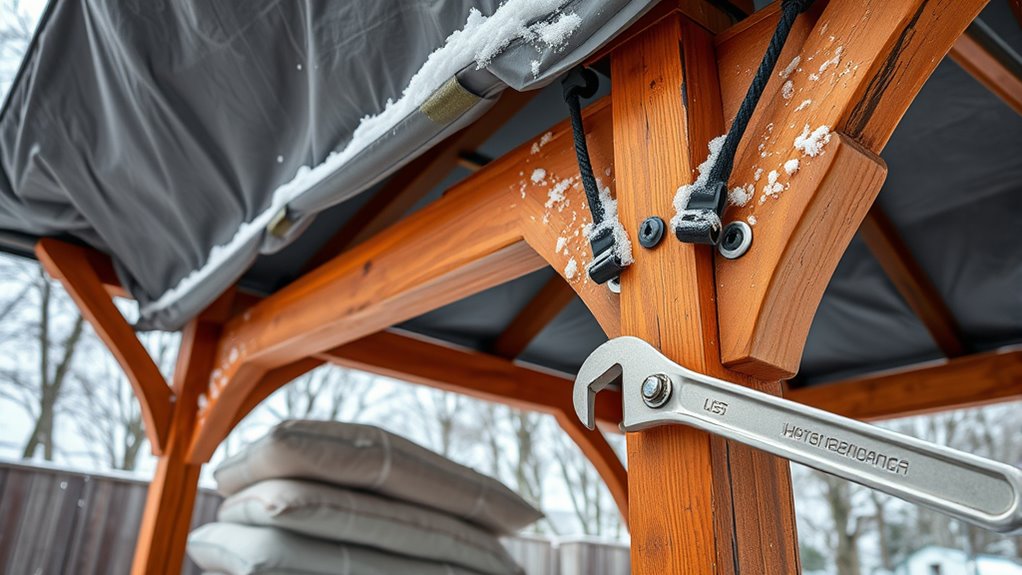
Picture your gazebo standing resilient against the harsh winter winds, its frame sturdy and secure. To achieve this, you need to assess its current condition and identify any weaknesses. From rust to cracks, every detail matters. Understanding how to reinforce the structure effectively can prevent costly repairs later. What steps can you take to guarantee your gazebo withstands the elements? Let’s explore the essential techniques for fortifying your outdoor haven.




Assessing Your Gazebo’s Current Condition
Before you begin reinforcing your gazebo frame, it’s essential to assess its current condition to identify any weaknesses or damages that need addressing. Conduct a detailed gazebo inspection, focusing on joints, connections, and structural integrity. Look for signs of rust, rot, or cracks in the materials. A thorough frame assessment will help you pinpoint areas that require immediate attention. Verify that all fasteners are secure, and evaluate the overall alignment of the structure. This meticulous evaluation not only enhances the longevity of your gazebo but also empowers you to make informed decisions for effective reinforcement strategies that uphold your desire for freedom outdoors.
Choosing the Right Materials for Reinforcement
When selecting materials for reinforcing your gazebo frame, it’s essential to take into account factors such as durability, weather resistance, and compatibility with existing structures. Several material types can enhance strength and longevity:
- Steel: Excellent for structural integrity and resistance to harsh elements.
- Aluminum: Lightweight and corrosion-resistant, ideal for mobile applications.
- Composite materials: Offer strength with reduced weight and maintenance.
- Wood: Traditional choice, but should be treated for weather resistance.
Utilizing appropriate reinforcement techniques with these materials will guarantee your gazebo withstands winter conditions effectively, allowing you to enjoy your outdoor space without worry.
Adding Cross Bracing for Stability
Adding cross bracing is essential for enhancing the stability of your gazebo frame. It effectively redistributes loads and minimizes lateral movement, which is vital for maintaining structural integrity. When selecting materials for cross bracing, consider options that offer both strength and resistance to environmental factors.
Importance of Cross Bracing
One essential element in reinforcing the stability of a gazebo frame is the incorporation of cross bracing. This technique considerably enhances structural integrity, especially during harsh winter conditions. By adding cross bracing, you can achieve several cross bracing benefits:
- Reduces lateral movement
- Distributes loads evenly
- Enhances overall stability
- Prevents warping and bending
These advantages make certain that your gazebo withstands wind and snow, maintaining its form and function. Prioritizing cross bracing not only extends the life of your gazebo but also assures a safer, more reliable outdoor space for your enjoyment throughout the winter months.
Materials for Cross Bracing
While selecting the right materials for cross bracing is essential for enhancing a gazebo’s stability, it’s important to take into account both strength and durability. For wood types, consider pressure-treated lumber or cedar, as they resist warping and decay. These options provide excellent tensile strength and can withstand harsh winter conditions. Alternatively, metal options like galvanized steel or aluminum offer superior rigidity and resistance to rust. When choosing, weigh the benefits of each material against your specific environment and aesthetic preferences. Ultimately, using the right combination of materials will guarantee your gazebo can endure winter’s challenges efficiently.
Installing Additional Support Beams
To enhance the stability of your gazebo, installing additional support beams can be essential, especially in areas prone to high winds or heavy snowfall. When selecting support beam types, consider these installation techniques:
Enhancing your gazebo’s stability with additional support beams is crucial for areas facing high winds or heavy snowfall.
- Use pressure-treated wood for durability against moisture.
- Incorporate diagonal bracing to distribute weight evenly.
- Secure beams with metal brackets for added strength.
- Attach beams at critical load points to enhance overall stability.
Securing the Roof Structure
Securing the roof structure of your gazebo is essential for ensuring its longevity and stability, particularly in adverse weather conditions. To enhance roof support, consider adding cross-bracing between rafters, which distributes weight more evenly. Additionally, inspect the roof connections for any signs of wear or weakness. For winter reinforcement, apply a snow load calculation to determine if your current structure can withstand potential snowfall. Reinforce weak areas with brackets or additional supports, ensuring they’re securely fastened. By taking these proactive measures, you’ll protect your gazebo from winter’s harsh elements and prolong its life for years to come.
Anchoring the Gazebo to the Ground
Properly anchoring your gazebo to the ground is essential for its stability and safety, especially in high winds or storms. To guarantee your structure remains secure, consider the following options for anchor systems:
Proper anchoring is crucial for your gazebo’s safety and stability, particularly during storms and high winds.
- Use heavy-duty ground stakes to penetrate the soil
- Employ concrete footings for added stability
- Install a tensioning system to distribute forces evenly
- Utilize tie-down straps for additional wind resistance
These methods will help safeguard your gazebo from unpredictable weather. Assess the terrain and choose the anchoring solution that best fits your needs, allowing you to enjoy your outdoor space with confidence.
Protecting Against Snow Accumulation
While snow accumulation can pose a significant threat to the structural integrity of your gazebo, implementing preventive measures can mitigate potential damage. To prepare for winter, assess the snow load your gazebo can withstand, considering the material and design. Reinforce the frame by adding diagonal braces or supports, distributing the weight evenly. During winter preparations, regularly clear snow buildup from the roof, especially after heavy snowfall. This practice helps prevent excessive stress on the structure. Additionally, consider using a snow roof rake to safely remove snow without climbing onto the gazebo, ensuring your outdoor space remains safe and functional throughout winter.
Regular Maintenance and Inspections
Maintaining the structural integrity of your gazebo extends beyond winter preparations; regular maintenance and inspections are essential year-round. Establishing a maintenance schedule guarantees your gazebo remains sturdy and safe. Regular inspections help identify potential issues before they escalate. Here are key aspects to focus on:
Regular maintenance and inspections are crucial year-round to ensure your gazebo remains sturdy and safe.
- Check joints and connections for signs of wear
- Inspect for rust or corrosion on metal components
- Confirm wood is free from rot and pests
- Tighten loose screws and bolts
Preparing for Severe Weather Events
As severe weather events can pose significant risks to your gazebo’s stability, it’s essential to take proactive measures to reinforce its frame. Begin with winter storm preparedness by securing all joints and connections, ensuring they’re tight and free from rust. Evaluate the gazebo’s location; avoid low-lying areas prone to flooding or wind exposure. Consider adding bracing to support the structure during high winds. Also, remove any lightweight decorations or furniture that could become projectiles. Implementing these severe weather precautions not only safeguards your gazebo but grants you the peace of mind to enjoy your outdoor space, even in harsh conditions.
Frequently Asked Questions
What Tools Do I Need for Reinforcing My Gazebo Frame?
For fortifying your gazebo frame, gather essential DIY tools like drills, saws, and wrenches, along with robust reinforcement materials such as brackets, screws, and weather-resistant wood. Your structure’s stability depends on these critical components.
How Often Should I Inspect My Gazebo During Winter?
You should inspect your gazebo bi-weekly during winter for ideal maintenance. Regular checks enhance gazebo durability, allowing you to address potential issues promptly, ensuring you’re enjoying your space without worry, even in harsh conditions.
Can I Reinforce My Gazebo Without Professional Help?
Yes, you can DIY reinforcement for your gazebo without professional help. Regular gazebo maintenance, like adding cross-bracing and securing loose connections, enhances stability and guarantees your structure withstands winter’s challenges effectively.
What Are the Signs of Structural Damage to Look For?
Look for sagging beams, cracked joints, and rust signs. If you notice wind stress on the structure, such as bowing or shifting, these indicate potential structural damage needing immediate attention to guarantee stability and safety.
Is It Safe to Use My Gazebo in Winter?
If your gazebo stands like a fortress, it can still offer refuge in winter. However, guarantee winter safety by checking stability and avoiding heavy snowload. Otherwise, it’s best to limit gazebo usage until spring.