
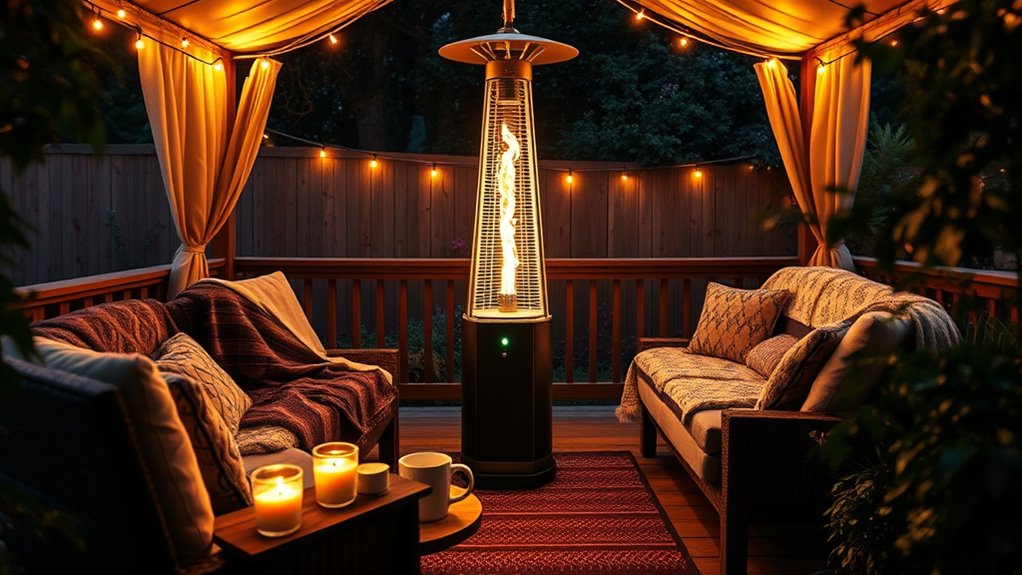
Using a gazebo heater overnight can seem like inviting a cozy, warm hug into your outdoor space, but it can also be a recipe for disaster if you’re not careful. To guarantee a safe experience, you’ll need to follow specific guidelines and understand the risks involved. From choosing the right location to educating your guests, there’s more to take into account than just turning it on. Let’s explore the essential safety measures you should implement.




Understanding Different Types of Gazebo Heaters
When it comes to choosing a gazebo heater, understanding the various types available is essential for ensuring comfort and safety. Electric heaters offer convenience and low maintenance, while propane heaters provide robust heat output, making them ideal for larger spaces. Infrared heaters, on the other hand, heat objects directly, which can be efficient for smaller areas. Patio heaters can also be versatile options. Always consider outdoor safety by following installation guidelines and regular heater maintenance. Evaluate fuel types and heater efficiency to match your gazebo design. Making an informed choice will enhance your outdoor experiences while ensuring you stay warm and secure.
Choosing the Right Location for Your Heater
Choosing the right location for your gazebo heater is essential to secure both comfort and safety. Start by considering heater placement; make certain it’s positioned away from flammable materials like fabrics or wood. Maintain adequate safety zones around the heater, typically at least three feet, to prevent accidental contact. Also, think about airflow—avoid corners where heat may concentrate and create hazards. Position your heater where it can effectively warm the area without obstructing movement. By being mindful of these factors, you can enjoy your time outdoors while minimizing risks and maximizing your freedom to relax in your cozy gazebo.
Importance of Proper Ventilation
Although it may seem counterintuitive, proper ventilation is essential for the safe operation of your gazebo heater. Without adequate air circulation, harmful gases can accumulate, posing serious risks to your health. Employing effective ventilation techniques, like using vents or keeping windows slightly open, guarantees a steady flow of fresh air. This not only enhances safety but also optimizes the heater’s efficiency. You want to enjoy your space freely without worrying about air quality. By prioritizing ventilation, you create a comfortable environment, allowing you to relax and fully appreciate your gazebo heater’s warmth while minimizing potential hazards.
Checking for Gas Leaks and Safety Features
Before using your gazebo heater, it’s essential to inspect gas connections for any signs of leaks. Make certain to check that the safety shut-off mechanisms are functioning properly, as these features are important for preventing accidents. Taking these precautions can help guarantee a safe and enjoyable experience while using your heater.
Inspecting Gas Connections
When inspecting gas connections for your gazebo heater, it’s crucial to guarantee safety and functionality. Ascertain connection integrity and conduct gas pressure testing to confirm there are no leaks. Here are some essential steps to follow:
- Examine all hoses and connectors for wear or damage.
- Use soapy water to check for bubbles indicating leaks.
- Verify that all connections are tightened securely.
- Regularly inspect the regulator for proper functionality.
Safety Shut-Off Mechanisms
After ensuring the integrity of gas connections, it’s important to familiarize yourself with safety shut-off mechanisms in your gazebo heater. These mechanisms, like automatic shut off, are essential for preventing gas leaks and potential hazards. Regularly check that safety features are functioning correctly; they can save lives. Make it a habit to inspect the heater before each use, ensuring all components operate smoothly. If your heater lacks these critical safety features, consider upgrading to a model that includes them. By prioritizing safety, you can enjoy your outdoor space with peace of mind, knowing you’ve taken the necessary precautions.
Setting Up Your Heater: Guidelines to Follow
Though setting up your heater might seem straightforward, adhering to specific guidelines is essential for safety and efficiency. Proper heater placement and following safety guidelines can make all the difference.
- Verify the heater’s at least three feet away from flammable materials.
- Keep the heater on a stable, level surface to prevent tipping.
- Use a heater designed for outdoor use, suitable for your gazebo.
- Regularly check for gas leaks if applicable, and verify proper ventilation.
Monitoring Temperature and Fuel Levels
To guarantee the safe operation of your gazebo heater, it’s essential to monitor both the temperature and fuel levels regularly. Keeping an eye on these factors helps prevent overheating and fuel shortages, which can lead to accidents. Additionally, setting the thermostat correctly will enhance safety and efficiency, so make it a habit to check these settings frequently.
Regular Temperature Checks
Regular temperature checks are essential for guaranteeing the safe operation of gazebo heaters. You should prioritize temperature monitoring to avoid potential hazards. Conducting regular inspections helps maintain a prime environment for relaxation and enjoyment.
- Use a reliable thermometer to gauge the heater’s temperature.
- Check for any unusual fluctuations that could indicate a malfunction.
- Schedule inspections before each use, especially after prolonged downtime.
- Always monitor the heater’s placement to guarantee it’s not too close to flammable materials.
Fuel Level Management
While enjoying your gazebo heater, it is crucial to keep an eye on fuel levels to guarantee continuous operation and safety. Monitoring the fuel gauge regularly helps you plan your refill schedule, ensuring you never run out unexpectedly. Here’s a quick reference table to assist you:
| Fuel Level | Action Needed |
|---|---|
| Full | Enjoy the warmth! |
| 3/4 Full | Check in a few hours |
| 1/2 Full | Plan for a refill |
| 1/4 Full | Refill soon |
| Empty | Stop usage immediately |
Stay proactive about fuel management for a worry-free experience!
Safety Thermostat Settings
A well-functioning thermostat is the heart of your gazebo heater, ensuring perfect warmth while maintaining safety. Proper thermostat calibration is essential for reliable performance. You’ll want to monitor the temperature closely to achieve the best temperature without risking overheating. Here are some key considerations:
- Regularly check thermostat settings for accuracy
- Keep an eye on fuel levels to avoid unexpected shutdowns
- Adjust settings based on outdoor conditions
- Consider a programmable thermostat for convenience
Utilizing Safety Accessories and Features
To guarantee a safe and enjoyable experience with gazebo heaters, it’s essential to utilize the various safety accessories and features available. Start by ensuring your heater has an automatic shut-off function to prevent overheating. Consider using a protective cover when the heater’s not in use, which can shield it from environmental hazards. Additionally, safety accessories like carbon monoxide detectors can provide peace of mind, especially during overnight use. Always check the heater features for stability, ensuring it’s securely placed to avoid tipping. By incorporating these elements, you can enjoy your time outdoors without unnecessary risks.
Preparing for Unforeseen Weather Conditions
When using gazebo heaters, it’s essential to stay prepared for unexpected weather changes. Regularly monitor weather forecasts to anticipate conditions that could impact your setup. Additionally, having a protective cover and an emergency preparedness kit on hand can help you respond quickly and safely.
Weather Forecast Monitoring
Although unpredictable weather can complicate outdoor gatherings, monitoring the forecast is crucial for safe use of gazebo heaters. By keeping an eye on weather pattern analysis and real-time updates, you can be prepared for sudden changes. Here are a few tips to stay ahead:
- Check forecasts regularly for temperature drops or storms
- Use reliable weather apps for instant notifications
- Pay attention to wind conditions that could affect heater safety
- Plan your gatherings around favorable weather forecasts
Being proactive about weather monitoring guarantees your comfort and safety, allowing you to enjoy your outdoor space without unnecessary worries.
Protective Cover Use
Protecting your gazebo heaters with a suitable cover is crucial, especially since unexpected weather conditions can arise at any moment. Select protective cover materials that provide durability and weather resistance features, like heavy-duty polyester or vinyl. These materials can shield your heaters from rain, snow, and UV rays, guaranteeing they last longer and function safely. When choosing a cover, make certain it fits snugly to prevent wind from displacing it. A well-fitted cover not only protects against moisture but also keeps debris at bay, allowing you to enjoy your outdoor space without worrying about your heaters’ condition during unforeseen weather events.
Emergency Preparedness Kit
An emergency preparedness kit is essential for anyone using gazebo heaters, especially in unpredictable weather. You never know when conditions might shift, so being ready can make all the difference. Your kit should include:
- A reliable flashlight with extra batteries
- A first aid kit for minor injuries
- Emergency communication devices, like a battery-powered radio
- Non-perishable food and water for at least 72 hours
These items can help guarantee your safety and comfort. Remember, being prepared allows you to enjoy your time outdoors without worry, even when the weather takes an unexpected turn. Stay safe and be ready!
Establishing a Safe Shutdown Routine
To guarantee the safety and longevity of your gazebo heater, establishing a safe shutdown routine is vital. Start by following the manufacturer’s shutdown procedures diligently. Always turn off the gas supply and unplug the heater to prevent any leaks or accidents. Allow the heater to cool completely before covering it for storage, which is also an important step in heater maintenance. Regularly check for any wear or damage during shutdown, ensuring it’s ready for the next use. This routine not only enhances safety but also prolongs the life of your heater, giving you the freedom to enjoy your outdoor space worry-free.
Educating Guests on Heater Safety Practices
While enjoying your time in the gazebo, it’s essential that guests understand heater safety practices to minimize risks. Proper guest education is key, so consider these safety reminders:
Ensuring guests know heater safety practices is vital for a safe and enjoyable gazebo experience.
- Keep flammable materials, like blankets and papers, away from the heater.
- Never leave the heater unattended when in use.
- Make certain proper ventilation to prevent carbon monoxide buildup.
- Familiarize yourself with the heater’s operation and emergency shut-off procedures.
Frequently Asked Questions
Can I Use an Electric Heater in My Gazebo?
You can use an electric heater in your gazebo, but you must prioritize electric heater safety. Consider proper ventilation and explore gazebo heating options to guarantee warmth without compromising your comfort or well-being. Stay cautious!
What Is the Best Fuel Type for Gazebo Heaters?
For gazebo heaters, propane offers excellent efficiency and warmth, while electric options provide convenience and safety. Consider your needs: if you’re seeking portability and high heat, propane’s your choice; for ease, go electric.
How Do I Maintain My Gazebo Heater?
To maintain your gazebo heater, regularly clean it to prevent buildup. Follow safety tips like checking for gas leaks and guaranteeing proper ventilation. Regular maintenance guarantees peak performance and helps prolong its lifespan.
Are There Specific Regulations for Outdoor Heaters?
Yes, there’re outdoor heating regulations you should follow. Check local laws for heater safety standards to guarantee compliance, maintain safety, and enjoy your outdoor space without concerns. Always prioritize safety when using outdoor heaters.
Can I Leave the Heater Unattended Overnight?
You shouldn’t leave heaters unattended overnight. For heater safety, it’s essential to monitor them while in use. Unattended heaters can pose fire risks, so always prioritize safety over convenience when enjoying your outdoor space.