
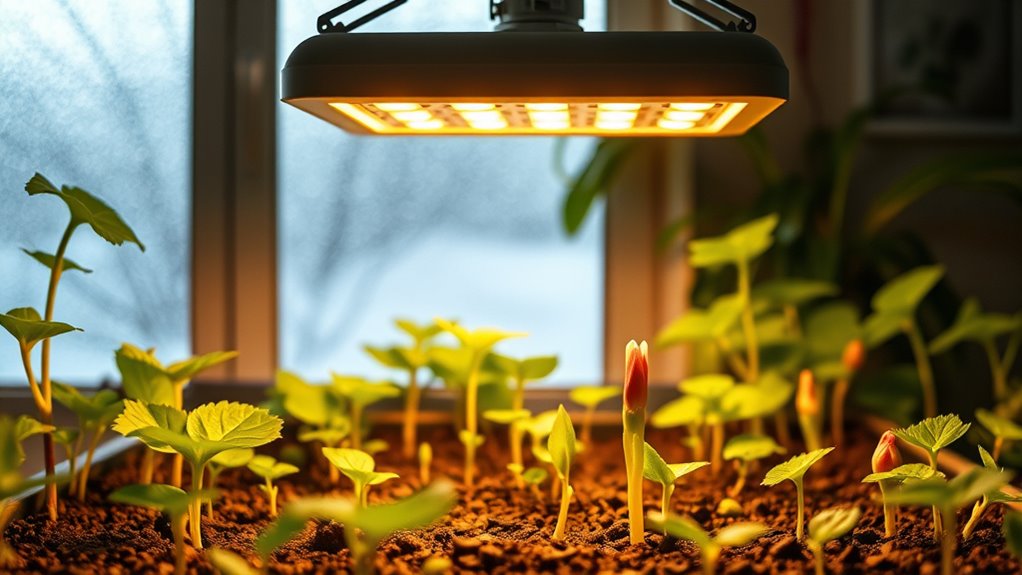
When winter arrives, natural sunlight diminishes, making it challenging to keep your indoor garden thriving. Using grow lights becomes essential for maintaining healthy plant growth during these months. You’ll need to understand the different types of grow lights available and how they can benefit your specific plants. Proper setup is vital, as is knowing the ideal light duration. Let’s explore how you can optimize your indoor garden for winter success.




Understanding Grow Lights and Their Types
When you’re considering winter gardening, understanding grow lights and their types is essential for successfully nurturing your plants indoors. LED technology is a popular choice due to its energy efficiency and long lifespan, emitting full-spectrum light that mimics natural sunlight. It’s perfect for all growth stages, helping you achieve robust plants. Alternatively, fluorescent options provide a cost-effective solution, especially for seedlings and low-light plants. They emit less heat, which can be beneficial in keeping your indoor environment stable. Choosing between these types will depend on your specific gardening goals, space, and plant needs, allowing you the freedom to thrive all winter long.
Benefits of Using Grow Lights in Winter
While winter can pose challenges for indoor gardening, using grow lights offers numerous benefits that can markedly enhance your plant’s growth and health. Here’s why you should consider them:
- Improved Plant Growth: Grow lights provide consistent light exposure, essential for photosynthesis, leading to healthier and more vigorous plants.
- Energy Efficiency: Many modern grow lights utilize LED technology, reducing energy consumption while delivering ideal light spectrums.
- Extended Growing Seasons: They allow you to cultivate plants year-round, enabling you to enjoy fresh produce even in the cold months.
Choosing the Right Grow Light for Your Plants
When choosing the right grow light, you’ll need to contemplate the light spectrum, as different plants require varying wavelengths for ideal growth. Additionally, wattage plays a vital role in determining how much coverage area your light can effectively illuminate. Balancing these factors guarantees your plants receive the right intensity and type of light for healthy development during the winter months.
Light Spectrum Considerations
Choosing the right grow light involves understanding the light spectrum, as different plants have specific needs for photosynthesis and growth. You’ll want to take into account the balance of red light and blue light, as each plays an essential role in plant development.
- Red light promotes flowering and fruiting.
- Blue light encourages vegetative growth and leaf production.
- Light intensity and duration affect how effectively your plants photosynthesize, so adjust accordingly.
Wattage and Coverage Area
Understanding wattage and coverage area is vital for selecting the right grow light for your plants, as insufficient light can hinder growth and yield. Higher wattage typically translates to greater light output, but it’s important to match this with your plants’ specific needs. For example, leafy greens require less wattage than fruiting plants. Additionally, consider the energy efficiency of the light; LED options provide high light output with lower energy consumption, making them ideal for extended use. Calculate the coverage area by evaluating the light’s spread to guarantee all your plants receive adequate illumination for peak growth and development.
How to Set Up Your Grow Light System
Setting up your grow light system requires careful consideration of the types of lights you choose, their positioning, and the timing of usage. You’ll want to select lights that cater to the specific needs of your plants, ensuring they’re placed at the ideal distance to maximize light absorption. Additionally, establishing a consistent lighting schedule is essential for promoting healthy growth during the winter months.
Choosing the Right Lights
When it comes to winter gardening, selecting the right grow lights is essential for ensuring your plants thrive indoors. You’ll want to take into account various factors, including light spectrum, energy efficiency, and space constraints. Here are some key options:
- LED options: Energy-efficient and long-lasting, with adjustable light spectra for different plant stages.
- Fluorescent tubes: Affordable and effective for seedlings, providing a balanced spectrum but with shorter lifespans.
- HID lights: High-intensity discharge lights that are powerful, but consume more energy and generate heat.
Choosing wisely can empower your indoor garden and keep your plants flourishing through winter.
Positioning and Timing
To guarantee your plants receive adequate light for growth during the winter months, proper positioning and timing of your grow light system are essential. Start by ensuring your light placement is about 12-24 inches above your plants, adjusting as they grow to avoid burn. Use a timing schedule that mimics natural sunlight—typically 12-16 hours of light per day. Automated timers can help keep consistency, ensuring your plants thrive. Position your lights directly above the foliage to maximize coverage. Regularly monitor your plants’ responses, making adjustments based on their growth patterns and light needs for best results.
Ideal Light Duration for Different Plants
Although each plant species has unique light requirements, understanding the ideal light duration is essential for enhancing growth during winter gardening. Most plants thrive with about 12-16 hours of light per day, but this can vary. Here’s a quick guide to help you:
- Leafy greens: 10-12 hours of light; they prefer shorter durations.
- Fruiting plants: 14-16 hours; they need more light for maximum fruit production.
- Herbs: 12-14 hours; adjust based on growth stage.
Managing Temperature and Humidity With Grow Lights
Proper light duration is just one part of creating an ideal environment for winter gardening; managing temperature and humidity plays a significant role in plant health as well. To guarantee peak growth, you’ll need effective temperature regulation and humidity control. Ideally, maintain temperatures between 65°F and 75°F for most plants. Use thermostats or heaters to avoid drastic fluctuations. For humidity, aim for levels around 40-60%. Employ humidifiers or pebble trays to increase moisture, especially in dry indoor air. Monitoring these factors closely can create a thriving microclimate, allowing your plants to flourish even in the depths of winter.
Common Mistakes to Avoid When Using Grow Lights
Many gardeners make essential mistakes when using grow lights, which can hinder plant growth and health. Here are some common pitfalls to avoid:
Avoid common mistakes with grow lights to ensure healthy plant growth and maximize your yields.
- Incorrect light distance: Placing lights too close can cause light burn and overheating plants.
- Inadequate light duration: Not providing enough light hours can stunt growth and reduce yields.
- Ignoring plant needs: Each plant species has specific light requirements; failing to adapt can lead to poor results.
Recommended Plants for Indoor Winter Gardening
When it comes to indoor winter gardening, choosing the right plants can make all the difference in your success. You’ll love experimenting with various herb varieties and vegetable options that thrive under grow lights. Here’s a quick overview of some recommended plants:
| Herb Varieties | Vegetable Options | Light Requirements |
|---|---|---|
| Basil | Lettuce | Moderate |
| Chives | Spinach | Low to Moderate |
| Oregano | Radishes | Moderate |
| Cilantro | Microgreens | Low to Moderate |
These selections guarantee a vibrant indoor garden, even in the coldest months!
Tips for Maintaining Your Indoor Garden Throughout Winter
To guarantee your indoor garden thrives during the winter months, it’s vital to focus on consistent care and monitoring. Regular attention guarantees your plants receive the necessary light and nutrients. Here are some essential tips for successful winter care:
- Adjust Light Exposure: Increase grow light duration to combat shorter days.
- Monitor Humidity Levels: Use a hygrometer; indoor heating can dry out the air.
- Water Wisely: Reduce watering frequency, as plants typically need less moisture in winter.
Frequently Asked Questions
Can Grow Lights Replace Natural Sunlight Completely?
No, grow lights can’t completely replace natural sunlight. While they can provide a suitable light spectrum for plant growth, they often lack the full spectrum needed for ideal photosynthesis and overall plant health.
How Much Electricity Do Grow Lights Consume?
Grow lights’ electricity consumption varies by type, but energy-efficient LEDs typically use less power than traditional bulbs. They provide a fuller light spectrum, enhancing plant growth while keeping your energy costs manageable for winter gardening.
Are There Any Safety Concerns With Grow Lights?
Sure, grow lights aren’t just your new best friend; they can also be fire hazards if you ignore light intensity. Always guarantee proper ventilation and don’t let them touch flammable materials—freedom comes with responsibility!
How Often Should I Replace My Grow Lights?
You should replace your grow lights every 12 to 24 months, depending on bulb types. LED lights typically last longer, while fluorescent bulbs may need more frequent replacement due to their shorter grow light lifespan.
Can I Use Grow Lights for Seed Starting?
Yes, you can definitely use grow lights for seed starting. In fact, studies show that seeds under ideal light spectrum conditions germinate up to 30% faster, enhancing your seed germination techniques and boosting early plant growth.