
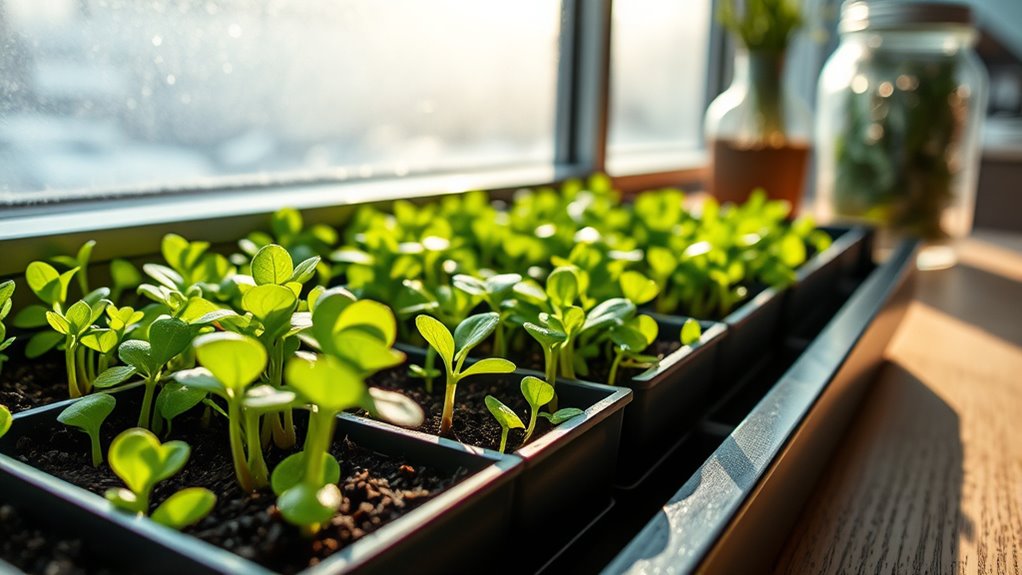
Growing microgreens during winter can be a practical solution for maintaining a steady supply of fresh greens. With the right varieties, such as mustard greens or pea shoots, you can cultivate nutrient-rich plants even in low light and cooler temperatures. However, understanding the vital supplies and conditions needed for successful growth is critical. Let’s explore the necessary steps to guarantee your indoor microgreen garden thrives during the colder months.




Understanding Microgreens and Their Benefits
Although many people may not realize it, microgreens are more than just a trendy addition to salads and sandwiches; they’re packed with nutrients and flavor. These tiny plants, ranging from arugula to radish, boast diverse microgreen varieties that offer impressive health benefits. Rich in vitamins, minerals, and antioxidants, microgreens can enhance your immune system and support overall well-being. With their concentrated nutrient profiles, they can provide up to 40 times the nutrients of their mature counterparts. Incorporating microgreens into your diet not only elevates meals but also empowers you to embrace healthier eating habits during the winter months.
Selecting the Right Varieties for Winter Growth
When selecting microgreens for winter growth, it’s vital to evaluate varieties that thrive in lower light and cooler temperatures. Here are three excellent winter varieties with distinct flavor profiles:
- Mustard Greens: Offers a spicy kick, perfect for adding zest to winter dishes.
- Pea Shoots: Sweet and tender, these provide a fresh, crisp texture that complements salads.
- Radish Greens: With a peppery flavor, they enhance the taste of soups and sandwiches.
Choosing the right microgreens not only guarantees successful growth but also enriches your culinary experiences during the colder months.
Essential Supplies for Indoor Microgreen Gardening
To successfully grow microgreens indoors during winter, you’ll need to evaluate several essential supplies. Start with selecting the right seeds tailored for your indoor environment, and choose a suitable growing medium that retains moisture while providing adequate drainage. Additionally, ensuring proper light and temperature conditions will be vital for ideal growth and yield.
Seed Selection Tips
Choosing the right seeds is essential for successful indoor microgreen gardening, especially during winter months when sunlight and warmth are limited. Focus on seed types that thrive indoors and have high germination rates. Here are some tips to guide you:
- Opt for Fast-Growing Varieties: Choose seeds like radish, arugula, or basil for quick results.
- Check Germination Rates: Select seeds with a germination rate of 85% or higher to boost your success.
- Consider Flavor Profiles: Pick a mix of spicy and mild varieties to elevate your culinary experience.
These selections will enhance your indoor microgreen garden’s productivity and enjoyment.
Growing Medium Options
After selecting the right seeds, the next step in your indoor microgreen gardening journey involves choosing a suitable growing medium. You can opt for coconut coir, a sustainable choice that retains moisture while providing excellent aeration. Alternatively, peat moss offers a light, fluffy texture ideal for seed germination. If you’re looking for soil alternatives, consider using biodegradable mats or compostable trays designed specifically for microgreens. Hydroponic systems are also an option, allowing you to grow without soil entirely, using nutrient-rich water instead. Each medium has its advantages, so choose one that aligns with your gardening style and preferences.
Light and Temperature Requirements
While it may seem easy to overlook, light and temperature play essential roles in the successful growth of microgreens during winter months. To guarantee robust growth, consider these factors:
- Light Intensity: Use grow lights with a minimum of 200-400 µmol/m²/s for ideal photosynthesis.
- Duration: Aim for 12-16 hours of light daily to prevent leggy growth.
- Temperature Fluctuations: Maintain a stable environment, ideally between 65°F-75°F, to avoid stress on your microgreens.
Step-by-Step Guide to Growing Microgreens
To successfully grow microgreens in winter, you’ll need to follow a systematic approach that guarantees ideal conditions for germination and growth. Start by selecting your microgreen varieties, such as radish, basil, or arugula. Next, gather your materials: shallow trays, potting mix, and a spray bottle for watering. Fill your trays with the mix, then evenly distribute seeds on top. Lightly cover them with more mix and mist gently to moisten. Place trays in a well-lit area or under grow lights, ensuring they stay warm. Keep the soil consistently moist, and within days, you’ll have vibrant greens ready to harvest!
Optimal Conditions for Success: Light, Temperature, and Watering
Ensuring your microgreens thrive during winter requires careful attention to three critical factors: light, temperature, and watering. To achieve ideal growth, consider the following:
- Light Intensity: Use grow lights to provide 12-16 hours of bright, even light daily, ensuring your microgreens get the intensity they need.
- Temperature: Maintain a consistent temperature between 65°F to 75°F (18°C to 24°C) to promote healthy growth and avoid stress.
- Humidity Levels: Keep humidity around 40-60% to prevent mold while ensuring moisture retention in the soil.
Harvesting and Storing Your Microgreens
Harvesting your microgreens at the right time is crucial for maximizing flavor and nutritional benefits. Use sharp scissors for clean cuts, ideally harvesting when leaves are fully developed but before flowering. This enhances taste and texture. Employ harvesting techniques like cutting just above the soil line to minimize damage. Once harvested, rinse the microgreens gently to remove any soil or debris. For storage methods, place them in a breathable container lined with a paper towel to absorb moisture. Keep your microgreens in the refrigerator, where they can last up to a week, ensuring you enjoy their freshness and liveliness.
Incorporating Microgreens Into Your Winter Meals
Incorporating microgreens into your winter meals enhances both flavor and nutritional value, as they’re packed with vitamins and minerals. You can easily add them to salads, soups, or as a garnish for entrees, providing a fresh contrast to hearty winter dishes. Experimenting with various microgreen varieties can elevate your recipes while boosting their health benefits.
Nutritional Benefits of Microgreens
Microgreens pack a powerful nutritional punch, making them an ideal addition to your winter meals. These tiny greens offer significant health benefits due to their exceptional nutrient density. Incorporating microgreens into your diet can enhance your winter nutrition in several ways:
- Vitamins and Minerals: Microgreens are rich in essential vitamins like A, C, and K, along with minerals such as iron and calcium.
- Antioxidants: They provide a wealth of antioxidants that combat oxidative stress.
- Fiber: Microgreens contribute to your daily fiber intake, promoting digestive health.
Embrace these tiny powerhouses for a vibrant, nutrient-rich winter menu!
Recipe Ideas Featuring Microgreens
There’s no denying that adding microgreens to your winter meals can elevate both flavor and nutrition. Consider crafting vibrant microgreen salads as a revitalizing side or main dish. Mix various microgreens like arugula, radish, and pea shoots for a nutrient-dense base. For a cozy breakfast, blend microgreens into your morning smoothies; they’ll add a peppery kick without overpowering the flavor. Just toss in spinach, banana, and a handful of your favorite microgreens for an energizing start. These versatile ingredients not only enhance taste but also provide a substantial boost of vitamins, making your winter meals both delicious and health-conscious.
Frequently Asked Questions
Can I Use Regular Potting Soil for Microgreens?
You can use regular potting soil for microgreens, but guarantee it’s well-draining. Different potting soil types can affect growth; choose one that retains moisture without becoming soggy to promote healthy microgreen development.
How Often Should I Fertilize My Microgreens During Winter?
You’d think winter’s a quiet time for growth, but your microgreens thrive! Fertilize every two weeks using a balanced liquid fertilizer, ensuring they get essential nutrients during this chilly season for peak winter growth.
What Pests Should I Watch Out for Indoors?
You should watch out for common indoor pests like aphids, fungus gnats, and spider mites. Implement pest prevention strategies, such as maintaining cleanliness, monitoring humidity, and using natural insecticidal soaps to protect your plants effectively.
Is It Possible to Grow Microgreens Without Soil?
Absolutely, you can grow microgreens without soil! Have you considered hydroponic systems? They use soil alternatives like coconut coir or peat moss, providing nutrients efficiently while allowing you the freedom to cultivate indoors year-round.
Can I Reuse Soil From Previous Microgreen Crops?
You can reuse soil from previous microgreen crops, but make certain it’s regenerated properly. Amend it with organic matter to enhance nutrient retention and prevent disease, offering your next crop a healthier growing environment for best results.