
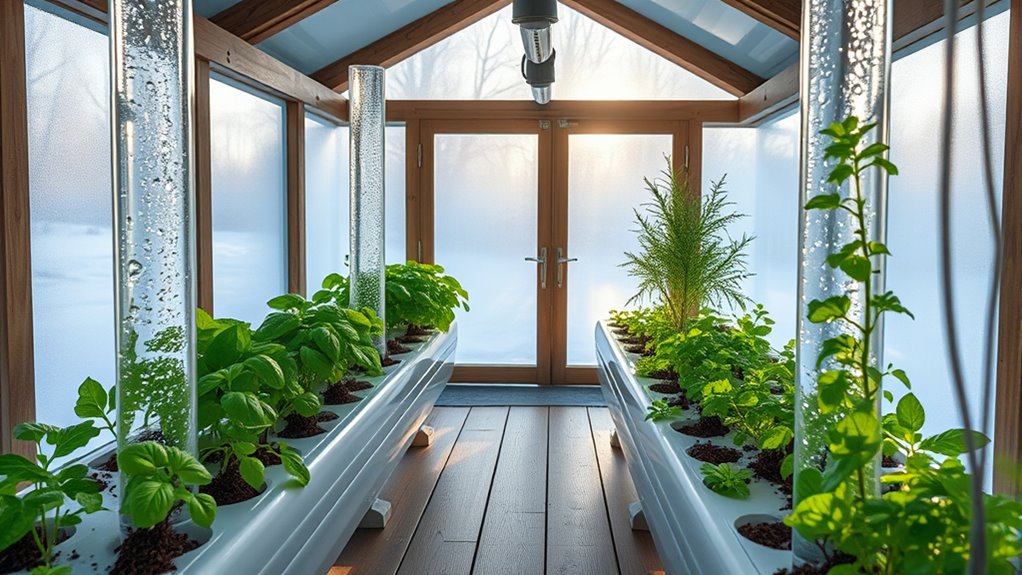
Did you know that hydroponic systems can increase crop yields by up to 30% compared to traditional farming? This is particularly beneficial in winter, when outdoor gardening isn’t feasible. By setting up a hydroponic garden in your gazebo, you can cultivate fresh produce regardless of the cold weather outside. Understanding the fundamentals of this method is essential for successful implementation, and there are several factors to evaluate before you begin.




Understanding Hydroponics: The Basics
While many gardeners find traditional soil-based methods appealing, hydroponics offers a soil-less alternative that can be particularly beneficial in winter. The hydroponic history dates back to ancient civilizations, demonstrating humanity’s quest for efficient cultivation. By utilizing nutrient solutions, you can provide plants with essential minerals directly in water, promoting rapid growth and higher yields. This method eliminates soil-borne diseases and pests, giving you greater control over your gardening environment. Understanding the types of hydroponic systems, such as nutrient film techniques or deep water culture, equips you with the knowledge to maximize your winter gardening potential, ensuring a thriving indoor garden year-round.
Benefits of Hydroponic Gardening in Winter
Hydroponic gardening in winter presents unique advantages that can enhance your indoor growing experience. You’ll enjoy accelerated plant growth due to controlled nutrient delivery and optimized light conditions, maximizing your winter gardening efforts. The absence of soil reduces pest problems and disease, allowing for healthier plants. Additionally, hydroponic systems require less water, making them eco-friendly and efficient. You can cultivate a diverse range of crops irrespective of outdoor conditions, giving you freedom to experiment with varieties. Ultimately, the hydroponic benefits extend beyond mere convenience, offering you a sustainable way to enjoy fresh produce all winter long.
Choosing the Right Hydroponic System for Your Gazebo
When selecting the right hydroponic system for your gazebo, it’s important to take into account several factors that will influence your growing success. First, consider the system types available, such as deep water culture, nutrient film technique, or aeroponics. Each has unique benefits suited for different plants. Next, evaluate system sizes; smaller setups might fit snugly in your gazebo, while larger systems may require more space. Additionally, think about the plants you want to grow, as this will dictate your system’s design and capacity. Ultimately, choosing the right system guarantees a productive, thriving hydroponic garden throughout winter.
Essential Equipment for Indoor Hydroponic Gardening
Creating a successful indoor hydroponic garden requires a selection of essential equipment to guarantee ideal growth and plant health. Start with quality hydroponic supplies, including nutrient solutions and growing media like clay pellets or rock wool. You’ll also need a reliable water pump and an air pump for oxygenation. Don’t forget gardening tools, such as pH testers, which facilitate nutrient absorption, and a light source like LED grow lights for peak photosynthesis. Additionally, consider a timer for your lighting and watering schedules. With the right equipment, you’ll foster a thriving indoor ecosystem, empowering you to grow fresh produce year-round.
Setting Up Your Hydroponic Garden in the Gazebo
When setting up your hydroponic garden in the gazebo, it’s vital to choose a system that fits your space and plant needs, such as nutrient film technique or deep water culture. You’ll also need to guarantee ideal lighting conditions, as adequate light is essential for plant growth, especially in winter months. Finally, managing temperature and humidity will create a stable environment, allowing your plants to thrive regardless of external weather conditions.
Choosing the Right System
As you consider the ideal hydroponic system for your winter gazebo, it’s essential to evaluate your space, budget, and plant preferences. There are several system types, such as Nutrient Film Technique (NFT), Deep Water Culture (DWC), and Ebb and Flow. Each comes with its own system advantages; for instance, DWC is great for rapid growth, while NFT is space-efficient. Assess the size of your gazebo to determine which system fits best, and factor in your budget for equipment and maintenance. Ultimately, your choice should align with the plants you wish to grow, ensuring a successful hydroponic experience.
Optimal Lighting Conditions
How can you guarantee your hydroponic garden thrives during the winter months in your gazebo? Ideal lighting is essential. LED grow lights are your best bet, as they provide the necessary light spectrum for photosynthesis while being energy-efficient. Position these lights about 12-24 inches above your plants, ensuring they mimic natural sunlight. Aim for a 12-16 hour light cycle daily to stimulate growth without stressing your crops. Monitor your plants’ response; adjust the distance or duration as needed. By investing in quality LED grow lights and fine-tuning the light spectrum, you’ll create a flourishing indoor garden, regardless of winter’s chill outside.
Temperature and Humidity Control
To guarantee your hydroponic garden flourishes in the winter months, maintaining ideal temperature and humidity levels in your gazebo is essential. Effective temperature regulation and humidity monitoring are key to plant health. Follow these steps:
- Install a thermostat to monitor temperature fluctuations regularly.
- Use a hygrometer to keep track of humidity levels, aiming for 40-60%.
- Set up heating lamps or heaters for consistent warmth, especially at night.
- Incorporate a dehumidifier if humidity exceeds suitable levels to prevent mold and mildew.
Selecting the Best Plants for Hydroponic Growth
When selecting plants for hydroponic growth, consider vegetables like lettuce and spinach, which thrive in nutrient-rich solutions. Herbs such as basil and cilantro are also excellent choices, offering robust flavors while adapting well to indoor environments. If you’re interested in fruit-bearing options, strawberries and dwarf tomato varieties can provide rewarding yields in your winter gazebo.
Ideal Hydroponic Vegetables
Selecting the right vegetables for hydroponic growth can greatly enhance your gardening success, especially in a winter gazebo environment. Focus on hydroponic varieties that thrive with nutrient solutions tailored to your setup. Here are four ideal choices:
- Lettuce – Fast-growing and tolerant of varied conditions.
- Tomatoes – High yield and flavorful; guarantee proper support.
- Cucumbers – Quick to develop; prefer warmer temperatures.
- Peppers – Diverse options with rich flavors; need adequate light.
Herbs for Indoor Growth
In addition to vegetables, incorporating herbs into your hydroponic setup can greatly enhance your indoor gardening experience. Selecting the right herb varieties is essential for success. Consider popular indoor herbs like basil, cilantro, and mint, which thrive in hydroponic systems. These herbs not only require minimal space but also grow quickly, providing fresh flavors year-round. Make sure you maintain ideal nutrient levels and pH balance, as these factors greatly impact their growth. By cultivating these indoor herbs, you’ll enjoy the freedom of fresh ingredients at your fingertips, elevating your culinary creations and enriching your indoor gardening journey.
Fruit-bearing Plant Options
While many gardeners may consider leafy greens as the primary choice for hydroponic systems, fruit-bearing plants can also thrive in these setups, offering both beauty and bountiful yields. When selecting fruit varieties, keep these seasonal considerations in mind:
- Strawberries – Ideal for winter growth, providing sweet fruits.
- Tomatoes – Versatile and productive, perfect for year-round cultivation.
- Peppers – Both sweet and hot varieties thrive under controlled conditions.
- Cucumbers – Quick-growing and fruitful, they can flourish indoors.
Maintaining Your Hydroponic Garden: Tips and Tricks
Maintaining your hydroponic garden requires attention to detail, especially during the winter months when environmental conditions can fluctuate considerably. Focus on pH management; aim for a stable range of 5.5 to 6.5 to guarantee nutrient absorption. Regularly monitor water quality and adjust nutrient solutions accordingly. Implement pest control measures proactively to protect your crops. Understand growth cycles to optimize light and temperature settings, and practice crop rotation to maintain soil health. Don’t forget system maintenance—cleaning your setup prevents build-up and disease. Finally, make seasonal adjustments to your garden’s conditions, guaranteeing your plants thrive despite the winter chill.
Harvesting and Enjoying Your Winter Produce
As your hydroponic garden flourishes during the winter months, knowing when and how to harvest your crops becomes essential for maximizing flavor and nutrition. Use these harvesting methods to guarantee your produce is at its peak:
- Timing: Harvest in the morning for the best flavors.
- Technique: Use sharp scissors to cut stems cleanly.
- Storage: Place harvested greens in cool, damp cloths to retain freshness.
- Enjoying: Experiment with fresh salads or smoothies to savor the vibrant tastes.
Frequently Asked Questions
Can I Use Tap Water for My Hydroponic System?
Yes, you can use tap water, but be cautious. Its water quality may vary, affecting nutrient balance. Test for chlorine and hardness; consider filtering to guarantee ideal conditions for your hydroponic system’s success and plant health.
How Much Electricity Will My Hydroponic Setup Consume?
Your hydroponic setup’s electricity costs depend on equipment wattage and usage duration. By choosing energy-efficient lights and pumps, you can minimize consumption, ensuring your system remains sustainable while providing ample growth conditions for your plants.
What Pests Should I Be Aware of in a Winter Garden?
In indoor gardens, around 10% of plants may face pest issues. Focus on pest identification, like aphids and spider mites. Implement organic solutions such as neem oil to maintain a healthy, thriving garden without harmful chemicals.
Do I Need to Supplement Nutrients During Winter Months?
Yes, you’ll need to supplement nutrients during winter months. Adjust nutrient timing to match winter growth rates, ensuring plants receive adequate minerals for ideal development despite reduced light and cooler temperatures in your setup.
Can I Combine Hydroponics With Traditional Gardening Methods?
Combining hydroponics with traditional gardening techniques creates hybrid systems that leverage the best of both worlds. This approach enhances nutrient delivery and optimizes space, giving you more freedom to grow diverse, thriving plants year-round.