
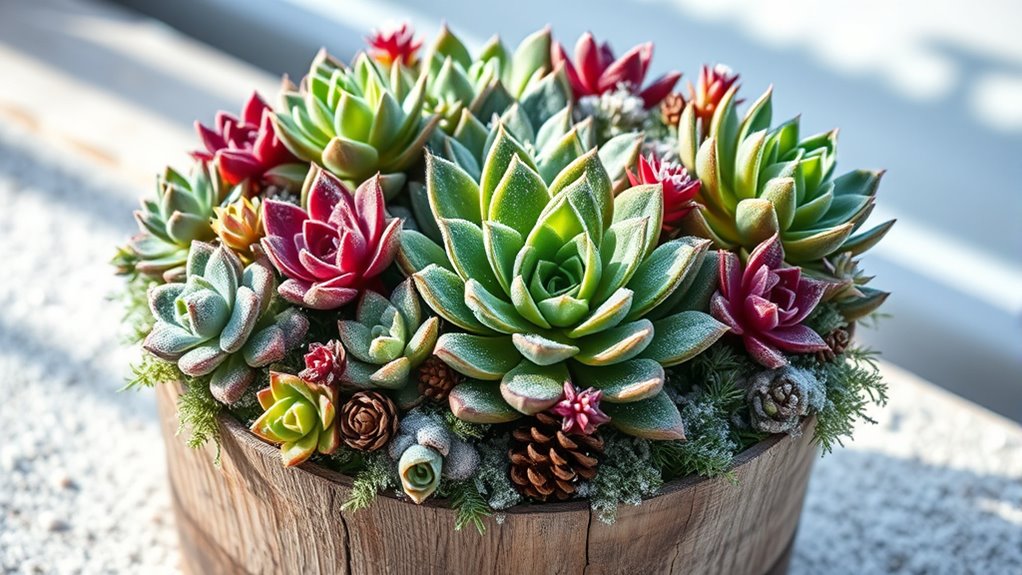
Did you know that certain succulent varieties can thrive even in winter’s chill? Selecting the right plants is essential for creating a vibrant arrangement that lasts through the colder months. Understanding how to layer and arrange these hardy succulents can elevate your indoor decor. Let’s explore the best practices for crafting stunning winter succulent displays that not only beautify your space but also showcase nature’s resilience.




Choosing the Right Succulents for Winter
When selecting succulents for winter arrangements, it’s important to take into account their hardiness and ability to thrive in cooler temperatures. Look for winter hardy varieties like Echeveria and Sedum, which are drought resistant and can endure frost. Pay attention to color variations; deep greens, blues, and even purples can enhance your display. Consider their growth habits—some spread while others are more upright—this will affect your arrangement’s overall look. Additionally, these plants exhibit seasonal adaptations, adjusting their water needs and growth patterns during colder months. By choosing wisely, you’ll create a stunning winter succulent arrangement.
Container Selection for Your Arrangement
Selecting the right container is just as important as choosing your succulents for winter arrangements. Consider both container materials and sizes to guarantee your plants thrive. Here’s a quick overview to help you decide:
| Container Materials | Ideal Container Sizes |
|---|---|
| Terracotta | 4-8 inches |
| Ceramic | 6-10 inches |
| Plastic | 4-12 inches |
| Metal | 5-10 inches |
| Wood | 6-12 inches |
Choosing breathable materials like terracotta promotes drainage, while varied sizes accommodate different succulent types. Let your creativity flow while guaranteeing functionality in your winter arrangements!
Layering and Arranging Succulents
To create a visually appealing winter succulent arrangement, it’s essential to contemplate how you layer and arrange your plants. Employing effective layering techniques can elevate your design, creating depth and interest. Consider these arranging styles:
Elevate your winter succulent arrangement by thoughtfully layering plants for depth and visual intrigue.
- Vary plant heights for dynamic visual impact.
- Group similar colors for harmonious themes.
- Use contrasting textures to draw the eye.
- Create focal points with unique or larger specimens.
Creative Themes for Winter Displays
When creating winter succulent displays, you can explore themes like holiday-inspired designs or rustic winter aesthetics. Incorporating elements such as pinecones, twinkling lights, and natural wood can enhance the festive feel while maintaining the integrity of your succulents. By thoughtfully selecting complementary decorations, you can achieve a visually striking arrangement that captures the essence of the season.
Holiday-Inspired Designs
There’s something enchanting about incorporating succulents into holiday-themed displays, which offers a unique twist on traditional winter decor. You can create stunning arrangements by playing with holiday color schemes and using festive container ideas. Consider combining vibrant reds, greens, and metallics to captivate the eye.
- Use a red ceramic pot for a pop of color.
- Incorporate shimmering ornaments among the succulents.
- Add natural elements like pinecones for texture.
- Experiment with layering different succulent varieties for depth.
These elements not only enhance the aesthetic but also evoke a warm, inviting atmosphere, celebrating the spirit of the season.
Rustic Winter Aesthetics
While embracing the charm of rustic winter aesthetics, you can create arrangements that evoke a cozy, cabin-like atmosphere. Start by selecting succulents in muted tones like deep greens and soft grays, which resonate with winter warmth. Pair them with natural elements—think reclaimed wood, burlap, or twine for containers. Incorporate pinecones, branches, and moss to enhance the rustic charm. Utilizing varying heights and textures adds visual interest. To complete your display, consider soft, warm lighting, like fairy lights or candles, to enhance the inviting feel. This approach not only showcases your succulents but also creates a serene winter retreat indoors.
Incorporating Natural Elements
To create a visually appealing winter succulent arrangement, contemplate incorporating natural elements that enhance both texture and aesthetics. By adding organic textures, you can create depth while showcasing the unique beauty of your succulents. Here are some natural accents to contemplate:
- Driftwood pieces for a rustic touch
- Pinecones to evoke a cozy, wintery feel
- Dried moss for a lush contrast
- Stones or pebbles to ground the arrangement
These elements not only enrich your display but also invite a sense of tranquility and connection to nature, allowing your creativity to flourish and your spirit to soar.
Tips for Indoor Care During Winter
During winter, your succulents require specific adjustments to thrive indoors. You’ll need to modify their light exposure, alter watering frequency, and maintain consistent temperatures to prevent stress. Understanding these factors will help guarantee your arrangements remain healthy and vibrant throughout the colder months.
Light Requirements Adjustments
As shorter days and lower light levels set in during winter, it’s crucial to adjust your succulent care regimen to guarantee peak health. Since succulents thrive on light intensity and sunlight duration, consider repositioning them near south-facing windows to maximize exposure. You might also use grow lights to supplement natural light if necessary.
- Your plants deserve the best care, even in winter.
- A little adjustment can keep them thriving.
- Let your creativity shine through your arrangements.
- Experience the joy of watching them flourish all season long.
With these changes, your succulents will continue to thrive despite winter’s challenges.
Watering Frequency Changes
With the reduced light levels of winter, you’ll also need to adjust your watering routine for succulents. During their dormant period, these plants require less water, so it’s essential to monitor moisture levels closely. Instead of the usual weekly watering, consider reducing it to every two to three weeks, depending on your indoor environment. Always check the soil moisture before watering; it should be dry to the touch. Overwatering can lead to root rot, especially in winter. By tailoring your approach, you’ll help your succulents thrive through the colder months while respecting their natural growth cycles.
Temperature Control Tips
While you might enjoy the cozy warmth of your home in winter, it’s essential to maintain a stable temperature for your succulents. Sudden temperature fluctuations can stress them, causing damage. Here are some temperature control tips:
- Utilize temperature monitoring tools to keep tabs on your plant’s environment.
- Position succulents away from drafty windows or heating vents.
- Consider using heating solutions like grow lights to provide warmth without drying out the air.
- Adjust your thermostat to maintain a consistent temperature, ideally between 60-75°F.
Seasonal Color Palettes for Your Arrangement
When you’re creating a winter succulent arrangement, selecting the right seasonal color palette can greatly enhance its visual appeal. Think about color combinations that reflect winter’s essence, like deep greens, frosty whites, and soft pastels. Here’s a table to inspire your choices:
| Color | Succulent Type | Seasonal Theme |
|---|---|---|
| Deep Green | Echeveria | Evergreen Serenity |
| Frosty White | Ghost Plant | Icy Elegance |
| Soft Pastel | Sedum | Warmth in Winter |
These palettes can help you evoke seasonal themes, transforming your arrangement into a mesmerizing winter display.
DIY Succulent Terrariums
When creating a DIY succulent terrarium, the first step is choosing the right container, as it impacts drainage and aesthetic appeal. Next, selecting appropriate succulent varieties guarantees compatibility regarding light and water requirements. Finally, understanding care and maintenance tips will help your terrarium thrive throughout the winter months.
Choosing the Right Container
Choosing the right container for your DIY succulent terrarium is essential for the health and aesthetics of your arrangement. When selecting, consider various container materials and sizes to create a balanced look.
- Glass containers offer visibility and elegance.
- Terracotta promotes breathability but requires careful watering.
- Plastic is lightweight and versatile.
- Ceramic adds a touch of artistry.
Aim for a size that allows your succulents to grow without crowding. The right container guarantees proper drainage, preventing root rot, and enhances your creative expression, giving you the freedom to design a stunning winter oasis for your home.
Selecting Succulent Varieties
Selecting the right succulent varieties is essential for creating a thriving DIY terrarium that reflects your personal style. Consider varieties like Echeveria, Haworthia, and Sedum, each offering unique shapes and colors. When choosing, think about seasonal adaptations; some succulents thrive in cooler months while others prefer warmth. Mixing varieties that complement each other not only enhances visual appeal but also guarantees compatibility in care requirements. Opt for low-maintenance options if you’re new to terrariums. Ultimately, your selections should express your creativity, allowing for an arrangement that’s both stunning and resilient throughout the winter season.
Care and Maintenance Tips
After you’ve curated a selection of succulents for your terrarium, proper care and maintenance will guarantee they thrive throughout the winter months. Monitor light exposure, ensuring they get 6 hours of indirect sunlight daily. Water sparingly, allowing the soil to dry out completely between watering. Use appropriate fertilizer options, like a diluted cactus mix, every 4-6 weeks. For pest management, inspect regularly for mealybugs or aphids and treat promptly with insecticidal soap.
- Feel the joy of vibrant greenery in your home.
- Experience tranquility as you nurture life.
- Embrace the beauty of resilience.
- Create a personal sanctuary of freedom.
Unique Display Ideas for Small Spaces
Although small spaces may seem limiting, they can actually provide a perfect backdrop for showcasing beautiful succulent arrangements. Consider utilizing shelf displays or wall planters to maximize vertical space. Create eye-catching table centerpieces with varied heights for added interest. Corner arrangements can bring life to often-overlooked areas. For a unique touch, try hanging gardens that draw the eye upward, or use window ledges to capture natural light. Embrace minimalist designs by grouping succulents in simple containers, and adapt your arrangements to reflect seasonal themes. These ideas enable you to express your creativity while making the most of your limited space.
Propagation and Maintenance of Winter Succulents
While winter can pose challenges for succulent enthusiasts, understanding the propagation and maintenance of these hardy plants can confirm they thrive during the colder months. For successful succulent propagation, make certain you use clean, sharp tools and allow cuttings to callous before planting. During winter maintenance, monitor humidity levels, as dry air can lead to stress.
- A thriving garden brings joy.
- Propagated succulents provide endless beauty.
- Nurturing plants fosters a deep connection.
- Winter resilience inspires hope and creativity.
Frequently Asked Questions
Can Succulents Survive Frost During Winter Months?
Succulents can’t survive frost, but don’t worry—just give them frost protection and proper winter care. A little extra attention can keep your plants thriving while you enjoy the beauty of winter’s chill.
How Often Should I Water Winter Succulents?
You should water winter succulents every 2-4 weeks, depending on humidity and temperature. During winter care, make certain soil dries completely between watering; overwatering can lead to root rot, jeopardizing your plants’ health.
What Are the Best Light Conditions for Winter Succulents?
Winter succulents thrive in bright, indirect light. For ideal placement, position them near a south-facing window, ensuring they receive at least six hours of light daily to prevent stretching and maintain their vibrant colors.
Are There Specific Pests to Watch for in Winter?
You’ll want to watch for mealybugs and aphids this winter. Their tiny bodies can hide among your succulents. Implementing effective pest control and maintaining vigilant winter care can help keep your plants thriving and pest-free.
Can I Use Outdoor Succulents for Indoor Arrangements?
You can use outdoor varieties for indoor arrangements, but make certain they have indoor compatibility. They may require acclimatization and specific care, as indoor conditions can differ greatly from their natural outdoor environments.