
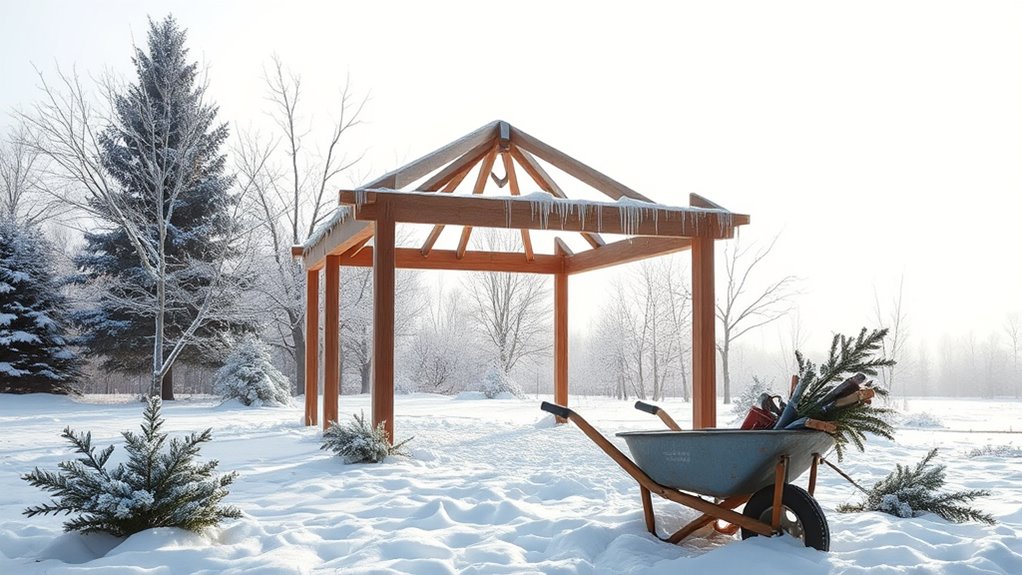
When you’re planning to build a winter garden gazebo, it’s vital to take into account several factors that guarantee both functionality and style. You’ll want to select a location that offers sunlight and protection from harsh winds, while the materials you choose should withstand the elements. As you design your gazebo, think about how it fits with your home’s aesthetic. Let’s explore the fundamental components that will make your winter oasis both inviting and practical.
Choosing the Right Location for Your Gazebo
When you’re deciding where to place your gazebo, consider how the location will affect its functionality and aesthetic appeal. Aim for a spot that offers ideal sunlight exposure, allowing you to bask in natural light during the day while providing a cozy retreat in the evenings. Strategically positioning your gazebo can also enhance wind protection; consider nearby trees or structures that can act as natural barriers. This thoughtful placement not only maximizes your enjoyment but also guarantees structural integrity. Ultimately, your gazebo should harmonize with its surroundings, offering freedom to relax and unwind in your winter garden oasis.
Selecting Materials for Durability and Aesthetics
When selecting materials for your winter garden gazebo, you’ll want to weigh the benefits of various wood types against the sturdiness of metal. Each option has its unique aesthetic appeal and durability characteristics, influencing both the structure’s longevity and visual charm. Understanding these differences will help you make an informed choice that enhances your outdoor space.
Wood Types Comparison
Although choosing the right wood type for your winter garden gazebo might seem challenging, understanding the characteristics of various species can greatly enhance both durability and aesthetics. Cedar, for instance, offers significant advantages like natural resistance to decay and insects, ensuring longevity while giving a warm, inviting look. On the other hand, pressure-treated wood, while durable, has disadvantages such as chemical treatments that can leach over time, affecting both the environment and your health. By weighing these options, you’ll find a balance between beauty and resilience, allowing your gazebo to become a cherished retreat in your winter garden.
Metal vs. Wood
Choosing between metal and wood for your winter garden gazebo is essential for achieving both durability and aesthetic appeal. Metal offers exceptional durability, resisting harsh weather and pests, while requiring minimal maintenance. However, wood aesthetics provide warmth and a natural charm, enhancing the garden’s ambiance. If you seek a timeless look, consider treated hardwoods that withstand the elements. Alternatively, if you prefer a modern vibe, sleek aluminum or galvanized steel might suit your tastes. Ultimately, weigh the balance of metal durability against wood aesthetics to create a space that reflects your style and stands the test of time.
Designing Your Gazebo: Size and Style Considerations
What factors should you consider when designing your gazebo for winter gardening? First, think about the size guidelines to guarantee it accommodates your plants and gardening activities. Then, explore various style inspirations to match your aesthetic and functional needs.
Consider size and style to create a functional and aesthetically pleasing gazebo for your winter gardening needs.
- Dimensions: Make sure it’s spacious enough for movement and equipment.
- Style: Choose a design that complements your home and landscape.
- Materials: Consider weather-resistant materials for durability.
- Ventilation: Guarantee adequate airflow to maintain a healthy environment for your plants.
Taking time for these considerations will enhance your winter gardening experience.
Essential Tools and Equipment Needed
When planning your winter garden gazebo, having the right tools and equipment is essential to guarantee a successful gardening experience. You’ll need the following:
| Tool/Equipment | Purpose |
|---|---|
| Shovel | Digging and planting |
| Pruning shears | Trimming winter plants |
| Garden trowel | Planting smaller species |
| Gazebo accessories | Enhancing the gazebo setup |
With these tools, you can effectively manage your winter plants and maintain the beauty of your gazebo. Enjoy the freedom to create a serene winter retreat, where you can nurture your gardening passion year-round!
Preparing the Foundation and Site
Choosing the right location for your gazebo is essential, as it impacts both aesthetics and functionality. Once you’ve pinpointed the ideal spot, clear the area of debris and vegetation to create a clean slate. Finally, make certain the ground is level, as a solid foundation will set the stage for a sturdy and attractive structure.
Choosing the Location
Selecting the right location for your winter garden gazebo is essential to its functionality and aesthetic appeal. Consider these key factors:
- Sunlight exposure: Position your gazebo to maximize natural light, ensuring your plants thrive.
- Wind protection: Choose a site shielded from harsh winds to create a cozy atmosphere.
- Accessibility: Make sure it’s easy to reach, enhancing your enjoyment and maintenance routine.
- View: Select a spot that offers pleasing vistas, allowing you to appreciate your garden’s beauty.
Taking the time to evaluate these elements will help you create a serene and functional winter garden retreat.
Clearing the Area
With your location set, the next step is clearing the area to prepare a solid foundation for your winter garden gazebo. Start with site preparation by marking the gazebo’s footprint. Remove any grass, weeds, and obstacles, ensuring a clean slate. Focus on debris removal, which includes rocks, branches, and any unwanted materials that could compromise stability. Use tools like shovels and rakes for efficient cleanup, creating a smooth surface. It’s essential to establish a pristine environment, allowing you to express your creativity when building your gazebo. A well-prepared site not only supports the structure but enhances your overall garden experience.
Leveling the Ground
To create a sturdy and inviting winter garden gazebo, leveling the ground is an essential step that can’t be overlooked. Proper ground preparation guarantees your gazebo stands strong against the elements. Here are some effective leveling techniques to take into account:
- Clear debris: Remove rocks, roots, and any other obstructions.
- Mark the area: Use stakes and string to outline the gazebo’s footprint.
- Check for slope: Use a level to identify any high or low spots.
- Fill and compact: Add soil or gravel as needed, compacting it to create a solid base.
With careful leveling, your gazebo will be a welcoming retreat all winter long.
Step-by-Step Construction Process
Building a winter garden gazebo involves a series of carefully planned steps that guarantee both structural integrity and aesthetic appeal. Start by laying a solid foundation, ensuring it’s level and stable. Next, construct the frame using rot-resistant materials, allowing for ample space for gazebo lighting that’ll illuminate your winter plants. Attach the roof, providing adequate pitch to handle snow accumulation. Once the frame is complete, add walls or screens for protection, ensuring they’re designed to let in light. Finally, finish with decorative elements that resonate with your style, creating a cozy retreat that invites you to enjoy your winter garden year-round.
Insulation and Heating Options for Winter Use
While you may envision a serene winter garden retreat, the reality of cold temperatures necessitates effective insulation and heating solutions. By choosing the right insulation materials and heating systems, you can create a cozy space. Consider these options:
Creating a cozy winter garden retreat requires effective insulation and heating solutions for ultimate comfort amidst the chill.
- Double-glazed windows for better thermal performance
- Foam board insulation to reduce heat loss
- Radiant floor heating for comfort underfoot
- Electric heaters for quick warmth
Implementing these strategies not only keeps your gazebo warm but also enhances your enjoyment of the winter landscape. Embrace the freedom to relax outdoors, regardless of the chill in the air!
Decorative Elements to Enhance Your Gazebo
A winter garden gazebo can transform into a stunning focal point with the right decorative elements. Consider incorporating various lighting options, like string lights or lanterns, to create a warm ambiance. Seasonal decor, such as pine garlands or winter-themed wreaths, can enhance the aesthetic appeal.
| Element | Description |
|---|---|
| String Lights | Create a cozy atmosphere |
| Lanterns | Offer classic charm |
| Pine Garlands | Add seasonal freshness |
| Winter Wreaths | Provide festive warmth |
These touches can elevate your gazebo, making it a delightful retreat all winter long.
Landscaping Around Your Gazebo
Creating an inviting landscape around your gazebo not only enhances its beauty but also establishes a seamless connection with the surrounding environment. Focus on thoughtful plant selection that complements your gazebo’s design. Consider incorporating:
- Perennial flowers for vibrant color
- Evergreens for year-round greenery
- Ornamental grasses for texture
- Seasonal decorations like lanterns or twinkling lights
These elements can elevate your space, enriching the atmosphere regardless of the season. By integrating diverse flora and charming decor, you’ll create a sanctuary that invites relaxation and enjoyment. Embrace your creativity, and let your gazebo shine as a focal point in your garden!
Maintenance Tips for Year-Round Enjoyment
To fully enjoy your winter garden gazebo throughout the year, regular maintenance is key. Start with winter maintenance by checking the structure for snow buildup, which can cause damage. Clean debris regularly to keep it inviting. Consider seasonal decorations that reflect each time of year, creating a cozy atmosphere.
| Season | Maintenance Tips |
|---|---|
| Winter | Remove snow, check stability |
| Spring | Inspect for damage, clean |
| Summer/Fall | Add decorations, refresh paint |
Frequently Asked Questions
What Permits Do I Need to Build a Gazebo?
Building a gazebo’s like planting a tree; you need the right soil. Check your local zoning regulations and building codes for permits. They’re essential to guarantee your project flourishes without legal complications or restrictions.
Can I Install Electricity in My Gazebo?
Yes, you can install electricity in your gazebo. Just guarantee you use weather-resistant electrical wiring and consider outdoor lighting options. Always follow local codes and hire a professional if you’re unsure about the installation process.
How Much Does It Cost to Build a Gazebo?
Building a gazebo’s like crafting a dream—you’ll spend anywhere from $2,000 to $10,000 depending on materials costs and design options. Choose wisely; your vision deserves the best foundation for freedom and creativity.
Will a Gazebo Increase My Property Value?
Yes, a gazebo can enhance your property value by improving outdoor aesthetics and providing a functional space. This property enhancement attracts potential buyers, offering them a charming retreat that adds to your home’s overall appeal.
How Do I Winterize My Gazebo After Use?
To winterize your gazebo, prioritize gazebo maintenance by cleaning surfaces, removing debris, and applying protective coatings. Use tarps for winter protection against snow and ice, ensuring structural integrity and prolonging its lifespan for future enjoyment.