
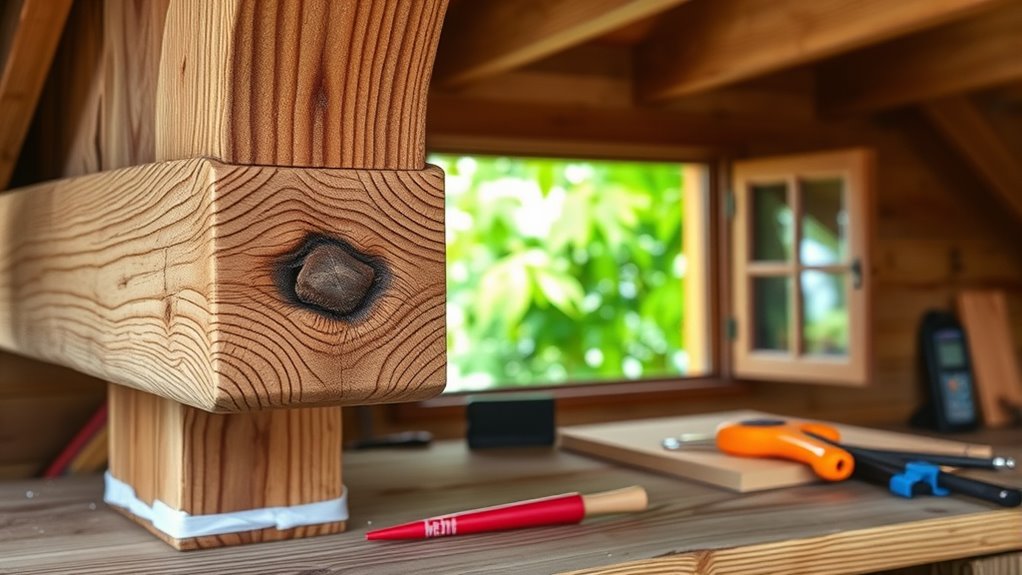
To prevent roof beam rot, to guarantee longevity, and to maintain structural integrity, you must adopt a systematic approach. Regular inspections and proper ventilation are essential, but they are just the beginning. Understanding how moisture accumulates and the materials you choose can make a significant difference. By addressing these factors, you can protect your roof beams effectively. What other strategies might contribute to a more robust defense against rot?
Understanding the Causes of Roof Beam Rot
Understanding the causes of roof beam rot is essential for maintaining the structural integrity of your home. The primary causes of moisture often stem from leaks, inadequate ventilation, or high humidity levels. When moisture accumulates, it can penetrate wood, fostering decay and leading to structural weaknesses. These weaknesses compromise the load-bearing capacity of beams, risking collapse. Additionally, poor construction practices can exacerbate moisture retention, further accelerating deterioration. Recognizing these factors allows you to implement preventive measures, ensuring your home remains safe and sound. By addressing moisture sources proactively, you can preserve the strength and longevity of your roof beams effectively.
Regular Inspections: Key to Early Detection
To prevent roof beam rot, you should schedule routine inspections to assess the integrity of your roofing structure. Regular checks allow you to identify signs of damage early, minimizing potential long-term issues. By staying proactive, you can guarantee your roof remains structurally sound and extend its lifespan.
Schedule Routine Checks
While regular inspections may seem like an added chore, they play an essential role in preventing roof beam rot. Establishing a consistent scheduling frequency is vital; aim for inspections at least twice a year. Create an inspection checklist that includes checking for moisture, signs of pests, and structural integrity. This systematic approach allows you to catch potential issues early, before they escalate into significant problems. By committing to routine checks, you empower yourself to maintain your roof’s health and guarantee its longevity. Taking these proactive measures is a key step towards preserving your home and securing your freedom from costly repairs.
Identify Signs of Damage
Routine inspections lay the groundwork for identifying signs of damage before they worsen. During these checks, look for signs of moisture, such as dark spots or mold, which can indicate potential rot. Be vigilant for any signs of structural instability, like sagging beams or cracks in the wood. These issues often escalate quickly, compromising the integrity of your roof. Regularly evaluating your roof beams not only preserves their longevity but also safeguards your entire structure. By catching these signs early, you maintain your freedom from costly repairs and guarantee a stable, secure environment for years to come.
Proper Ventilation in Attics and Roof Spaces
Effective ventilation in attics and roof spaces is vital for preventing roof beam rot, as it helps regulate temperature and moisture levels. Proper airflow reduces humidity, which is essential for maintaining attic insulation and protecting structural integrity. Without adequate ventilation, trapped moisture can lead to mold growth and wood decay. To guarantee effective humidity control, consider installing ridge and soffit vents, which promote a continuous exchange of air. Regularly inspect these systems to prevent blockages. By prioritizing ventilation, you empower your home’s longevity and create a healthier environment, safeguarding against the detrimental effects of excess moisture.
Maintaining Gutters and Downspouts
Proper ventilation in attics and roof spaces isn’t the only factor in preventing roof beam rot; maintaining gutters and downspouts plays a substantial role as well. Regular gutter cleaning is essential to remove debris that can clog drainage systems, causing water to overflow. Overflowing gutters can lead to moisture accumulation around your roof beams. Additionally, downspout maintenance guarantees that water is directed away from the foundation and roof structure. Check for blockages and verify downspouts are properly secured and directed. By prioritizing these tasks, you greatly reduce the risk of roof beam rot, promoting a healthier and longer-lasting roofing system.
Choosing the Right Materials for Roof Beams
When selecting materials for roof beams, it’s crucial to take into account not only their structural integrity but also their resistance to moisture and decay. Consider the following options:
- Engineered Wood: Offers high strength and stability, often treated for moisture resistance.
- Pressure-Treated Lumber: Natural wood chemically treated to resist rot and insect damage.
- Steel Beams: Durable and resistant to decay, though heavier and more expensive.
- Composite Materials: Combine natural fibers with plastics, providing moisture resistance without sacrificing structural integrity.
These choices will help guarantee your roof beams remain robust and free from rot.
Employing Moisture Barriers and Sealants
Although moisture is a primary contributor to roof beam rot, employing moisture barriers and sealants can greatly mitigate this risk. Effective moisture management starts with selecting the right barrier materials and ensuring proper sealant application. This prevents water infiltration while allowing trapped moisture to escape.
| Material Type | Purpose |
|---|---|
| Vapor Barriers | Prevents moisture entry |
| Membranes | Protects against water |
| Sealants | Fills gaps and cracks |
| Coatings | Provides an additional layer |
Addressing Pest Infestations Promptly
To prevent roof beam rot, you need to identify common pests that can compromise structural integrity. Recognizing these threats early allows for effective pest control methods to be implemented swiftly. By addressing infestations promptly, you can safeguard your roofing system from further damage.
Identifying Common Pests
Identifying common pests in your roof structure is crucial, as infestations can lead to significant damage if not addressed promptly. Utilize effective pest identification techniques to recognize the following common pest species:
- Termites: Look for mud tubes and discarded wings.
- Carpenter ants: Check for sawdust piles and hollowed wood.
- Wood-boring beetles: Identify small holes and powdery frass.
- Fungi: Observe discoloration and soft spots in wood.
Early detection of these pests minimizes the risk of rot and structural failure, ensuring your roof remains sound and secure. Stay vigilant to protect your investment and maintain your freedom.
Effective Pest Control Methods
When pests invade your roof structure, implementing effective control methods is essential to prevent further damage. Start with pest exclusion techniques; seal gaps and cracks to deter entry. Consider introducing natural predators, like certain birds or beneficial insects, to maintain a balanced ecosystem. Regularly monitor your roof for signs of infestation and respond promptly to any issues. Use targeted treatments, such as eco-friendly pesticides, when necessary, but guarantee they don’t harm beneficial species. By prioritizing these methods, you’ll safeguard your roof beams from pests and the rot they cause, preserving the integrity of your home.
Frequently Asked Questions
How Often Should I Inspect My Roof Beams for Rot?
You should inspect your roof beams for rot at least twice a year as part of your roof maintenance routine. Regular inspection frequency helps identify issues early, ensuring your structure remains safe and sound.
What Are the Signs of Roof Beam Rot to Look For?
Look for discoloration, soft or crumbling wood, and a musty smell during your roof inspection. These signs threaten your roof’s structural integrity, making prompt action essential for maintaining a safe and stable environment.
Can I Repair Rotting Roof Beams Myself?
Yes, you can tackle rotting roof beams with DIY repairs if you’re skilled. Make certain you assess the extent of the damage first, and implement effective rot prevention measures to avoid future issues and maintain structural integrity.
How Much Does It Cost to Replace Roof Beams?
Replacing roof beams can cost between $1,500 to $4,000, depending on size and labor. For instance, if you’re reinforcing a 20-foot beam, ensuring structural integrity might lead to higher roof replacement costs down the line.
Are Certain Wood Types More Resistant to Rot?
Yes, certain wood types, like pressure treated lumber and rot resistant species such as cedar or redwood, offer enhanced durability against decay. Choosing these materials can greatly improve your structure’s longevity and reduce maintenance needs.